Tag: Pakistan Supreme Court

  • Another farce by Justice Dramabaz

    Another farce by Justice Dramabaz

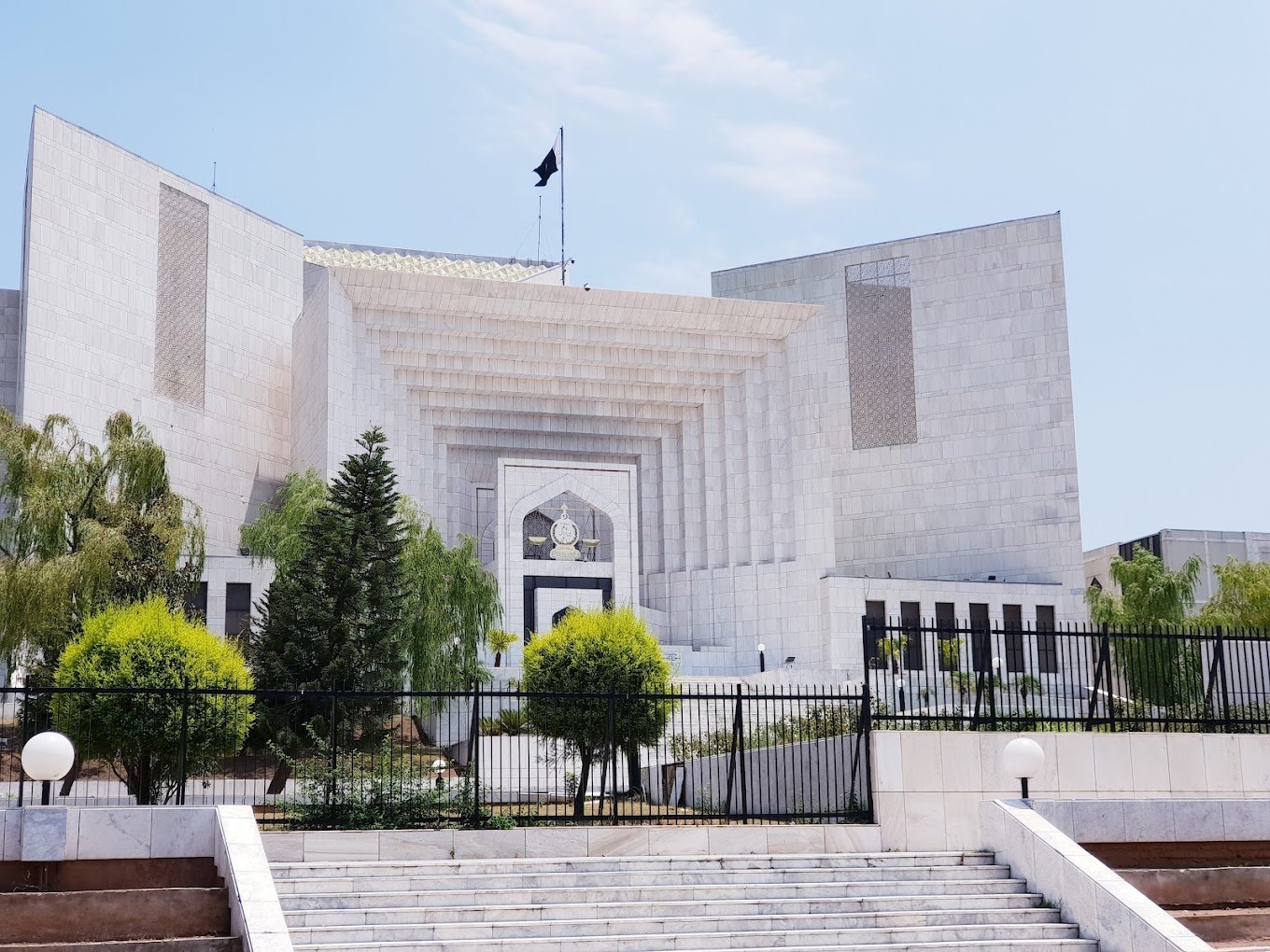
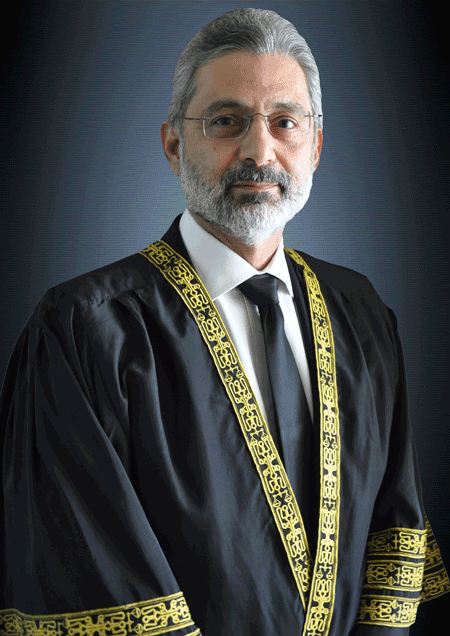
    A meeting was held between the Pakistan Prime Minister Shahbaz Sharif and  the Chief Justice of Pakistan Qazi Faez Isa in response to the letter of 6 Judges of the Islamabad High Court to the CJP and other senior Judges complaining of interference by the ISI and other intelligence agencies of Pakistan with fthe functioning of the judiciary. Thereafter the Pakistan Law Minister announced setting up of a commission to probe into the matter, headed by a retired Judge, Justice Tassaduq Jillani.

    https://t.co/CtFk6rE3pY

    https://www.dawn.com/news/1824028

    https://www.aljazeera.com/news/2024/3/27/judges-vs-spies-pakistans-jurists-accuse-intel-agency-isi-of-intimidation

    https://www.brecorder.com/news/40295615

    https://timesofindia.indiatimes.com/world/pakistan/6-pak-hc-judges-in-letter-to-top-court-council-accuse-isi-of-intimidation/articleshow/108829702.cms

    However, Justice Jillani has said he is not willing to head such a probe.

    Now Qazi Faez Isa ( whom I call Justice Dramabaz ) has issued a suo motu notice and set up a bench of 7 Judges of the Supreme Court to deal with the matter.

    https://tribune.com.pk/story/2461259/sc-takes-suo-motu-notice-on-judges-letter-

    forms-larger-bench

    In my opinion this is just another farce by Justice Dramabaz. Let me explain.

    1. There is no reason to disbelieve what the 6 Judges of IHC said in their letter.

    A fascist reign of terror was unleashed in Pakistan by the Pakistan army after the events of 9th May, 2023 ( which many say were stage managed ). About 14,000 people were arrested by the security forces on trumped up charges, their houses broken into, and they were beaten/tortured, and then incarcerated in jail in inhuman conditions, where they are still rotting. The people of Pakistan are living in terror, and the Pakistan media is largely muzzled.

    It is in the nature of fascism, whether of the Hitler type in Nazi Germany, the Mussolini type in Italy, or the Pinochet type in Chile ( where tens of thousands of people simply ‘disappeared’ ) that the judiciary is silenced. The judiciary stands as a bulwark against state oppression, and is a protector of the rights of the people, and hence it cannot be left independent under fascist rule. So it has to be silenced, as has lagely been done in Pakistan, and some of the ways that was done were mentioned in para 6 of the letter of the 6 IHC judges.

    2. So what can the bench of 7 Judges of the Pakistan Supreme Court constituted by the CJP possibly achieve ? If they find the allegations of the 6 IHC Judges to be correct, which they undoubtedly are, will they send the Director General and other senior officers of the ISI, on whose instructions this outrage was obviously committed, as well as those who carried out the order, to jail for contempt of court ? It is laughable even to think of the idea. It requires people with guts and a spine to do that, and these people do not have that

    3. What, then, will this 7 member bench do ? 

    It will hold that the allegations of these 6 IHC Judges cannot be substantiated

    And to ensure that, Justice Dramabaz has deliberately selected 7 Supreme Court judges who are his sidekicks and do his bidding, and are known to be pro-Pakistan establishment, to be on the bench, instead of constituting a Full Bench of all Judges of the Supreme Court, including upright and independent Judges like Justice Munib Akhtar, Justice Ayesha Malik, and Justice Shahid Waheed.

    Justice Dramabaz will himself preside over this bench, and his actions have proved that he has become a servile toady of the Pakistan Establishment e.g. his flawed and dishonest judgmernt depriving Imran Khan’s PTI of its party symbol, and his other acts detailed below

    https://indicanews.com/justice-markandey-katju-four-glaring-flaws-in-pakistan-supreme-court-judgment/

    So this bench of 7 Supreme Court judges constituted by Justice Dramabaz will only be a farce, and its proceedings a melodrama, a burlesque, and an excercise in futility.

    4. What then should be done ? I have mentioned the only correct course of action in 2 video interviews ( one very recent ) which I gave to a young Pakistani journalist, Sohrab Barkat, of siasat.pk

    That course of action is for the Chief Justice of Pakistan to announce that he will close all courts in Pakistan unless and until the Pakistan Establishment ( meaning the army ) gives an assurance that there will be no interference with the independence of the judiciary, no threats or snooping on the judges, and judicial orders will be obeyed. There is no other way out. 

    But that is too much to expect from Justice Dramabaz

  • The Crisis in Pakistan’s Judiciary

    The Crisis in Pakistan’s Judiciary

    6 Judges of the Islamabad High Court have written a letter to the Supreme Court Judicial Council of Pakistan, whose head is the Chief Justice of Pakistan Qazi Faez Isa, complaining of the interference in their work, threats, and snooping on them by Pakistan’s Intelligence Agencies

    The lawyers have called a convention to discuss this brazen attack on the independence of the judiciary

    For quite some time it has been noticed in Pakistan that Court orders are not obeyed. For instance, the order of the Supreme Court to hold elections for the Punjab Legislative Assembly on 14th May, 2023, was simply thrown into the waste paper basket. 

    https://timesofindia.indiatimes.com/world/pakistan/pak-parliament-rejects-sc-order-to-conduct-snap-polls-in-punjab/articleshow/99311033.cms

    The latest revelations in the letter of 6 Hon’ble Judges of the Islamabad High Court shows brazen interference by the executive with the judiciary.

    This takes us into the question why have a judiciary at all ? 

    It is in the nature of things that in every society, in all ages, there were, and will be, some disputes between the people, or between the people and the authorities. Hence there has to be a forum for peaceful resolution of these disputes, on the basis of some established principles, by professional experts who are conversant with these principles, known as Judges, otherwise they will be resolved violently by guns, bombs, swords, or lathis. Hence the purpose of a judiciary is to preserve peace in society.

    A person presents his case in court, as does his adversary, and then the judge gives his verdict. Even if a party loses, he has the satisfaction that he was given a hearing, and this pacifies him to some extent.

    But this presumes that the Judge was honest, impartial, and independent. In Pakistan, unfortunately, these features are missing. An example of this is the clearly dishonest verdict of the 3 Judge bench of the Pakistan Supreme Court, presided over by the Chief Justice Qazi Faez Isa, which deprived Imran Khan’s PTI party of its symbol

    https://indicanews.com/justice-markandey-katju-four-glaring-flaws-in-pakistan-supreme-court-judgment/

    A Pakistani journalist, Sohrab Barkat, of the social media forum siasat.pk, who is based in Islamabad, asked me what I would have done in this situation had I been the Chief Justice of Pakistan.

    I told him I would have taken a very tough stand. I would have closed down all courts in Pakistan until the government gives a solemn assurance that it will obey court orders ( subject of course to provisions for review, or appeal to a higher court ), and will respect the independence of the judiciary.

    I would have also sent to jail for contempt of court those who defied court orders, however high the person or persons may be

    Unfortunately the former CJP Bandial, and the present CJP Qazi Faez Isa, have proved to be spineless in this regard, and the latter has proved to be servile to the Pakistan Establishment, and a disgrace to the judiciary, like a modern Judge Jeffreys.

  • Gen Munir, the financial wizard

    Gen Munir, the financial wizard

    One would have thought that the job of an army chief is to protect his country’s borders, and render assistance to the civilian authorities in cases of internal disturbances when asked by the latter. But it seems that the Pakistan army chief, Gen Munir, has other ideas, and believes he can fix Pakistan’s tumbling economy.

    Gen Munir, the financial wizard.

    He recently held several hours long meetings in Karachi and Lahore with over a hundred prominent members of Pakistan’s business community to sort out the country’s economic woes.

    Pakistan has a 27% inflation rate, and the prices of food have gone up recently by 40%. The currency has been rapidly depreciating ( presently about Rs 306 vis-a-vis the dollar ). Highly inflated electricity bills have resulted in massive demonstrations and protests all over the country. Traders are on strike.

    Pakistan has a civilian government ( though a caretaker one ) and fixing the economy is surely the task of this government. But Gen Munir has now dropped even the fig leaf of civilian rule,and the army has taken full control.

    In his meetings with the business leaders Gen Munir has announced a plethora of steps he is going to take viz corruption will be eradicated or largely reduced, 100 billion dollars will be invested in Pakistan by foreign countries like Saudi Arabia, Kuwait and the UAE, smuggling of Iranian oil checked, forex traders taxed, the ‘grey economy’ curbed, sick government industries privatised, etc

    There are several problems with Gen Munir’s plans

    Firstly, Pakistan’s present economic crisis was largely due to the misdeeds of these very business leaders whom he met, who along with corrupt politicians, bureaucrats and army generals looted Pakistan for decades. Now all they want is reduction in income and sales taxes, and various other concessions for themselves ( as they told Gen Munir ), and they are least bothered about the public welfare..

    Secondly, checking corruption is easier said than done. Much of the corruption is by army officers themselves, as explained below :

    So the army has a vested interest in maintaining corruption.

    Thirdly, it is presumptuous to believe that anyone will invest money unless he is assured that he will get back the money he invests with a reasonable profit. After all, he is not doling out charity. Gen Munir may give his guarantee in this connection, but what are words when not backed up by deeds ? The past performance of Pakistan has been dismal, with its leaders repeatedly going around with a begging bowl to the IMF, Saudi Arabia, etc.

    And lastly, recovery of Pakistan’s economy depends on peace and stability, which is only possible after a free and fair elections.

    But Gen Munir, knowing that Imran Khan’s PTI will sweep the polls as he has support of 85% Pakistanis ( as all opinion polls indicate ), is adamant not to hold elections for parliament or the provincial legislatures.

     In fact the very purpose of holding meetings with business leaders was to convey the message that first we have to fix Pakistan’s economy, however long it takes, and only thereafter can elections be held ( which is putting the cart before the horse ).

    I am afraid Gen Munir has bitten more than he can chew, and is living in la-la land

  • Pakistan Judges, how will you answer Allah when brought before Him

    Pakistan Judges, how will you answer Allah when brought before Him

    What has been witnessed in recent times is the almost total abandonment by the Pakistan Supreme Court Judges of their solemn duty of upholding the Pakistan Constitution, e.g. Article 224(2) thereof, and of protecting the liberties and rights of the people, ten thousand of whom, including former Prime Minister Imran Khan, are in jail in terrible conditions, many, including women, having been dragged out of their houses, which were broken into, and often brutally tortured, while the judiciary is silent

    Justice Katju’s letter to Pakistani Judges


    Probably the Judges think that if they interfere and refuse to cow down and surrender to the dictates of the Pakistan Establishment they will be made to suffer personally in some way.

    For that reason they are not doing their solemn duty, and have turned a Nelson’s eye to these horrors.


    But I would like to tell them about a Judge, Qazi Sirajuddin, who did his duty even at the risk of his head being cut off by the Sultan.


    In his ‘History of Bengal’ Prof. Charles Stewart mentions an interesting case of 1490 before Qazi Sirajuddin, the Qazi -e-Subah of Bengal.


    One day while the Sultan of Bengal was practising archery, one of his arrows accidentally wounded a boy, the son of a widow. The widow immediately came before the Qazi and demanded justice.


    The Judge (the Qazi ) was in a dilemma. He said to himself ” If I summon the Sultan to my court, he may cut off my head for impertinence, but if I overlook his act, I shall one day certainly be summoned before the Court of God to answer for my neglect of duty. “


    After much reflection, fear of God prevailed over fear of the Sultan, and the Qazi ordered one of his officers to go and summon the Sultan to his Court.


    On receiving the summons,the Sultan instantly rose, and concealing a short sword under his garments, went before the Qazi, who far from rising from his seat or showing the Sultan any mark of respect said to him ” You have wounded the son of this poor widow. You must therefore immediately pay her adequate compensation, or suffer the sentence of the law. “


    The Sultan made a bow, and turning to the widow gave her a sum of money which satisfied her. After doing so he said to the Qazi ” Worthy Judge, the complainant has forgiven me. ” The Qazi then asked the woman if she was satisfied, to which she assented, and the case was then dismissed.
    The Qazi then came down from his seat and made obeisance before his sovereign, the Sultan, who, drawing the sword from beneath his garment, said ” O Qazi, in obedience to your command I came instantly to your Court, but if you had not done your duty I swear that with this sword I would have taken off your head. Thanks to God I have in my dominion a Judge who acknowledges no authority superior to the law ”.
    The Qazi then took out a whip which he had concealed under his robes, and said to the King ” I also swear by Almighty God that if you had not complied with the injunction of the law this whip would have made your back black and blue. It has been a trial for both of us ”.


    Let the Pakistan Supreme Court Judges learn from this historical account. They are all God fearing Muslims. Probably they are only thinking of their present comforts. But how will they answer Allah when brought before him ?

  • Imran Khan has become an idea which has gripped the masses in Pakistan

    Imran Khan has become an idea which has gripped the masses in Pakistan


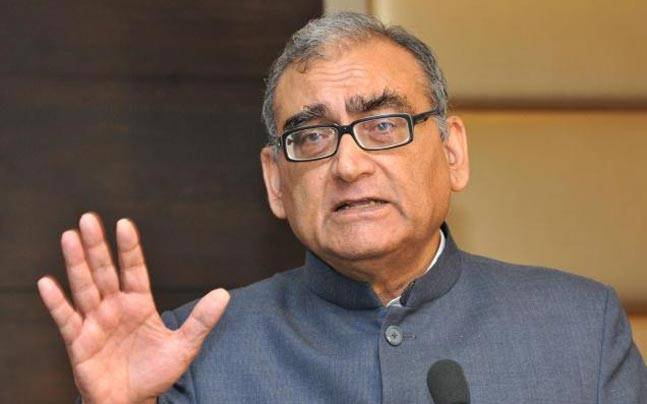
    Justice Markandey Katju

    When Imran Khan became Prime Minister of Pakistan in 2018, and for quite some thereafter too, I was very critical of him.


    He had taken help of religious extremists during his election campaign, and had given PTI tickets to dubious ‘electables’.


    Soon after becoming PM he had dismissed the renowned economist Atif Mian from the Pakistan Economic Advisory Council, just because he was an Ahmadi.


    He had suppressed the press, even getting arrested and imprisoned Mir Shakil-ur-Rehman, owner of Jang Group, in a 34 year old land case, because of some criticism by his newspaper.


    https://www.dawn.com/news/1540500


    He constantly spoke of Madina ki Riyasat. Speaking of it a few times would be okay, but making a habit of it is going too far.


    However, all that is in the past, and we should see the present.


    Presently Imran Khan is leading the democratic forces in Pakistan, against the fascist reign of terror unleashed by the corrupt Pakistan Establishment.

    He is basically an honest man, who has repeatedly said he will continue living in Pakistan, and not fly abroad like the corrupt Nawaz Sharif ( who was convicted by the Pakistan Supreme Court ). He has no assets abroad, unlike PDM leaders, whose names appear in the Panama Papers, and other credible material. In my opinion all honest and right thinking people everywhere should support him.
    Earlier, 70% Pakistanis supported him ( according to opinion polls in Pakistan and the bye elections results ). But now the number has drastically risen, and may be between 80 and 90%. This means over 200 million out of the 240 million Pakistanis support Imran Khan.


    Imran Khan is now no longer a person, he has become an idea in Pakistan, representing honesty, truth,and commitment to the people’s welfare.. Even if he is imprisoned or physically eliminated, the idea will live on, like the ghost of Caesar after his assassination.

  • Strange behaviour of the Pakistan Supreme Court Judges By Justice Katju

    Strange behaviour of the Pakistan Supreme Court Judges By Justice Katju

    A bench of the Pakistan Supreme Court today declared Imran Khan’s arrest by the Pakistan Rangers, on a warrant of the NAB relating to a corruption charge regarding Al-Qadir Trust, illegal, and ordered his release.

    I agree that the arrest was illegal, though for reasons different from that given by the court. However, before I give my reasons, I would like to comment on the strange behavior of the judges on the bench hearing the case.
    From the internet it appears that on seeing Imran Khan in court, the Chief Justice remarked ” We are very happy to see you ” ( Aap ko dekh kar badi khushi hui )


    With great respect to Justice Bandial, this remark was totally uncalled for and unwarranted, and it tends to convey a wrong signal that the CJP and Imran Khan are buddies.
    Francis Bacon, a Lord Chancellor of England once remarked ” A much talking judge is like an ill tuned cymbal ”, and all judges should keep that in mind. The less they talk in court the better.
    There was widespread violence in Pakistan following Imran Khan’s arrest

    The CJP observed that he did not approve of the manner of the arrest.
    Now an act being improper, and it being illegal, are two very different things. The court can interfere only if it is illegal, and cannot interfere merely because it is improper.
    If the Pakistan Supreme Court regarded the arrest illegal, then it should have clearly mentioned in its order which specific law did it violate ? Is there any law in Pakistan which says no arrest can be made in a court building ? I doubt it. There is none in India, and the Pakistani Penal Code and Criminal Procedure Code broadly follow the law in India.


    After declaring the arrest illegal and setting Imran Khan free, the Pakistan Supreme Court directed him to appear the next day before the Islamabad High Court. What for ? If the arrest was illegal, why should he be made to appear in the High Court ? The Supreme Court should have itself granted him bail using its suo motu powers, as well as its power under Article 187(1) of the Constitution which states ” the Supreme Court shall have power to issue such directions, orders or decrees as may be necessary for doing complete justice in any case or matter pending before it ”.


    Now I may give my own reasons why I regard the arrest illegal.


    Section 157 of Pakistan’s Criminal Procedure Code ( which is identical to section 157 of the Indian Cr.P.C. ) states :
    ” Procedure where cognizable offence suspected:

    (1) If from information received or otherwise, an officer incharge of a police-station has reason to suspect the commission of an offence which he is empowered under Section 156 to investigate, he shall forthwith send a report of the same to a Magistrate empowered to take cognizance of such offence upon a police-report and shall proceed in person, or shall depute one of his subordinate officers not being below such rank as the Provincial Government may, by general or special order, prescribe in this behalf to proceed, to the spot, to investigate the facts and circumstance of the case, and, if necessary, to take measures for the ‘discovery and arrest of the offender ”.


    The last few words in this provision clearly imply that arrest is not a must in every case. This is evident from use of the words ” if necessary ”. So if an investigation can be done without arresting a suspect, e.g. by questioning him at his residence or place of work, an arrest would be unnecessary and unwarranted, and would violate section 157.


    In India and Pakistan policemen who arrest a person are often complying with an order received from some higher police or political authority. Are they bound to carry out such an order? All arrests are not legal. What usually happens in India ( or Pakistan ) is that the moment an FIR of a cognizable offence is lodged in a police station, the police rush to arrest the accused.

    But what is the correct legal position?
    In Joginder Kumar vs. State of U.P. (AIR 1994 S.C. 1349), the Indian Supreme Court observed: “No arrest can be made because it is lawful for the police officer to do so. The existence of the power to arrest is one thing. The justification for the exercise of it is quite another. The police officer must be able to justify the arrest, apart from his power to do so.


    Arrest and detention in police lock-up of a person can cause incalculable harm to the reputation and self-esteem of a person. No arrest can be made in a routine manner on a mere allegation of commission of an offence made against a person.

    It would be prudent for a police officer, in the interest of protection of the constitutional rights of a citizen, and perhaps in his own interest, to ensure that no arrest should be made without a reasonable satisfaction reached after some investigation as to the genuineness and bona fides of a complaint and a reasonable belief both as to the person’s complicity and even so as to the need to effect arrest.


    Denying a person of his liberty is a serious matter. The recommendations of the Police Commission merely reflect the constitutional concomitants of the fundamental right to personal liberty and freedom. A person is not liable to arrest merely on the suspicion of complicity in an offence.

    There must be some reasonable justification in the opinion of the officer effecting the arrest that such arrest is necessary and justified. Except in heinous offences, an arrest must be avoided if a police officer issues notice to person to attend the Station House and not to leave the Station without permission would do.”


    The last sentence is important, though usually ignored by policemen. In the same judgment, the Indian Supreme Court has observed that the power to arrest is a major source of corruption for the police, and that according to the Third Report of the National Police Commission, about 60 per cent of arrests in our country are either unnecessary or unjustified.


    The observations of the Pakistan Supreme Court are, in fact, in accordance with Section 157(1) of the Criminal Procedure Code, which I have quoted above.


    The CrPC deliberately uses the words “and, if necessary, to take measures for the discovery and arrest of the offender.” The caveat “if necessary” indicates that the law does not authorise the police to arrest a suspect in every criminal case. The reality in India ( and probably also in Pakistan ), however, is that the moment an FIR of a cognisable offence is lodged, the police rush in to arrest, ( and often demand money for not doing so ).


    The correct position in law is that they must refuse to carry out an illegal order, failing which the policemen concerned will themselves have to face severe criminal as well as civil penalties.


    In R. vs. Commissioner of Police for the Metropolis, ex parte Blackburn, (1968), Lord Denning observed that the police are under a duty to follow the law. It follows that if there is a conflict between the law and an order issued by an executive authority, the police must ignore the illegal order of the executive authority, however high.


    In the Nuremberg Trials held after the Second World War, the Nazi war criminals took the plea that they were only carrying out orders of their superior authority, Hitler. This plea, that ‘orders are orders ‘ was rejected by the International Tribunal, and many of the accused were sentenced to be hanged.


    So if a policeman gets an illegal order, whether from a higher police authority, or a political authority, it is his duty to refuse to carry it out, otherwise he will have to face criminal and civil liability. To make an illegal arrest is a crime (wrongful restraint and wrongful confinement) punishable under sections 341 and 342 I.P.C.


    A wrongful arrest is violative of Article 21 of the Indian Constitution, which guarantees life and liberty to all persons. In Deepak Bajaj vs. State of Maharashtra ( 2008 ) the Indian Supreme Court observed:
    “The purpose of Article 21 is to safeguard the liberty of the citizen which is a precious right not to be lightly transgressed by anyone.

    The imperative necessity to protect those precious rights is a lesson taught by all history and all human experience. Our founding fathers had lived through bitter years of the freedom struggle and seen an alien government trample upon the human rights of our citizens. It is for this reason that they introduced Article 21 in the Constitution ”.


    In Ghani vs. Jones (1970)1 Q.B. 693 (709) Lord Denning observed:
    “A man’s liberty of movement is regarded so highly by the law of England that it is not to be hindered or prevented except on the surest ground”


    This observation has been quoted with approval by the Indian Supreme Court in Govt. of Andhra Pradesh vs. P. Laxmi Devi J.T. 2008 (2) SC 639 (vide para 90).
    The above is the reasoning which I would have given in my order if I had heard Imran Khan’s case for quashing his arrest. I would have held that there was no need to arrest him, and he could be questioned by the police at his residence. Hence the arrest was illegal

    However, having said all this, I wish to applaud the Pakistan Supreme Court for having shown the courage to stand up for justice by setting aside Imran Khan’s illegal arrest, despite the atmosphere of fear, trepidity, and consternation prevailing in Pakistan

  • The decision to arrest Imran Khan by Justice Katju

    The decision to arrest Imran Khan by Justice Katju

    Crucial decisions of the Pakistan army, the real rulers of Pakistan, are taken in the Corps Commanders conferences which are held regularly, and in addition whenever the army chief requisitions it. The meetings, which are closed door and highly confidential, are chaired by the army chief, who is a full general, and the participants are the corps commanders and principal staff officers, who are of the rank of lieutenant general. No one else is allowed to attend.

    The decision to arrest former Prime Minister Imran Khan was almost certainly taken in one of these meetings, but since they are always closed door and highly confidential, no one, apart from the participants, know what actually transpired.

    I have therefore used my imagination and written this fictional and hypothetical account of what occurred in the meeting.

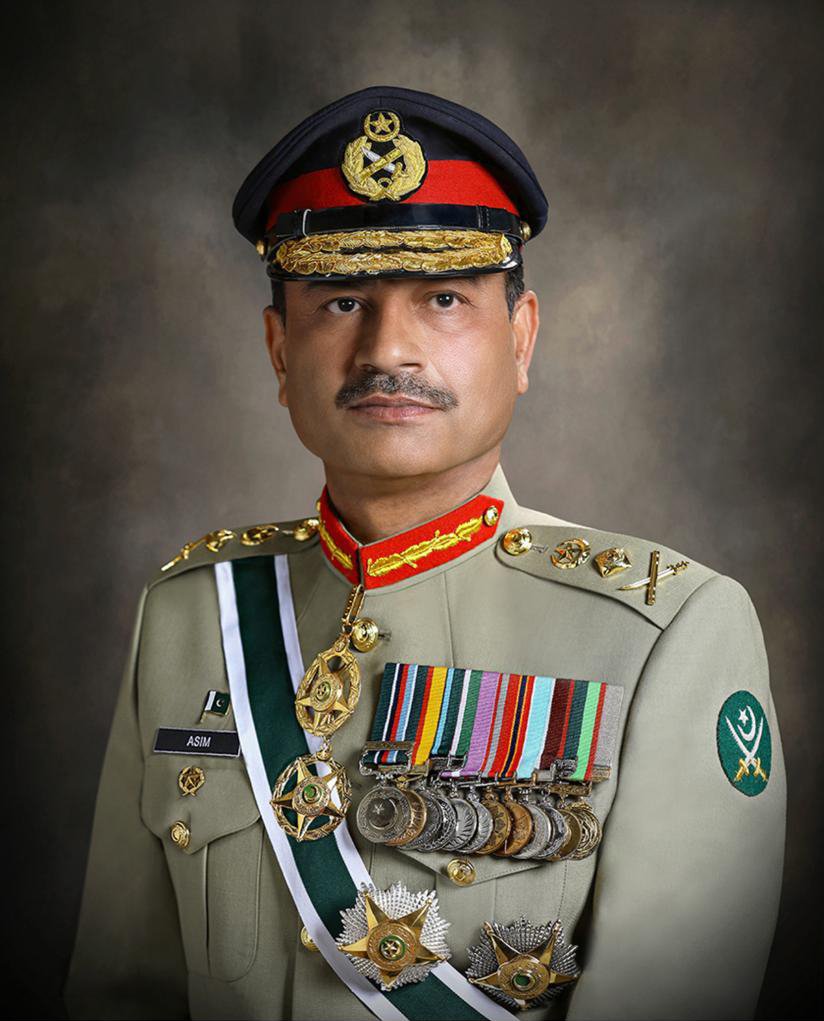
    The Chairman, Gen Asim Munir, opens the proceedings.

    Gen Munir ” Gentlemen, we are meeting today to discuss the prevailing political situation in our country, particularly when it has taken such an ugly turn. I would request you gentleman to speak freely, and suggest what course of action should the army adopt ”

    Lt Gen X  ” Sir, may I have permission to speak ”

    Gen Munir ” Certainly X, say whatever you have in mind ”.
    Lt Gen X ” Sir, I may be pardoned for using strong language, and I want to make it clear that I am not in any way aligned with any political party, but some of the recent utterances of Mr Imran Khan, head of the PTI, about the army are highly objectionable and just not acceptable to anyone with self respect.

     I have discussed this matter with many of the participants in this meeting, and also with several other army officers, who are in agreement with me, and have asked me to be their spokesperson here.

    Mr Imran Khan has made false, baseless, and malicious statements publicly that Maj Gen Faisal Naseer of the ISI twice tried to get him murdered. He has also alleged that Gen Naseer was involved in the brutal killing of TV anchor Arshad Sharif in Kenya, and has said that Gen Naseer stripped Senator Azam Swati naked, and inflicted severe torture on him.

    Sir, we all know Gen Naseer, who has the highest character, and he would never do things like these. We regard allegations against him as allegations against all officers of the Pakistan army. If we do not do anything about this it means we admit being murderers ”

    Lt Gen Y ” Mr Imran Khan has also attacked our former chief Gen Bajwa and accused him of hiring former Pakistani ambassador to the US, Hussain Haqqaani, to lobby against him there ”

    Lt Gen Z ” Mr Khan has also claimed that then military establishment was in contact with the Pakistan Muslim League-Nawaz chief Nawaz Sharif to topple his government and the plot against him became clear following the removal of Lt Gen (retd.) Faiz Hameed as ISI chief in October 2021. He has alleged that Gen Bajwa was playing a double game, and he discovered later that even PTI’s members were being given different messages ”.

    Gen Munir ” Gentlemen, are you suggesting that we bump off Mr Khan ? I personally am not in favour of that ”Lt Gen X ” No sir, all we are suggesting is that Mr Khan be taken care of. Things cannot be allowed to continue like this. We too have our self respect. How long must we hang our heads in shame before the public ? ”

    Gen Munir ” O.K. I think we are all agreed on that. Mr Khan’s insults of Pakistan’s army have now crossed their limits. I suggest Lt.Gen X be made in charge of a task force to sort out Mr Khan ”Everyone agrees.

    Gen Munir  ” X, organise this task force as soon as you can, and take anyone from the army for this. There is already a NAB warrant for arrest of Imran Khan which we had covertly arranged for, but the police seems to be half hearted in executing it. Tell the head of the Rangers to do it within 48 hours. Tell him the army will not tolerate any excuses. 

    Also, tell the Chief Justice of Pakistan to order all judges not to release Imran Khan until the army permits. Tell him failure to do so will have very serious consequences for both him and any judge who orders Mr Khan”s release. 

    Anything further gentlemen ? ”

    No one replies.

    Gen Munir  ” Very well gentlemen, this meeting is closed ”

    Situation after Imran Khan’s arrest: Pakistan mein PTI officials ki dhadaadhad giraftariyan ho rahi hain. Pak fauj ne talwaar nikaal li hai. Ab maidan-e-jang se bhag jaane mein hi aqlmandi hai. Hindi nazm ‘Haldighati’ ka yeh misra yaad aata hai ”Tha shor maut se bacho bacho, talwaar chali talwaar chali”Work is said to be in progress to declare PTI a terrorist organisation. Having assiduously built up PTI from 1996, this moorkh Imran Khan has practically destroyed it within a few months by taking on the Pak army. To save their own skins, there will soon be a largescale exodus of PTI members from the party

    Disclaimer : “The views and opinions expressed here are those of the authors and do not necessarily reflect the official policy or position of the thenewscaravan.com

    Any content provided by our authors are of their opinion, and are not intended to malign any religion, ethnic group, club, organization, company, individual, or anyone or anything. The News Caravan values and welcomes diverse representations and opinions.”

  • Holding National and Provincial Assemblies elections together in Pakistan By Justice Katju

    Holding National and Provincial Assemblies elections together in Pakistan By Justice Katju

    In the present crisis in Pakistan, a demand has been raised, mainly by the ruling PDM leaders and its members, that elections to the National and Provincial Assemblies be held together. The Pakistan Senate has also passed a resolution to this effect. Is this demand valid ? I submit it is not.

    There is no provision in Pakistan’s Constitution that the National and Provincial Assembly elections must be held together.Apart from that, there is another problem in holding both elections together.

    Article 52 of Pakistan’s Constitution states :” The National Assembly shall, unless sooner dissolved, continue for a term of five years from the day of its first meeting and shall stand dissolved at the expiration of its term ”.

    Similarly Article 107 states :

    ” The Provincial Assembly shall, unless sooner dissolved, continue for a term of five years from the day of its first meeting and shall stand dissolved at the expiration of its term ”.Now suppose a Provincial Assembly, for some reason, is dissolved prematurely one year after its first meeting, but the National Assembly is not dissolved, and has yet to complete another 4 years. Will there be no Provincial Assembly for 4 years ? 

    Article 224(2) of Pakistan’s Constitution states :

    ”  When the National Assembly or a Provincial Assembly is dissolved, a general election to the Assembly shall be held within a period of ninety days after the dissolution, and the results of the election shall be declared not later than fourteen days after the conclusion of the polls ”.

    This provision is very clear, and it makes it obvious that both National and Provincial Assembly elections cannot be held together, where either the National or the Provincial Assembly was dissolved prematurely.

    The Punjab Provincial Assembly was dissolved prematurely on 14th January 2023, and hence in view of Article 224(2) elections to it had to be held by 14th April, and they could not be validly postponed to the time when the National Assembly completes its term in August, and elections are to be held  for it in October.

    I submit that for meeting the demand for holding elections simultaneously, the Constitution has to be amended, and until that is done, the demand is not tenable.

  • Jisko samjha tha khameera woh bhasaaku nikla By Justice Katju

    Jisko samjha tha khameera woh bhasaaku nikla By Justice Katju

    On 4th April the Pakistan Supreme Court boldly passed an order fixing 14th May as the date for holding elections to the Punjab Assembly, 

    However, thereafter an application was filled by the Defence Ministry for changing the date, citing security and financial reasons, and praying that elections should be held simultaneously for the National and Provincial Assemblies.

    This application, which was heard yesterday, 19th April, should have been dismissed in 5 minutes by the Court, as it was clearly frivolous and specious, but instead it was unnecessarily heard the whole day, during which the Court behaved like a village panchayat, mediation centre, or a jirga ( as in Afghanistan ) and delivered homilies and lectures, advising the political parties to sit together and try to come to an agreement about the date for the elections.

    After its boldness shown on 4th April, this pusillanimous behaviour of the Court was deeply disappointing. 

    The Court should have simply asked the Attorney General whether the PDM Govt will comply with the order of the Court of 4th April and release the funds for the elections, and on receiving no clear cut, or an evasive reply, as it happened, 

    should have sacked the Govt, relying on the precedent of the dismissal by the Court of former PM Yusuf Raza Gilani for contempt of Court.

     Instead, the Court blew hot and cold together, by on the one hand hand saying that it cannot backtrack on its order fixing 14th May for the elections, and at the same time saying that the date can be changed if there is consensus among the political parties.

    But how can they say this ? Can the Court say that the Constitution must be followed,but it need not be followed if the parties agree ? That would be ex facie legally untenable and unacceptable.

    The case was adjourned for today, 20th April, but it is obvious this is just a waste of time.

    The PMLN has announced it will boycott the polls if held on 14th May

    Political parties have started arriving in the Court

    So another drama will be enacted in Court today.

    It seems the wind has gone out of the sails of the judges on the bench, who have lost their nerve, and now they are trying to wriggle out somehow from their earlier bold and correct stand.

     There is a proverb :” Jisko samjha tha khameera woh bhasaaku nikla ”

    I regret to say this, but this aptly describes the judges on the bench hearing the case.

  • What is going on in the Pakistan Supreme Court ?

    What is going on in the Pakistan Supreme Court ?

    I was a lawyer for 20 years in India and a Judge for another 20 years ( including being the Chief Justice of 3 High Courts and a Judge in the Indian Supreme Court ), but I can’t make head or tail of what is going on in the Pakistan Supreme Court.
    The hearing of the petition against postponement of elections of the Punjab and KP Assemblies is going on  for the last 4 days, and twice the bench hearing the case has been dissolved. The CJP Bandial has said there are no differences among the judges, a statement belied by the orders of his own colleagues, two of whom recused from the hearing..

    I simply can’t understand what is there for the Pakistan Supreme Court to decide ? The Pakistan Constitution says elections must be held within 90 days of dissolution of the Assembly. The Punjab and KP Assemblies had been dissolved on 18th January. Hence elections had to be held by 18th April, and so even the postponement of the elections to 30th April by the Election Commission of Pakistan was unconstitutional. How could they be further postponed to 8th October ? Is the ECP above the Pakistan Constitution ?

    I regret to say that the Pakistan Constitution is treated as a joke by the powers that be in Pakistan. For instance, whenever martial law was illegally imposed in Pakistan the Pakistan Supreme Court validated it by inventing an egregious, flagitious and disreputable ‘doctrine of necessity’, which is unknown to jurisprudence throughout the world.

    The performance of the present bench of the Court is equally debasing and scandalous. The Court should have dismissed the petition, as I would have done had I been on it, in 5 minutes by saying that elections must be held within 90 days of the dissolution of the Punjab and KP Assemblies. There was no scope for arguments about it. But instead a melodrama and comedy has been going on in the Court for the last 4 days, with lawyers, particularly those supporting the postponement of the elections, being permitted long winded arguments over a matter which really needed no arguments.

    I would often tell lawyers in my Court ” Be brief, be quick, and be off ”. The same should have been said by the Judges hearing the case.

    It seems evident that some elements in Pakistan are determined that no early elections be held in Punjab and KP, but what is particularly distressing is that the highest court in the land is, wittingly or unwittingly, collaborating in this egregious and deplorable design.

    Disclaimer : “The views and opinions expressed here are those of the authors and do not necessarily reflect the official policy or position of the thenewscaravan.com

    Any content provided by our authors are of their opinion, and are not intended to malign any religion, ethnic group, club, organization, company, individual, or anyone or anything. The News Caravan values and welcomes diverse representations and opinions.”

    Author : Justice Markandey Katju is former Chairman , Press Council of India and former Judge , Supreme Court of India.