Tag: Niti Aayog

  • Over 135 Million Indians Break Free from Multidimensional Poverty in Five Years, States NITI Aayog Report

    Over 135 Million Indians Break Free from Multidimensional Poverty in Five Years, States NITI Aayog Report

    A Remarkable Shift: National Multidimensional Poverty Index Reveals Progress

    India has achieved a significant milestone in its fight against poverty, as highlighted by the recently released National Multidimensional Poverty Index by NITI Aayog. The report reveals that more than 135 million Indians have successfully emerged from multidimensional poverty over the course of five years, demonstrating a noteworthy shift in the country’s socioeconomic landscape.

    Steady Decline: Proportion of Poor Drops from 24.8% to 14.9%

    NITI Aayog Report

    The comprehensive index shows a remarkable reduction in the proportion of the population living in poverty. Between 2015-16 and 2019-21, the percentage of the poor decreased from 24.8% to 14.9%, reflecting the collective efforts made to uplift millions of individuals from multidimensional deprivation.

    Uttar Pradesh Leads: Highest Number of Individuals Escaping Poverty

    Among the states that witnessed significant progress, Uttar Pradesh emerges at the forefront. With an impressive decline, the state saw 34.3 million people breaking free from poverty. Bihar and Madhya Pradesh closely follow, indicating the widespread impact of poverty reduction initiatives across different regions of the country.

    Analyzing the Dimensions: Health, Education, and Standard of Living

    The National Multidimensional Poverty Index evaluates progress across three equally weighted dimensions: health, education, and standard of living. It takes into account various indicators aligned with the Sustainable Development Goals, such as nutrition, child and adolescent mortality, maternal health, years of schooling, access to clean cooking fuel, sanitation, drinking water, electricity, housing, assets, and financial inclusion.

    Rural vs. Urban: Poverty Reduction Trends in Different Areas

    The analysis also reveals distinct trends in poverty reduction between rural and urban areas. The rural regions experienced a faster decline, with poverty rates decreasing from 32.5% to 19.2%. In contrast, urban areas witnessed a reduction from 8.65% to 5.27%. These findings underscore the need for tailored approaches to address the unique challenges faced by both settings.

    Significance for Sustainable Development: Achieving SDG Target 1.2 Ahead of Schedule

    The substantial progress made in reducing multidimensional poverty positions India ahead of schedule in achieving Sustainable Development Goal (SDG) Target 1.2. The MPI value has nearly halved from 0.117 to 0.066 between 2015-16 and 2019-21, accompanied by a reduction in the intensity of poverty from 47% to 44%. These positive outcomes indicate a positive trajectory towards eradicating poverty and improving the well-being of the population.

    Contributing Factors: Flagship Programs Making a Difference

    NITI Aayog attributes this remarkable progress to the implementation of flagship programs. Initiatives like the Poshan Abhiyan, which focuses on nutrition, and Anaemia Mukt Bharat, aimed at addressing anemia, have played a crucial role in reducing health-related deprivations. Additionally, the Swachh Bharat Mission and Jal Jeevan Mission have significantly improved access to sanitation and clean drinking water nationwide.

    Interlinked Initiatives: Collaborative Efforts Yield Positive Outcomes

    The reduction in multidimensional poverty reflects the success of interlinked initiatives such as Saubhagya, Pradhan Mantri Awas Yojana, Pradhan Mantri Jan Dhan Yojana, and Samagra Shiksha. These programs, addressing aspects like access to electricity, housing, financial inclusion, and quality education, have collectively contributed to the positive shift in India’s poverty landscape.

    As India continues its fight against poverty, the significant progress made in recent years serves as a testament to the collaborative efforts of government programs, NGOs, and the resilience of the Indian people. While challenges remain, the country is moving closer to realizing a more inclusive and prosperous future for all its citizens.

  • Lies, damned lies, and statistics

    Lies, damned lies, and statistics

    By Justice Katju

    An article by Justice Markandey Katju

     Discrepancies and Doubts Surrounding India's Poverty Statistics: A Deeper Look


    An article titled ‘Over 135 Million Indians Break Free from Multidimensional Poverty in Five Years, States NITI Aayog Report ‘ has been published in the portal thenewscaravan.com


    https://thenewscaravan.com/over-135-million-indians-break-free-from-multidimensional-poverty-in-five-years-states-niti-aayog-report/


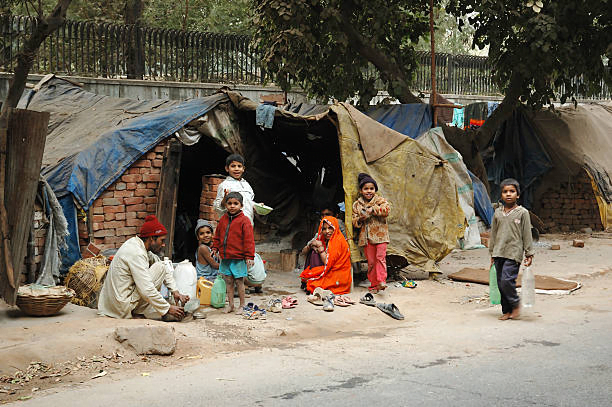
    There are two problems accepting this assertion (1) The source is Niti Aaayog, a Govt of India body, which would naturally like to paint a rosy picture of the country (2) Statistics in India are highly questionable, as it is very difficult to verify them.
    There is an aphorism of Mark Twain ” iies, damned lies, and statistics ”.


    https://www.forbes.com/sites/kalevleetaru/2017/02/02/lies-damned-lies-and-statistics-how-bad-statistics-are-feeding-fake-news/


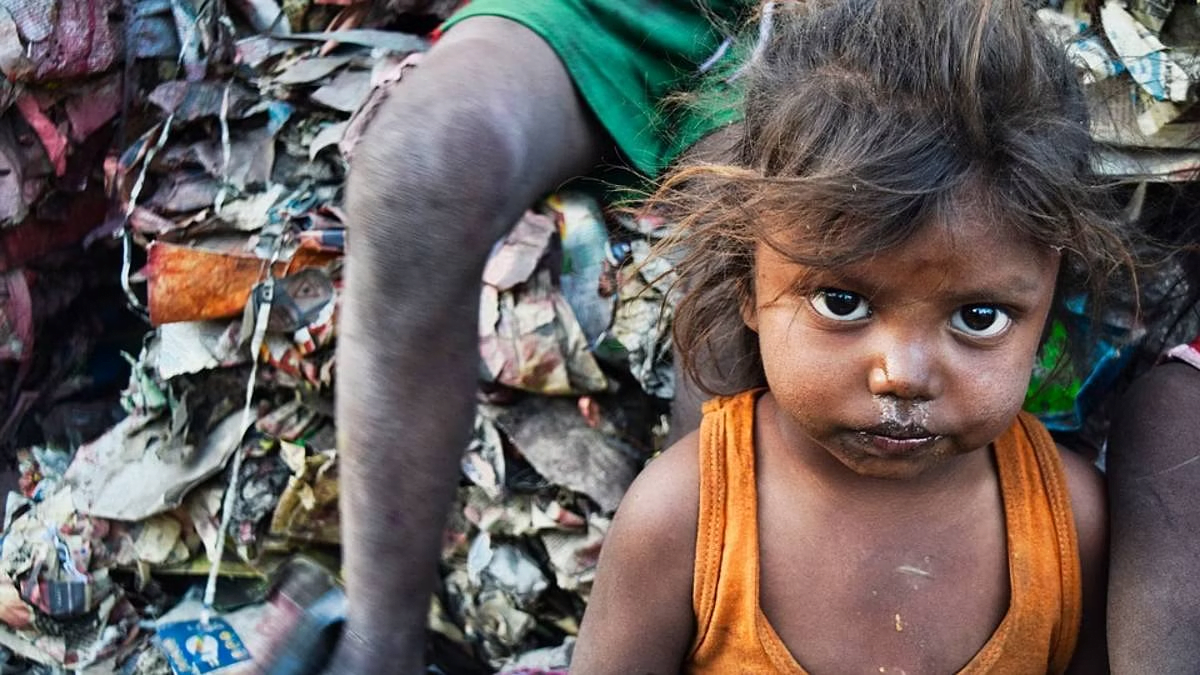
    This aphorism squarely applies to India, as it is a pretty disorganised country. Moreover it is so vast,, with 1400 million people, that it is difficult to get accurate figures, often even by a neutral unbiased body, what to say of a Government of India agency. How many people are poor, how many unemployed, how many lack proper healthcare and good education, etc are impossible to verify accurately, or even to conjecture.


    And what is the definition of poverty ? Since prices of essential commodities have steeply escalated in India in recent years, and incomes have not correspondingly increased ( assuming they have increased at all ), it is obvious that poverty has increased ( since incomes are relative to the price index ).

    india's Poverty by justice katju


    https://energy.economictimes.indiatimes.com/news/oil-and-gas/steep-rise-in-prices-of-essential-commodities-burning-a-hole-in-common-mans-pocket/96557653


    https://scroll.in/article/1023709/explained-how-the-prices-of-essentials-have-soared-in-india-over-the-past-decade


    Global Hunger Index, which is a reputed international agency reporting on world hunger, reported that half of Indian children are malnourished, wasted and/or stunted. India (which has a population of 1400 million ) has slipped from position number 101 to 107 in just one year ( 2021-2022 ) among the 121 countries surveyed by that international agency

    https://byjus.com/free-ias-prep/global-hunger-index/#:~:text=India%20ranks%20107th%20out%20of,countries%20covered%20in%20the%20GHI.

    Over 55% of our women are anaemic

    https://timesofindia.indiatimes.com/education/news/46-of-girls-under-15-anaemic-in-india-report/articleshow/89098690.cms

    Tens of millions of our young men and women are without jobs? If 100 class 4 ( peon or unskilled manual labour ) govt jobs are advertised, there are often several hundred thousand applicants, many of them having M.Sc M.A., or M.B.A. degrees ( some even Ph.D. ), engineers, etc.

    https://economictimes.indiatimes.com/news/politics-and-nation/over-93000-candidates-including-3700-phd-holders-apply-for-peon-job-in-up/articleshow/65604396.cms

    https://timesofindia.indiatimes.com/education/news/8-lakh-apply-for-4400-jobs-advertised-by-maharashtra-govt/articleshow/67911127.cms

    Proper healthcare and good education is almost non-existent for the masses. Private hospitals and clinics are too expensive for the masses, and the condition of the govt ones is terrible (to say the least ). Even the All India Instititute of Medical Sciences ), New Delhi ( AIIMS ), a premier Indian medical institute, looks like a railway station, with thousands of sick people waiting outside endlessly, and usually with perfunctory care, if any. The condition of most schools in India is terrible.

    It is sometimes claimed that GDP in India is growing, but no one asks who is getting the fruits of that growth, the Indian masses, or just a handful of big businessmen and international corporates ? The gap between rich and poor has widened in India, with a handful of big businessmen becoming richer ( often by illegal means ) while the poor get poorer ( because of escalating prices of food, etc ).

    Oxfam India’s report directly contradicts the report of Niti Aayog

    https://www.guwahatiplus.com/oxfam-india-highlights-widening-gap-between-indias-rich-and-poor#:~:text=GUWAHATI%3A%20A%20report%20by%20Oxfam,3%25%20of%20the%20country’s%20wealth.

    https://www.oxfam.org/en/india-extreme-inequality-numbers

    Other sources also contradict Niti Aayog’s claim.

    https://www.cnn.com/interactive/2017/10/world/i-on-india-income-gap/

    https://thewire.in/economy/india-world-inequality-report-poor-affluent-elite-progress

    https://www.bbc.com/news/world-asia-india-64286673

    https://www.news9live.com/opinion-blogs/rich-poor-gap-in-india-has-become-wider-in-terms-of-wealth-distribution-165312

    So whom is one to believe ? One’s mind boggles.