Tag: Markandey Katju

  • Validity of Imran Khan’s trial in jail

    Validity of Imran Khan’s trial in jail

    After former Prime Minister of Pakistan Imran Khan was ordered to be released  on bail in the toshakhana case by the Islamabad High Court he was rearrested in the cypher case, and will be tried in Attock jail where he has been incarcerated.

    The question is whether such a trial away from the public gaze is valid ? In my opinion it is not.

    The Greek philosopher Plato in his book ‘Laws’ said that justice is not a private affair, and so citizens should be allowed to attend court proceedings. Similarly, the German philosopher Hegel said that judicial proceedings must be public, since the aim of the court is to do justice, which is universal.

     A Constitutional Bench of Indian Supreme Court in Naresh Shridhar Mirajkar & Ors Vs State of Maharashtra (1966 3 SCR 744)  laid down the importance of open court proceedings.

     The Court held :

    “It is well-settled that in general, all cases brought before the Courts, whether civil, criminal, or others, must be heard in open court. Public trial in open court is undoubtedly essential for the healthy, objective and fair administration of justice. Trial held subject to the public scrutiny and gaze acts as a check against judicial caprice or vagaries, and serves as a powerful instrument for creating confidence of the public in the fairness, objectivity, and impartiality of the administration of justice.

     Public confidence in the administration of justice is of such great significance that there can be no two opinions on the broad proposition that in discharging their functions as judicial tribunals, Courts must generally hear causes in open and must permit public admission to the courtroom.”  

    Similarly, in Chief Election Commissioner vs MR Vijaykumar ( 2021 ) the Indian Supreme Court observed :

    ” Courts must be open both in the physical and metaphorical sense. Save and except for in-camera proceedings in an exceptional category of cases, such as cases involving child sexual abuse or matrimonial proceedings bearing on matters of marital privacy, our legal system is founded on the principle that open access to courts is essential to safeguard valuable Constitutional freedoms.

     The concept of an open court requires that information relating to a court proceeding must be available in the public domain. Citizens have a right to know about what transpires in the course of judicial proceedings. The dialogue in a court indicates the manner in which a judicial proceeding is structured. Oral arguments are postulated on an open exchange of ideas. It is through such an exchange that legal arguments are tested and analyzed. Arguments addressed before the court, the response of opposing counsel, and issues raised by the court, are matters on which citizens have a legitimate right to be informed. An open court proceeding ensures that the judicial process is subject to public scrutiny, which is crucial to maintaining transparency and accountability. In the functioning of democratic institutions this is crucial to establish the public faith in them ”.

    In R. vs Socialist Workers Printers and Publishers, exparte Attorney General ( 1974 ) Lord Widgery observed :

    ” The great virtue of having the public in court courts is that discipline which the presence of the public imposes upon the court itself. When the court is full of  members of the public it is bound to have the effect that everybody is careful about what they do, and there is a disciplinary effect on the court which would be totally lacking if there were no critical members of the public or press present. When one has an order for trial in camera, all the public and press are evicted at one fell swoop, and the entire supervision by the public is gone. Public scrutiny fosters confidence in the process. Public discussion and criticism works as a restraint on the conduct of a judge ”.

    Similarly, in Naresh Shridhar Mirajkar vs State of Maharashtra ( 1966 ) CJI Hidayatullah observed :

    ” Hearing in open court of causes is of the utmost importance for maintaining confidence of the public in the impartial administration of justice: it operates as a wholesome check upon judicial behaviour as well as upon the conduct of the contending parties and their witnesses. An open court serves an educational purpose as well. The court becomes a platform for citizens to know how the practical application of the law impacts upon their rights ”.

    The virtues of openness were discussed by the Supreme Court of Canada in A.G. Nova Scotia v. MacIntyre which quoted eighteenth-century philosopher Jeremy Bentham:” In the darkness of secrecy, sinister interest and evil in every shape have full swing. Only in proportion as publicity has place can any of the checks applicable to judicial injustice operate. Where there is no publicity there is no justice. Publicity is the very soul of justice. It is the keenest spur to exertion and the surest of all guards against improbity. It keeps the judge himself while trying under trial ”. 

    According to the Supreme Court of Canada in Vancouver Sun (Re), the open court principle enhances the public’s confidence in the justice system:” Public access to the courts guarantees the integrity of judicial processes by demonstrating that justice is administered in a non-arbitrary manner, according to the rule of law. Openness is necessary to maintain the independence and impartiality of courts. It is integral to public confidence in the justice system and the public’s understanding of the administration of justice. Moreover, openness is a principal component of the legitimacy of the judicial process and why the parties and the public at large abide by the decisions of courts ”.

    The open court principle has long been recognized as a cornerstone of the common law in the UK. In its 1913 decision in Scott v. Scott, the House of Lords noted the right of public access to the courts is “one of principle, turning not on convenience, but on necessity”. Viscount Haldane L.C., noted that “Justice is not a cloistered virtue”. 

    In the 1936 decision of Ambard v. Attorney-General for Trinidad and Tobago, Lord Atkin noted “Publicity is the very soul of justice. It is the keenest spur to exertion, and the surest of all guards against improbity.”[

    Thus, all over the world it is accepted that court proceedings should ordinarily be open to the public gaze, except in some cases like sexual offences, child molestation and matrimonial proceedings. Unlike hearings by bureaucrats of public grievances, which can be in their offices behind closed doors, ordinarily all court proceedings must therefore be open to public view.

    Section 352 of the Code of Criminal Procedure, Pakistan states :

    ”   Courts to be open: The place in which any Criminal Court is held for the purpose of inquiring into or trying any offence shall be deemed an open Court, to which the public generally may have access, so far as the same can conveniently contain them: 

    Provided that the Presiding Judge or Magistrate may, if he thinks fit, order at any stage of any inquiry into or trial of, any particular case, that the public generally, or any particular person, shall not have access to, or be or remain in, the room or building used by the Court ”.

    Thus this provision accepts the general principle that criminal trials should ordinarily be in open court, to which the public should have access.

    The exceptions may be, as mentioned above, in cases of sexual offences, child molestation, matrimonial cases etc but Imran Khan’s cypher case does not fall in these exceptional categories. 

    An exception cannot override the general rule. If it was felt that a huge crowd will come if Imran Khan is tried in open court causing law and order problems, security arrangements could surely have been made. Also restriction on the number of people who are granted entry into the courtroom could have been placed, as in the Eichmann trial of 1961 in Israel in which too the people wanting to attend was far in excess of the seating capacity in the courtroom, and hence lots were drawn, and only those who got tickets were granted entry.

    It is obvious that the real reason for not holding the trial in open court was the fear in the minds of the Pakistan Establishment that public viewing of the brave man whose spirit could not be crushed by his incarceration would further increase his popularity. However, to my mind this cannot be said to be a valid reason for not holding the trial in open court

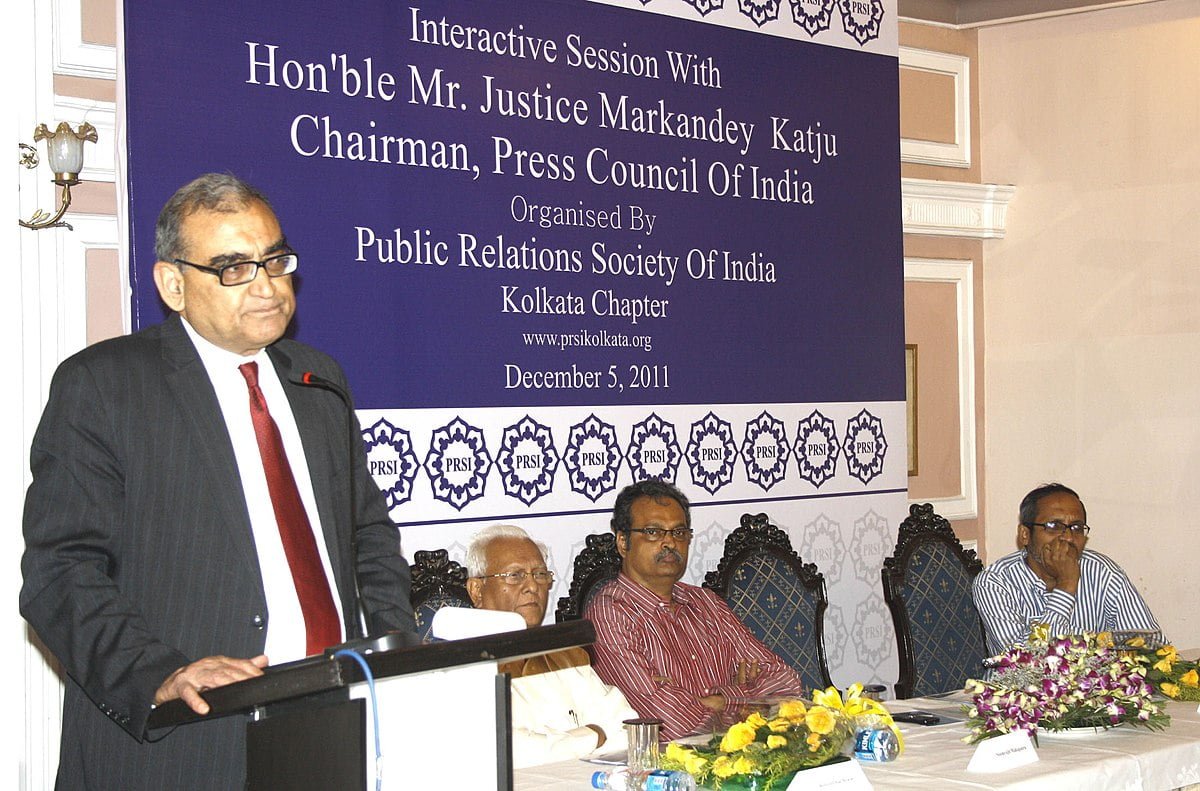
  • Justice Katju: A dinner at JNU

    Justice Katju: A dinner at JNU

    Many years back I was invited by the then Vice Chancellor of JNU ( Jawaharlal Nehru University ), Delhi for dinner along with about a dozen Professors of the University

    Prof Sopory, VC of JNU from 2011-2016
    Prof Sopory, VC of JNU from 2011-2016 Who Invited Justice Markandey Katju.

    I was told that the budget of the University Grants Commission was Rs.41,000 crore in the Five Year plan, and the annual budget of JNU alone was about Rs.200 crores.

    In my usual blunt way I said, “How has this benefited the Indian masses? It seems that the huge funds being ploughed into higher education in India are for the benefit of foreign countries and to give you Professors huge salaries and fine houses to live in rather than to benefit the Indian people.”

    This sparked off a lively debate. Some of the professors tried to refute my statement, but I stuck to my guns.

    I said that most of the money spent on education in India went to the institutes of higher education like the IITs and universities, and very little money was spent on primary and middle schools, particularly in rural areas, where the foundation of education was laid. There are very few facilities such as proper teachers, proper classrooms, proper seats, electricity, libraries, etc in these primary or middle schools, whereas the institutes of higher education are given huge funds and have very good facilities, state-of-the-art campuses, air-conditioning, etc.

    I then gave a few examples to prove what I said:

    1. I once went to a village about 40 km from Allahabad (my native city) to meet a farmer friend of mine, with whom I had studied at Allahabad University.

    At his home I met one of his sons who had passed class seven and promoted to class eight in his high school in the village. I asked him to bring his class 7 mathematics book and solve a few simple problems. He could not do so. I wondered how he had been promoted to class 8 when he could not solve simple class 7 problems. I then solved those simple problems, and asked him to attempt the other problems in the lesson. He was obviously an intelligent boy, because having learnt how to solve the simple problems, he proceeded to solve the rest.

    At this I asked him, “Did your teacher not teach you all this?” He replied, “Master Sahib thekedari karne lage hain, aur doosre master sahib class lene aate naheen hai” (the earlier teacher has become a contractor, and the next teacher does not come to take classes”).

    2. I went to a reputed intermediate college in Allahabad and was told that in a section in Class 11 there are 250 students. I was shocked. Under the rules there should not be more than 40 students in a class. What teaching can possibly be done in a class of 250 students? I also learnt that in some of the sections at Allahabad University there are over 300 students, and there is not even place for a student to sit.

    In view of this, much of the real education takes place in private coaching institutes, or at the residence of teachers who make much more money there than in their institutions. As a result, these teachers evince little interest in teaching in their institutions, and a student who does not join the coaching (paying high fees) finds it difficult to pass.

    3. In many of the staffrooms of our educational institutions, teachers, instead of discussing academic matters, often discuss petty politics, often of a casteist nature or matters pertaining to their service conditions. Senior professors often get appointed or promoted people of their own caste, whether they have merit or not.

    4. Teachers are often appointed not on merit but on extraneous considerations, like political connection, caste, etc. They are appointed on contract basis. In some States, “shikshamitra” who have been appointed on a salary of Rs.1,500 a month have no degree or teachers’ training qualification.

    5. The level of intellect of many teachers is low, ( like the teachers in Dickens’ novels ) because many of them have not been appointed on merit but on extraneous considerations.

    To give an example, when I was a judge of Allahabad High Court I had a case relating to a service matter of a mathematics lecturer in a university in Uttar Pradesh. Since the teacher was present in court I asked him how much one divided by zero is equal to. He replied, “Infinity.” I told him that his answer was incorrect, and it was evident that he was not even fit to be a teacher in an intermediate college. I wondered how had he become a university lecturer.

    In mathematics it is impermissible to divide by zero. Hence anything divided by zero is known as an indeterminate number, not infinity. To explain, suppose 1/0=x. Then x multiplied by 0 should be 1. But we know that anything multiplied by 0 becomes 0. Hence it is impermissible to divide by 0.

    Infinity is not a number at all. It simply means that there is no end to numbers as they are increased. It can be accurately expressed as follows :

    Limit of 1/x, x tending to 0, is infinity.

    I gave them many more such examples, and told the senior academicians at JNU that huge amounts of money of the Indian taxpayer is spent on the IITs and other institutes of higher education, but the graduates of these institutes often take up jobs in foreign countries. This results in brain drain. Thus, while Indians pay taxes which go towards educating our bright students, the benefit of their education goes to foreign countries and not to the Indian people. These foreign countries benefit because higher education in their own countries is very expensive, so they have to pay only a fraction of that amount to get our bright young students.

    I posed them another question: the test of every system is one simple question. Does it raise the standard of living of the masses or not? I said that the huge amount of money being spent on higher education in India is not raising the standard of living of the Indian masses because about 75 per cent of Indians continue to live in dire poverty. Also, there is massive unemployment, malnutrition, skyrocketing prices, huge problems of health care, housing, etc.

    Apart from that, I asked them how many Nobel laureates have our universities and other institutes of higher education produced ? Hardly any.

    In many American universities one will find half a dozen Nobel laureates in their faculties.

    Australia, which has a population of about 25 million, has 180 academicians who have an F.R.S. (Fellow of the Royal Society), while India, with a population of 1,200 million, has only about 20. So what are the achievements of our scientists and other intellectuals? It is only when they go to the United States or Canada or Europe that they achieve anything.

    What is the quality of research work done by our academicians in institutes of higher learning? Unfortunately it is abysmally low and does not benefit the Indian people. Their publications ( often plagiarism ), are mostly poor, and done only to improve their CVs in order to get jobs.

    The purpose of education is to help raise the standard of living of the masses. But in India it seems that its purpose is to raise the standard of living of a handful of people who get jobs as govt servants, corporate employees, teachers, etc

    I must say to the credit of the professors assembled there that they did not take any of my remarks personally. I told them that I had no intention to insult them but was only voicing my genuine grievance about the defects in the educational system in India, and the need to make it beneficial to the masses.

    At the end it was agreed that my views required serious debate

  • Live-in Relationships: Justice Katju

    Live-in Relationships: Justice Katju


    A BJP MP Ajay Pratap Singh has called for banning live-in relationships


    https://indianexpress.com/article/india/bjp-mp-calls-for-ban-on-live-in-relationships-8862180/


    https://thewire.in/rights/bjp-mp-calls-for-ban-on-live-in-relationships-to-protect-women


    His argument is that though the Indian Supreme Court has said that such relationships are not illegal, it has also said that they are not approved by the majority in Indian society.


    Thus in Khushboo vs Kanniammal the Supreme Court observed :
    ” While it is true that the mainstream view in our society is that sexual contact should take place only between marital partners, there is no statutory offence that takes place when adults willingly engage in sexual relations outside the marital setting, with the exception of `adultery’ as defined under Section 497 IPC ”.


    Mr Singh says that what is regarded unethical should also be made illegal.
    Now there are two objections to Mr Singh’s demand :

    1. Morality and law are not co-extensive. There are many things which may be regarded as immoral, e.g. insulting or speaking rudely to elders, but which are not necessarily illegal.
      Moreover, the criteria of unethical acts also keep changing with passage of time. Something which may have been regarded immoral in the past may not be so regarded today, and something regarded immoral today may not be so regarded in the future. For example, at one time in India one’s life partner was chosen by one ‘s parents, but today love marriages are common, and quite acceptable in a large section of our society
      In Western countries live-in relationships are very common, and no one frowns on them. It is true that the majority in India disapproves such relationships, and regards them as immoral. But a minority find nothing objectionable in them, since it is the couple’s private affair, and no one has any business or right to interfere with it.
      With the passage of time the minority view may become the majority one.
    2. Live-in relationship is part of the right to privacy, which has been declared to be part of the right to life and liberty guaranteed by Article 21 of the Constitution vide Justice K.S. Puttuswamy vs Union of India, 2017.
      In this 9 Judge Bench decision Justice Chandrachud ( as he then was ), who wrote the plurality decision, observed :
      ” Privacy postulates the reservation of a private space for the individual, described as the right to be let alone. The concept is founded on the autonomy of the individual. The ability of an individual to make choices lies at the core of the human personality. The notion of privacy enables the individual to assert and control the human element which is inseparable from the personality of the individual. The inviolable nature of the human personality is manifested in the ability to make decisions on matters intimate to human life ”.
      The Court was of the view that sexual orientation was an aspect of privacy guaranteed by Article 21 of the Constitution.
      Thus a couple has a fundamental right under Article 21 of the Constitution to have a live-in relationship, and even Parliament cannot ban such relationships, since no law made by Parliament can override the Constitution.
      Only a Constitutional amendment can ban live-in relationships, but clearly the ruling party does not have the numbers for that in the Rajya Sabha
  • A meeting with some Americans: Justice Katju

    A meeting with some Americans: Justice Katju


    Some time back a group of 15 or 16 Americans came from USA to India. They were all white, half of them women.
    Someone organised a meeting between them and me in Delhi.


    When we sat together I mentioned in my address to them that the condition of blacks of USA was fairly good.


    At this most of them vociferously disagreed ( though they were themselves all white ).
    I then asked them ” How many of you have read Mark Twain’s novel ‘Adventures of Huckleberry Finn ? ”.


    This is a truly great American novel, and Ernest Hemingway, himself a great novelist, often said that all American literature begins with that single novel. However it was at one time banned in some places in America because of its alleged racist slurs, particularly use of the word ‘nigger’ which is today regarded very offensive in America.


    Only a few of the group said that they had read it.
    I then related a scene in that novel when there is an explosion, and Aunt Sally ( a middle aged character in the novel ) said on hearing about it ” My God ! Was anyone hurt ? ”. To which Huck replies ” No Ma’am, only a nigger killed ”.


    Having said that I said that this indicates that before the Civil War in America ( 1861-65 ) which abolished slavery blacks were not even regarded humans, and could be even killed by their masters.


    Their degradation continued for a long time even after the Civil War, with Black Codes, Jim Crow laws, frequent lynchings of blacks by the Ku Klux Klan and others, denial of voting rights, etc.

    Though legally emancipated from slavery, most of them remained very poor and with little education.
    Racial segregation was legally upheld by the infamous decision of the US Supreme Court in Plessy vs Ferguson (1896) which laid down the devious principle of ‘separate but equal’.

    As a result there was racial apartheid in America ( as in South Africa ), and there were segregated schools, hotels, restaurants, hospitals, cinema theatres, public transportation in buses and trains, housing locations, swimming pools, sports, etc. In many states ( particularly in the south ) interracial marriages were legally prohibited ( as in Nazi Germany ), and in many areas blacks were not allowed to enter, e.g. in many beaches in Florida.
    However, in 1954 the US Supreme Court in Brown vs Board of Education reversed the Plessy verdict, and a few years later laws made by the US Congress like the Civil Rights Act, 1964, the Voting Rights Act, 1965, the Fair Housing Act, 1968 etc considerably improved the conditions of blacks in America.


    Now blacks cannot be legally discriminated against, and many of them have risen to high positions e.g. Barack Obama who became President of USA in 2009 and was reelected in 2012. Many blacks are today highly educated. Many are in the US Congress, many are successful businessmen and businesswomen, scientists, doctors, engineers, artists etc
    Of course there is still some prejudice and discrimination against blacks in some areas in USA, particularly in the south, and a few incidents from time to time like killing of a black man, George Floyd by a white policeman in Minneapolis, Minnesota in 2020 which resulted in widespread protests in America, even by whites.


    However, I asked the group I was addressing, can there be any doubt that the condition of blacks has considerably improved since the days of slavery ? Today a black man who has sex with or marries a white girl will not be killed, unlike in India where for a dalit boy to fall in love with or marrying a non-dalit girl is often inviting a death sentence ( called honour killing )


    Having said all this, I told the group that like people of all countries, Americans too have made mistakes in the past. But they later realised their mistakes, and rectified them. There is no doubt that America is a great country, and Americans have made great contributions in science, technology, and other fields which have benefited the whole world.


    Having concluded my speech, I said ” Long live America ! ”.

  • Urdu shaayari should be banned in Pakistan : Justice Katju

    Urdu shaayari should be banned in Pakistan : Justice Katju


    By Justice Katju
    Urdu shaayari should be banned as being unislamic in the Islamic Republic of Pakistan.
    What else should be done to a poetry whose greatest poet Mirza Ghalib writes :
    ” Masjid ke zer-e-saaya kharaabaat chaahiye ”
    i.e.
    ” Below a mosque there should be a wine shop ”
    ( Wine is haraam or strictly prohibited in Islam ).
    Or consider this sher of Ghalib :
    ” Imaan mjujhe roke hai jo khainche hai mujhe kufr
    Kaaba mere peeche hai, kaleesa mere aage ”
    i.e.
    ” Faith is holding me back, disbelief in islam is pulling me forward
    I have turned my back on the Kaaba, and looking towards the church ”
    Or this sher by Ghalib :
    ” Kahaan maikhaane ka darwaza Ghalib aur kahaan waiz
    Par itna jaante hain kal vo jaata tha ki hum nikle ”
    i.e.
    ” A pub and a religious scholar are poles apart
    But yesterday when I entered the pub he was leaving ”
    Consider this sher ( couplet ) of Mir Taqi Mir, another great Urdu poet :
    ” Mir ke deen-o-mazhab ko poochte kya ho, unne to
    Kashka kheencha dair mein baitha kab ka tark Islam kiya ”.
    i.e.
    ” Why do you ask Mir’s religion ?
    He has put on a tika ( mark on the forehead which Hindus make ), and sat in a
    Hindu temple
    And renounced Islam long ago ”
    And what about this sher of the Urdu poet Aatish :
    ” Fasl-e-bahaar aayi piyo sufiyon sharaab
    Bas ho chuki namaaz musalla uthaiye ”
    i.e.
    ” The crop of spring has come, so Sufis drink wine
    The namaaz is over, pick up the prayer carpet ( and drink ) ”
    Another Urdu poet Sahir Ludhianvi writes :
    ” Aqaayad waham hai, mazhab khyaal-e-khaam hai saaqi
    Azal se zehn-e-insaan basta-e-auhaam hai saaqi ”
    i.e.
    ” Faiths are illusions, and religion is false imagination
    Since eternity man’s mind has been bound by superstitions ”.
    Numerous such examples of apostasy and blasphemy in Urdu poetry by well known poets can be given.
    So I urge the Pakistan Parliament and Govt to quickly ban Urdu mushairas and study of Urdu poetry in educational institutions, and burn all Urdu poetry books, and declare all those who read or recite Urdu poetry as ‘murtads’ deserving the punishment meted out to murtads in Islam

  • Yeh Hindustan ke Sultanate ki ladai hai: Justice Katju

    Yeh Hindustan ke Sultanate ki ladai hai: Justice Katju


    There is a lot of speculation about the 2024 Indian Lok Sabha elections, particularly after 26 Opposition parties came together in Bangalore ( 17 parties had earlier met in Patna ), and they are scheduled to meet again in Mumbai


    https://indianexpress.com/article/political-pulse/meet-the-26-where-the-opposition-parties-meeting-in-bengaluru-stand-8846893/


    https://www.youtube.com/watch?v=bCbAvb0kCGY


    https://www.youtube.com/watch?v=eod3do8ZmYE


    They have decided to call their united front India, and will set up a coordination committee and a secretariat


    https://www.youtube.com/watch?v=W-eJpQL7LLM


    https://www.livemint.com/politics/news/upa-gets-new-name-next-opposition-meeting-to-be-held-in-mumbai-highlights-from-26-party-meet-in-bengaluru-11689677932935.html


    In my opinion this endeavour will not be able to stop BJP from coming to power again in 2024. Let me give my reasons.


    To understand indian politics one must know that Indian society is still largely semi-feudal, as is evident from the rampant casteism and communalism prevalent here. This is why Indian politics runs largely on the basis of caste and religious vote banks.


    Before the BJP came to power in the centre in 2014 most ‘secular’parties like the Congress, Samajwadi Party ( in UP ), Rashtriya Janta Dal ( in Bihar ), etc which were at one time in power, relied on some caste vote bank plus the Muslim vote bank ( which is fairly large in North india ).


    On the other hand, the BJP knows it will not get Muslim votes. So their best tactic is to unite the 80% Hindu population of India, claiming to be their representative.
    Now Hindu upper castes ( i.e. Brahmins, Rajputs, Banias, Bhumihars, etc ) , who are altogether about 18-20% in UP, Bihar, etc are, and will remain, solidly with the BJP.
    But to win elections 18-20% votes is not enough. One needs another chunk of about 15% votes. How does one get that ? That is the big problem for the BJP.


    In UP they solved the problem earlier by winning over a sizeable chunk of the OBC votes. In UP, OBCs ( which comprise of several castes e,.g. Yadavs, Kurmis, Lodhs, etc ) are about 40% of the total population. Of these, the largest caste is Yadavs, who are about 9 or 10%. The feeling among many non Yadav OBCs was that Samajwadi Party cares only for Yadavs, and gives them plum postings of DM, SP, daroga, etc when coming to power in UP, while ignoring non Yadav OBCs.


    This grievance was capitalised by the BJP, which managed to win over many non Yadav OBCs like Kurmis, Kushwahas etc ( a Kushwaha is Dy CM in UP ) They also won over a section of the Scheduled Castes ( though the majority remained with Mayawati’s BSP ).


    However, whereas the upper caste Hindus will remain with the BJP, come what may, that cannot be said about the section of OBCs and SCs who earlier voted for the BJP. They are at best unreliable partners, and may shift their votes.
    To ensure that this done not happen, and these OBCs and SCs remain securely in the BJP camp, some well organised communal riots and communal incidents a few months before the elections, to consolidate the 80% Hindus, will surely be engineered, and will do the trick. In a communally surcharged atmosphere Hindus of all castes tend to unite as against the Muslims, as it happened during the Ram Mandir agitation.
    Another possible tactic may be to have a short war with Pakistan, or a ‘surgical strike’. This too may surcharge the emotions of Hindus, to make them vote en bloc for the BJP.


    One thing can be said for sure. The BJP will not easily give up power, and for this use all saam, daam, dand, bhed possible.
    Yeh Hindustan ki sultanate ki ladai hai. Rivers of blood have flown over centuries in the fights to capture the Delhi throne. Something similar can be expected in 2024
    .

  • Muslims, stop behaving like fools 

    Muslims, stop behaving like fools 

    By Justice Katju 

    Some mischievous person burnt a copy of the Holy Quran before a mosque in Sweden, and almost the whole Muslim world is raising a hue and cry over it. Many Muslims have protested against this desecration of the Holy Quran. In Baghdad the Swedish embassy was stormed, Iran has decided not to send an ambassador to Sweden, and in Pakistan and elsewhere there have been massive demonstrations.

    https://www.indiatoday.in/world/video/watch-quran-burning-in-sweden-triggers-fiery-protests-across-muslim-nations-2402364-2023-07-05#:~:text=The%20act%20of%20burning%20the,Pakistan%20among%20other%20Muslim%20nations.

    https://www.firstpost.com/explainers/from-iraq-to-saudi-arabia-how-muslim-countries-reacted-to-quran-burning-in-sweden-12805852.html

    Muslims should realize that such acts like burning the Quran or portraying cartoons of the Holy Prophet are deliberate acts by miscreants to provoke a reaction, and by reacting to them Muslims are stupidly giving publicity to such rascals, which is exactly what they want, and on which they survive. 

    In my opinion the best way to react to these provocations is by not reacting at all, in other words, by ignoring them.

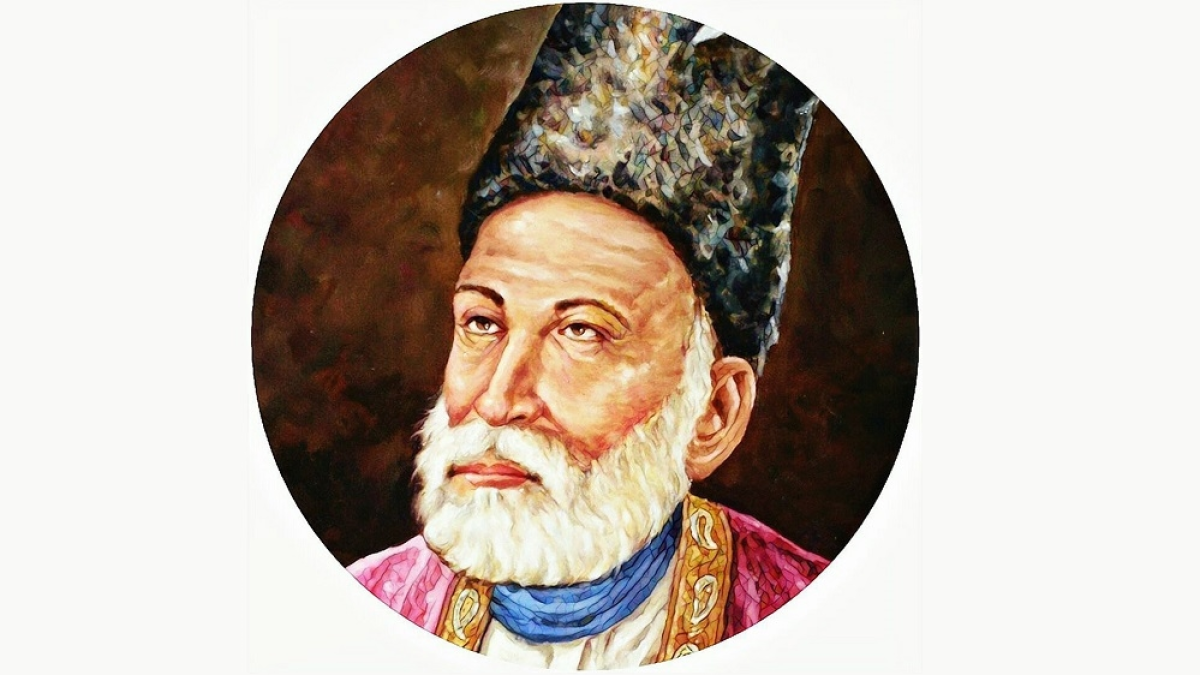
    When the great Urdu poet Mirza Ghalib was asked why he did not respond to malicious criticism he replied “ If a donkey kicks you, do you kick it back ? “.

    There are millions of copies of Quran in the world. Anyone can go to a shop and buy one. Once he buys it, it becomes his property, and he is entitled to do anything with it, even tear or burn it. Why should Muslims get so worked up about it ?  By reacting to such mischief Muslims only play into the hands of such rascals.

    When the Babri Masjid was demolished ,there was a huge uproar by Muslims all over the world, who held demonstrations and all manner of protests against this outrage. At that time a prominent social activist and leader of Kerala, Panakkad Sayyid Muhammad Ali Shihab Thangal,  appealed to Muslims to remain silent, and told Muslims to protect Hindu temples which may be attacked by agitated Muslims.

    Today a Keralite post graduate student of English Literature, Sayyid Muhammad Hafiz, met me in Calicut ( where I have come for a conference ). I asked him what should be the reaction of Muslims to burning of the Quran in Sweden ? He replied that it should be ignored. I told him that is the correct answer, and he has displayed the maturity and wisdom which all Muslims in the world should cultivate and develop, instead of behaving like fools. 

    Sayyid Muhammad Hafiz  told me that in the Holy Quran there is a an ayath “Turn away from the ignorant”.(Surah A-araf-Ayat 199). Sayyid Hafiz also told me many incidents when the Holy Prophet was abused, taunted and jeered, but  he did not react, but kept silent. A woman would throw garbage on him, but he would only smile. One day when she fell ill, the Prophet went to enquire of her health.

    Muslims should follow the example of the Prophet, and stop behaving like fools 

  • IMF Grants $3 Billion Loan to Pakistan: A Cause for Celebration or Concern?

    IMF Grants $3 Billion Loan to Pakistan: A Cause for Celebration or Concern?

    On knowing of the IMF decision to grant a 3 billion dollars loan to Pakistan, the Prime Minister of Pakistan Shahabaz Sharif said repeatedly in a press conference ” Alhamdulillah ”.


    https://www.youtube.com/watch?v=-fdu9qnr-08&pp=ygUXc2hhaGJheiBzaGFyaWYgaW1mIGxvYW4%3D


    Many Pakistanis are gloating over this loan by the IMF as if it is the end to all their economic woes. The Pakistan stock exchange has rallied, currency exchange rate has improved, and there is an atmosphere of glee and revelry in some quarters.
    However there is another, darker side to the picture.

    It is a loan, not a gift. Pakistan already has external debt of over 126 billion dollars, to which this will be added.


    https://www.orfonline.org/research/debt-ad-infinitum-pakistans-macroeconomic-catastrophe/#:~:text=During%20April%2DJune%202023%2C%20the,burden%20is%20US%24%204.5%20billion


    https://economictimes.indiatimes.com/news/international/world-news/pakistan-needs-to-pay-usd-77-5-billion-in-external-debt-risk-of-default-real-says-us-think-tank/articleshow/99323626.cms.


    This loan will cover less than the cost of Pakistan’s monthly import bill.

    Loans carry interest, and this fresh loan will add to the debt servicing bill, which is already very high ( about 4.5 billion dollars )

    https://www.brecorder.com/news/40247035
    https://tribune.com.pk/story/2406940/cost-of-debt-servicing-up-to-rs318tr

    The iMF reportedly set very strict conditions before granting this loan.
    For instance,
    (a) the heavy subsidy on electricity supplied will be removed. This will raise electricity rates to historic heights, affecting everyone in Pakistan.
    https://www.youtube.com/watch?v=PhFXSw0MZMs&pp=ygUmcHJpY2VzIGluIHBha2lzdGFuIHJpc2UgYWZ0ZXIgaW1mIGxvYW4%3D
    (b) Duty on petroleum products will sharply increase
    (c) There will be 220 billion dollars worth additional taxes
    (d) Prices of essential commodities like food will rise


    This reminds one of the situation in France before the French Revolution of 1789. The situation then was that the French monarchy was heavily in debt to foreign bankers ( mainly Dutch ). This was because of the heavy cost of supporting the American War of Independence (1775-81), and even more because of the great deficit between government income and expenditure ( primarily because, by feudal convention, the nobility could not be taxed ).


    https://courses.lumenlearning.com/suny-hccc-worldhistory2/chapter/efforts-at-financial-reform/


    The French Finance Minister, Necker, who dared not tax the powerful nobles, took loans from foreign banks to pay the huge debt. His successor, Calonne, went even further. He initiated huge public spending, thinking this will impress the creditors into granting more loans.


    However, this plan backfired, because the Dutch and other foreign bankers realised they would never recover the loans ( what to say of interest ), and so a time came when they outright refused to grant any further loans. This led to the calling of the Estates General in 1789 and the French Revolution, in which many heads rolled.


    I am afraid the Shahbaz Sharif Govt is heading in the same directiion. Can a government run forever on foreign loans ? The people of Pakistan are already suffering terribly in the economic crisis which has gripped the country. Taxing them further, directly or indirectly, as the IMF loan in essence requires, may well break their backs

  • Imran Khan has become an idea which has gripped the masses in Pakistan

    Imran Khan has become an idea which has gripped the masses in Pakistan


    Justice Markandey Katju

    When Imran Khan became Prime Minister of Pakistan in 2018, and for quite some thereafter too, I was very critical of him.


    He had taken help of religious extremists during his election campaign, and had given PTI tickets to dubious ‘electables’.


    Soon after becoming PM he had dismissed the renowned economist Atif Mian from the Pakistan Economic Advisory Council, just because he was an Ahmadi.


    He had suppressed the press, even getting arrested and imprisoned Mir Shakil-ur-Rehman, owner of Jang Group, in a 34 year old land case, because of some criticism by his newspaper.


    https://www.dawn.com/news/1540500


    He constantly spoke of Madina ki Riyasat. Speaking of it a few times would be okay, but making a habit of it is going too far.


    However, all that is in the past, and we should see the present.


    Presently Imran Khan is leading the democratic forces in Pakistan, against the fascist reign of terror unleashed by the corrupt Pakistan Establishment.

    He is basically an honest man, who has repeatedly said he will continue living in Pakistan, and not fly abroad like the corrupt Nawaz Sharif ( who was convicted by the Pakistan Supreme Court ). He has no assets abroad, unlike PDM leaders, whose names appear in the Panama Papers, and other credible material. In my opinion all honest and right thinking people everywhere should support him.
    Earlier, 70% Pakistanis supported him ( according to opinion polls in Pakistan and the bye elections results ). But now the number has drastically risen, and may be between 80 and 90%. This means over 200 million out of the 240 million Pakistanis support Imran Khan.


    Imran Khan is now no longer a person, he has become an idea in Pakistan, representing honesty, truth,and commitment to the people’s welfare.. Even if he is imprisoned or physically eliminated, the idea will live on, like the ghost of Caesar after his assassination.

  • My interview by Moeed Pirzada By Justice Katju

    My interview by Moeed Pirzada By Justice Katju


    A few days back I was interviewed by the eminent Pakistani journalist Moeed Pirzada, who is presently in Washington, DC.

    The interview was about an article I had earlier written on the eminent physicist Dr Parvev Hoodbhoy.


    https://indicanews.com/2023/06/13/justice-markandey-katju-on-dr-pervez-hoodbhoys-superficial-understanding/


    The interview is given below ( it has some problems of sound )


    https://www.youtube.com/watch?v=PmoDYaAIbNI&pp=ygUda2F0anUgbW9lZWQgZGl2aXNpb24gb2YgaW5kaWE%3D


    Moeed then posted this video on Youtube


    https://www.youtube.com/watch?v=NFTir4eYUtg&pp=ygUda2F0anUgbW9lZWQgZGl2aXNpb24gb2YgaW5kaWE%3D


    Moeed says my knowledge of history is superficial because I am not a historian, history teacher, or expert.


    Now it is true I was never a professor of history. But by my study of history for over 6 decades I can claim to have more knowledge of history than most of these professors. T

    o the latter history was only the means of getting a job. To me it was, and is, a passion. Knowledge in one’s head is what is relevant, not high sounding titles and designations. Moeed obviously does not understand this.


    In his last video Moeed does not deal at length with my central thesis ( that developed nations will oppose tooth and nail rapid industrialisation of India, because if we become a modern highly industrialised country, like China, with our cheap labour we will undersell the developed countries, causing their industries to collapse, and millions thrown out of employment ).


    Moeed asks questions like why did India and Bangladesh not unite after 1971, since I claim India, Pakistan and Bangladesh are really one country, only temporarily divided. He says that ‘ansuni” was done by me to that question.


    The truth is I had replied to the question by saying that the Western powers opposed unification, since it is their policy to keep us divided.

    This is because they do not want India to emerge as a united modern industrial giant, and with its cheap labour to undersell them, thus causing their industries to collapse, and millions thrown out of employment.


    Moeed talks of Stanley Wolpert’s book ‘Tryst with Destiny’, and suggests that Partition was because of differences between Nehru and Jinnah.
    This again is a superficial understanding.

    The British were determined to partition India before they leave, and the Cabinet Mission was just a decoy. In fact this was a favourite technique of theirs.

    Thus, they also partitioned on religious lines Ireland, Palestine, Cyprus, and even prepared to partition Turkey by the Treaty of Sevres, 1920, but prevented by Mustafa Kemal ” etc before giving them formal independence.

    This they did to keep the communities fighting each other even after the Britishers leave, so that Britishers can still dominate the region, or at least safeguard their economic interests.


    I may be having more interviews on this or other topics with Moeed, whom I respect, as he is a brave man