New Delhi: Supreme Court judge Justice KM Joseph on Monday said he is a Christian but still very fond of Hinduism.
Justice Joseph, who was heading a bench that also comprised Justice BV Nagarathna, made the remark while hearing a petition seeking the formation of a renaming commission for restoring the “original” names of ancient, cultural and religious places in the country that have been “renamed” by barbaric invaders.
“I am a Christian but still I am very fond of Hinduism, which is a great religion and should not be belittled. The heights which Hinduism has reached and is mentioned in Upanishads, Vedas and Bhagavad Gita is unequal in any system. Hinduism has reached great heights in metaphysics. We should be proud of this great religion and not belittle it.
“We should be proud of our greatness and our greatness makes us magnanimous. I am trying to study it. You should also read the book of Dr S Radhakrishnan on the philosophies of Hinduism. In Kerala, there were several rajas who had donated land for churches and other religious places,” he said.
The bench, which dismissed the public interest litigation (PIL) matter filed by advocate Ashwini Upadhyay, said India is a secular country and it cannot be a prisoner of the past.
Justice Joseph pointed out that religious worship has nothing to do with the naming of roads and said Mughal emperor Akbar had tried to create harmony between various communities.
The announcement yesterday that Queensland police now consider the Wieambilla attacks to be a “religiously motivated terror attack” connected to a Christian extremist ideology should constitute a seismic shift in our understanding of the terror threat in Australia.
Middle-aged, middle-class Christian Australians, two of them teachers, ambushed and killed two police officers and a neighbour. This should and must and trigger debate about new directions in extremism in Australia and equally, should stimulate a wider introspection about the increase in polarisation and extremism in Australia.
Christian extremist ideology
It is important to try to unpack, even with the still limited information available, what we do know about “Christian extremist ideology”. The deputy commissioner of Queensland police, Tracey Linford, indicated that evidence pointed towards the attackers subscribing “to what we would call a broad Christian fundamentalist belief system, known as premillennialism”, which drove a direct attack upon police.
Premillennialism may be understood as a form of evangelical Christian belief centred on the second coming of Christ. It has a number of offshoots grounded in different interpretations of text, primarily, but not limited to the Book of Revelation. A period of immense tribulation, defined by corruption and great evil (which some adherents believe is currently taking place) will precede the “rapture”, for many evangelicals, a terrifying event whereby the good will ascend into heaven and the evil be brutally punished. This will be followed, based on their belief, by a 1,000-year reign of Christ defined by peace and salvation.
The deputy commissioner of Queensland police, Tracey Linford, speaks to the media in Brisbane on Thursday. Photograph: Darren England/AAP
While some evangelical Christians view the end times as a metaphor for personal salvation, others believe it’s a literal, physical event for which they must prepare.
In this context, for those who believe the end of days is imminent and who have become radicalised, those deemed evil are considered legitimate targets for extreme violence and terror. Perversely, as with terrorists of other religious backgrounds, they believe this is justified in the name of God. In this particular case, Linford said the attackers saw police as “monsters and demons”.
Moving beyond the ‘other’
New formations of violent extremism are brewing away in the post-Covid context. Rapidly increasing economic inequalities, catastrophic natural disasters, vaccination mandates are some key contributing factors and the rise of social media and encrypted messaging enable the free flow of extremist content.
The Australian far right, which inspired the white Australian Christchurch terrorist Brenton Tarrant, continue to be active in efforts to recruit. Sovereign citizens, anti-vaxxers and conspiracy theorists are also highly active, while misogynists such as Andrew Tate continue to spread their messaging through social media.
These are internationally linked movements that are tied in to racist, antisemitic, anti-democratic and anti-women worldviews. Militant forms of Christianity such as those that have emerged in the United States (for example Christian nationalism) will also be taking hold among some Australians. Notwithstanding the diversity of these movements, many adherents are white, middle-aged Australian men and women.
This requires a deep reflection by both intelligence communities and society in general. The focus on the “other” as the primary source of violent extremism and terror threats is not only outdated, but dangerous. The US is already abundantly aware of this. Queensland police on Thursday referred explicitly to the Waco massacre in Texas in 1993, but we can look at the Unabomber, Timothy McVeigh, Ku Klux Klan and many other terror attacks carried out by white Americans. In 2019, at the height of the Trump years, Congress found that “white supremacists and other far-right extremists are the most significant domestic terrorism threat facing the United States”. We saw the result of this at the insurrection at the Capital building on 6 January 2021.
Implicit biases and the need for condemnation
From an investigative standpoint, implicit bias can cloud judgment when examining data. Two of the three Wieambilla attackers were accomplished teachers and educational leaders and all of them identified as Christian. Yet it is known that they had at the very least attempted to accumulate firearms. One of the attackers is reported to have posted direct threats to police and in one video, made posts online referring to himself as a “barbarian”, “savage” and “extremist”. In a similar vein, reports of concerns to police about the Christchurch terrorist’s statements and actions were overlooked by authorities in both Australia and New Zealand.
The even bigger problem, however, is the complete failure to have any sort of reflection or introspection about these attacks from within the community to which they belong. For two decades, Australian Muslims have been required to answer for the actions of an extremist fringe. Yet in the aftermath of the horrific Christchurch attack in which the attacker made reference to the Crusades and historic battles between Christians and Muslims, and now a double police murder, there has been very little, if any, introspection by the wider Australian community, including politicians and Christian leaders alike. There must be a collective acknowledgement and condemnation of the violent potential of intolerance, racism, hate and extremism in all its forms, including that which has become pervasive in our political discourse, media, religious institutions and wider society.
[ad_2]
#talk #extremism #links #Christian #fundamentalism #Josh #Roose
( With inputs from : www.theguardian.com )
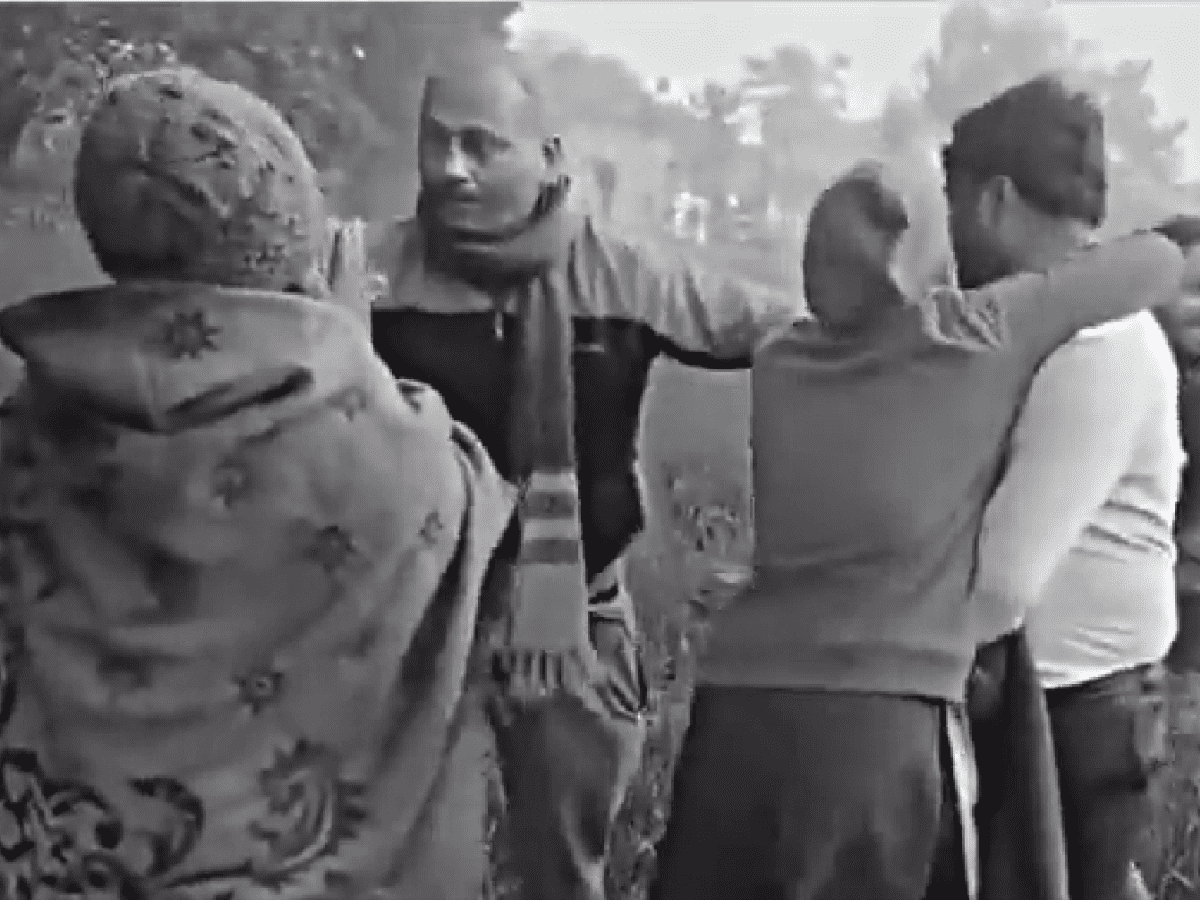
Women pleads with Bajrang Dal worker to stop harassing their male relative. The incident happened in Jandaha in Bihar
A Christian family was harassed and beaten up reportedly by workers of the right-wing organisation Bajrang Dal who alleged that the family was into religious conversions.
The video is from Jandaha, Vaishali district in Bihar.
A Bajrang Dal worker recorded the video saying, “Hamare Ram see jo khilwad karega, usko hum barbaad kar denge (We will destroy anyone who messes with our Lord Ram).”
As other Bajrang Dal men try to assault the man, the women of the family, including an elderly person, try to rescue him.
At one point the person recording the video says, “Pehle is budiya ko maaro (hit this old woman).”
While the women try their best to save their male relative from the clutches of Bajrang Dal, they hardly succeed.
While the younger woman pleads to stop, the man recording the video says, “Dharam parvarthan kaahe karva rahe ho (Why are you conducting religious conversions).”
The whole episode takes place in a village flanked by others including a young child.
Video:
Siasat.com spoke to officials of Jandaha police station who termed it as a false incident. “There has been no complaint filed so far. It is completely baseless information,” a police officer said.