Blog

  • Bengaluru private transporters on strike

    Bengaluru private transporters on strike

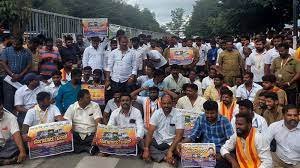
    The private transport operations strike in Bengaluru on September 11 had several demands made by various associations representing bus, auto, and taxi drivers. Here’s a summary of the demands and the government’s responses:

    Auto-rickshaw drivers and owners’ associations:

    1. Demand: Auto-rickshaw drivers demanded a grant of Rs 10,000 every month. Government Response: The government did not agree to this demand, citing the high financial burden.
    2. Demand: Establishment of a corporation for unorganized commercial drivers and a transport development corporation. Government Response: Discussions were held with the chief minister and state congress president to establish these corporations.
    3. Demand: Launch a new cab aggregator app from the government’s end. Government Response: Meetings were held with e-governance officials, and a technical report was sought.
    4. Demand: Open the government’s subsidized Indira canteen near Kempegowda International Airport for cab drivers to access lower-cost food. Government Response: The BBMP chief commissioner was informed to implement this suggestion.

    Taxi owners and drivers association:

    1. Demand: Implement a nine percent lifetime tax on vehicles worth Rs 15-20 lakh. Government Response: The government refused this demand.
    2. Demand: Provide subsidies to drivers for buying new cars. Government Response: The government stated that there are existing schemes from companies that provide such subsidies, and they will consider specific suggestions.
    3. Demand: Provide student scholarships for drivers’ children. Government Response: The Vidya Nidhi scheme was implemented, providing funds for yellow board drivers’ children after they pass Class 10.

    Bus owners’ and drivers’ demands:

    1. Demand: Withdraw the Shakthi scheme (free bus travel for women) and remove road tax. Government Response: The government did not agree to this demand.
    2. Demand: Reduce the entrance fee of buses in Kalasipalyam private bus stand. Government Response: A decision was made to collect Rs 50 per day for buses entering the Kalasipalyam bus stand.
    3. Demand: Reduce road tax on tourist and contract carriage buses. Government Response: The chief minister will take a decision on this issue.

    Cases pending before the court:

    1. Demand: Ban Rapido, a bike taxi aggregator in the state. Government Response: The government discussed the issue with the advocate general and plans to revoke the court’s stay order.
    2. Demand: Ban companies like Ola and Uber, which are collecting more than 5 percent commission in Karnataka. Government Response: The matter is pending before the court, and cab aggregators are allowed to collect a 10 percent commission according to an interim court order.
    3. Demand: Take action against Ola and Uber for charging exorbitant prices to customers. Government Response: The government asked cab aggregators to submit a report to implement uniform pricing for all vehicles.

    Other demands:

    1. Demand: Direct police to initiate action against finance companies and banks that illegally seize vehicles. Government Response: The government said that specific suggestions related to finance matters would be looked into.
    2. Demand: Take action against Zomato and Swiggy delivery executives for traffic violations. Government Response: More than 50 cases have been registered against Swiggy and Zomato for violating the Motor Vehicle Act.
    3. Demand: Ban e-rickshaws’ direct registrations by Rapido, Ola, Uber, and other online platforms. Government Response: The government suggested that those with e-rickshaw driving licenses can be given vehicle registrations
  • Heavy rain, water-logging throw life out of gear in Lucknow

    Heavy rain, water-logging throw life out of gear in Lucknow

    The heavy rain in Lucknow on Thursday had significant consequences, including:

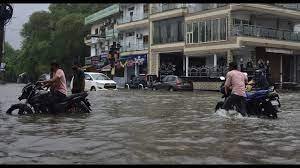
    1. Waterlogging: The rain caused severe waterlogging in various areas of Lucknow, including Triveni Nagar, Faizullaganj, Mahanagar, Aliganj, Alambagh, Barha, Hazratganj, Charbagh, Moulviganj, and Balaganj. This led to traffic disruptions and inconvenience for residents.
    2. Power Disruptions: The heavy rain resulted in power disruptions in several areas, including VVIP areas like Dilkusha Colony, Gomti Nagar, and Mahanagar. Approximately 40 sub-stations of Lucknow Electricity Supply Administration (LESA) had to shut down due to water entering these facilities. This led to power outages that affected students attending online classes and employees working from home.
    3. Communication Issues: Residents complained that they couldn’t reach the LESA sub-station in Chander Nagar, and their calls to the 1912 helpline of LESA were not answered, adding to their frustration.
    4. Tree Uprooting: In several places, trees fell on power lines, causing further disruption to electricity supply.
    5. Municipal Corporation Office Affected: Water also entered the premises of the Lucknow Municipal Corporation’s office, affecting its operations.
    6. Transportation Disruptions: The rain and waterlogging affected transportation in the city. Pedestrians were seen wading through knee-deep water in some areas, and dug-up roads in Qaiserbagh added to the commuting woes.
    7. Flights Affected: Due to the inclement weather and low visibility, three flights to Lucknow were diverted to other destinations, and international flights to and from Sharjah were canceled.
    8. Exorbitant Cab Fares: Cab services were disrupted due to the bad weather, and some drivers charged exorbitant fares, making it difficult for people to travel. Food delivery apps also charged hefty amounts for food delivery.
    9. Infrastructure Issues: Ongoing infrastructure projects, such as the smart city project in the Old City area, contributed to the waterlogging problems. Roads that were dug up for these projects compounded the situation.
    10. Public Complaints: Residents expressed their concerns about the open nullah overflowing into homes, posing a risk of infection.

    Efforts were being made to address these issues, with LESA teams working to remove uprooted trees and flush out water from sub-stations, and the municipal commissioner directing officials to attend to complaints. However, the incident highlighted the challenges posed by heavy rain in the city and exposed shortcomings in infrastructure and services

  • 16-year-old NEET student dies by suicide in Rajasthan’s Kota, 24th case this year

    16-year-old NEET student dies by suicide in Rajasthan’s Kota, 24th case this year

    The tragic suicide of the 16-year-old student preparing for the National Eligibility cum Entrance Test (NEET) in Kota, Rajasthan, is a deeply distressing incident that highlights the immense pressure that students in India face when preparing for competitive exams. It is important to acknowledge that there is no single solution to address this issue, as it involves various complex factors. Here are some key points from the provided information:

    1. High Pressure Environment: Kota is known as India’s coaching hub, where students from across the country come to prepare for competitive exams like NEET and JEE. The intense competition and the pressure to succeed can be overwhelming for many students.
    2. Rising Suicide Cases: The report mentions a significant increase in suicide cases among students in Kota, with a particularly alarming rise in recent years. These suicides are a tragic consequence of the extreme stress students face.
    3. Lack of Suicide Notes: In many of these cases, no suicide notes were found, and there were no apparent behavioral changes reported by the students’ roommates and parents. This makes it difficult to predict or prevent such incidents.
    4. Government Response: The government has taken some steps in response to these incidents. This includes suspending tests at coaching centers for two months, forming a committee to suggest measures, and appointing psychiatrists to assess the psychological health of students.
    5. Committee Suggestions: The committee has suggested various measures, including conducting fun activities to reduce stress, sharing motivational videos online, and considering reducing the syllabus to ease the pressure on students.
    6. Mental Health Support: Installing spring-loaded fans in hostels and PG accommodations is a symbolic gesture to provide mental support and security to students. However, addressing mental health issues requires a more comprehensive approach.
    7. Police Involvement: The police have set up a students’ cell to interact with students and monitor their well-being across coaching centers.

    It is essential for all stakeholders, including educational institutions, parents, policymakers, and society as a whole, to work together to address this pressing issue. Some possible actions to consider include:

    • Mental Health Support: Providing accessible and affordable mental health services for students, including counseling and therapy.
    • Reducing Academic Pressure: Reevaluating the intense competition and pressure associated with these exams and considering alternative methods of evaluation.
    • Parental and Peer Support: Encouraging parents and peers to provide emotional support to students and be vigilant about any signs of distress.
    • Awareness and Education: Raising awareness about the importance of mental health and stress management, both among students and their families.
    • Balanced Approach: Promoting a balanced approach to education that emphasizes personal development, well-being, and interests outside of academics.

    It is crucial to recognize that these are complex issues, and solutions may require a multi-faceted and sustained effort to address the mental health and well-being of students in the context of competitive exams.

  • Maratha quota stir simmers as talks with Shinde govt fail again

    Maratha quota stir simmers as talks with Shinde govt fail again

    Manoj Jarange-Patil, a Maratha quota activist, has been on an indefinite hunger strike demanding that Marathas from the Marathwada region be extended reservation under the Other Backward Classes (OBC) category by declaring them as Kunbis, a sub-caste. He is requesting that the government drop the requirement for Marathas to provide evidence of genealogy for obtaining Kunbi caste certificates. He is also demanding the strict implementation of a 2004 order of the state government that mandates the issuance of Kunbi certificates to Marathas.

    Earlier in the week, the Maharashtra government issued an order stating that Kunbi caste certificates would be provided to Marathas from the central Maharashtra region who possess Nizam-era documents recognizing them as Kunbis. However, Jarange-Patil is not satisfied with this and is insisting on a blanket reservation for all Marathas as Kunbis or strict adherence to the 2004 order.

    Jarange-Patil has also criticized the government for not fulfilling its promises regarding the withdrawal of cases against protesters from the Maratha community and taking strict action against police officers responsible for lathi-charge on agitators on September 1.

    A delegation of five members from the Maratha community met with Chief Minister Eknath Shinde and other officials to discuss the demands. Balasaheb Sarate-Patil, a member of the delegation, mentioned that the government has shown a positive attitude towards issuing Kunbi certificates to deserving community members and suggested that demanding blanket reservation for all Marathas may not be feasible or legal. However, they support Jarange’s demand that the government should not insist on Nizam-era documents and should accept later documents as evidence for OBC certificates.

    The government mediator, Arjun Khotkar, stated that the government has conceded all the demands that were possible, and the process for the withdrawal of police cases has already started. However, he also mentioned that granting blanket reservation to the community may not be legally viable.

    It appears that there is ongoing dialogue and negotiation between the Maratha community representatives and the government to resolve the issue and end the hunger strike

  • Tamil Nadu students refuse to eat breakfast prepared by Dalit cook

    Tamil Nadu students refuse to eat breakfast prepared by Dalit cook

    The incident you’ve described took place in Tamil Nadu’s Karur district, where 15 students of a school refused to eat food provided under the state’s breakfast scheme because it was cooked by a Dalit woman. The district collector, T Prabhu Shankar, visited the school in response to this caste-based discrimination and warned the parents of these students about potential legal action under the Prevention of Atrocities against the SC/ST Act.

    The parents of these Hindu students expressed their concern about the food being prepared by Sumathi, a Dalit woman, and stated that their children would not consume the food until she was allowed to continue cooking. They even mentioned that they were willing to take their children out of school if necessary.

    The breakfast scheme, which offers free breakfast to a large number of students in the state’s primary government schools, was inaugurated by Chief Minister MK Stalin on August 25. Out of the 30 students studying at the Velan Chettiyar Panchayat Union School in Karur district, 15 initially refused to participate in the scheme. Efforts were made by the district administration, including requests from the Planning Director, Srinivasan, to persuade the parents to allow their children to have breakfast as part of the scheme. Only two students eventually started eating the food from August 30 onwards, while the issue remained unresolved.

    The district administration issued a statement emphasizing that no such segregation would be tolerated and urged all parents to allow their children to partake in the morning meal

  • Chandrababu Naidu arrest September 9 updates | Arrested TDP chief shifted to SIT office after medical tests

    Chandrababu Naidu arrest September 9 updates | Arrested TDP chief shifted to SIT office after medical tests

    States that former Chief Minister N. Chandrababu Naidu of Andhra Pradesh is accused of being the “principal conspirator” in a ₹371 crore skill development scam. According to the Andhra Pradesh Crime Investigation Department (CID), Naidu is identified as “accused no 1” in this case, and they allege that a government order was issued under his instructions with the intent of causing wrongful loss to the public exchequer while benefiting private individuals.

    Naidu was arrested by the CID in connection with this scam, and the investigation suggests that private entities spent ₹371 crore on six skill development clusters, with these funds primarily coming from the Government of Andhra Pradesh and the AP Skill Development Center.

    The CID claims that Naidu, along with the Telugu Desam Party (TDP), is alleged to be a beneficiary of the misappropriated funds. They accuse Naidu of being the mastermind behind a scheme that transferred public funds to private entities through shell companies, leading to losses for the public treasury and private gains. The report also mentions the need for further examination of how the misappropriated funds were used, including cash holdings with individuals like Vikas Khanvilkar.

    In response to these allegations, Naidu reportedly expressed his willingness to sacrifice his life to safeguard the interests of the Telugu people. Please note that this information is based on the report provided, and it’s essential to consider all sides of the story and await the legal process and investigation outcomes for a complete understanding of the situation

  • Journalist arrested in Bengal; BJP, Congress allege gag on press freedom

    Journalist arrested in Bengal; BJP, Congress allege gag on press freedom

    The arrest of journalist Debmalya Bagchi in West Bengal has sparked controversy and accusations of stifling press freedom. Here’s a summary of the key points from the provided article:

    1. Debmalya Bagchi, a 33-year-old correspondent with Anandabazar Patrika in Paschim Medinipur district, was arrested on September 6 on charges of assaulting a Dalit woman neighbor.
    2. The opposition in West Bengal has accused the ruling Trinamool Congress (TMC) government of trying to silence Bagchi because of his reports on the hooch menace in the area.
    3. Bagchi’s recent articles had focused on illegal hooch (illicit liquor) trading taking place in the Sanjoal residential area within the Kharagpur Municipality. The TMC had won the civic body elections in this area the previous year.
    4. Bagchi and another individual named Basanti Das were charged under various sections of the Indian Penal Code (IPC), including wrongful restraint, voluntarily causing hurt, assault with intent to disrobe, and uttering words or gestures intended to insult the modesty of a woman. Additionally, they were charged under the Scheduled Caste & Scheduled Tribe (Prevention of Atrocities) Act based on a complaint lodged by the woman on August 28.
    5. The woman alleged that Bagchi had verbally abused her and her in-laws with casteist remarks on August 27, and when they protested, he physically assaulted her.
    6. Bagchi’s articles in Anandabazar Patrika had highlighted the issue of illegal hooch business in the Kharagpur Municipality area. He reported on the indifference of the local administration toward the problem and how individuals involved in the hooch trade had targeted those who complained against them.
    7. Adhir Ranjan Chowdhury, a Congress MP and the party’s leader in Lok Sabha, wrote a letter to Chief Minister Mamata Banerjee, requesting her intervention to protect press freedom and democracy.
    8. Suvendu Adhikari, BJP MLA and Leader of Opposition in the Assembly, claimed he was not allowed to meet Bagchi in jail and criticized the situation in West Bengal under what he referred to as Mamata Banerjee’s authoritarian regime.
    9. The editor of Anandabazar Patrika declined to comment on the matter, and the Trinamool Congress spokesperson Kunal Ghosh also refrained from making a statement.

    The situation appears to be politically charged, with opposition parties and journalists expressing concerns about press freedom and the motive behind Bagchi’s arrest, while the TMC government and its representatives have not commented on the issue.

  • Nipah alert sounded in Kerala after two ‘unnatural’ deaths: All you need to know

    Nipah alert sounded in Kerala after two ‘unnatural’ deaths: All you need to know

    The Nipah virus outbreak in South India, particularly in Kozhikode and Malappuram districts, has been a cause for concern in recent years. Here is some key information about the Nipah virus and the outbreaks in Kerala:

    1. Outbreaks in Kozhikode: The first-ever Nipah virus outbreak in South India was reported in Kozhikode and Malappuram districts in 2018. These districts have witnessed subsequent outbreaks, including one in 2021.
    2. Transmission: The Nipah virus is a zoonotic illness, meaning it is transmitted from animals to humans. Fruit bats are known to be natural reservoirs of the virus. Transmission can also occur through contaminated food or direct human-to-human contact. It can be a fatal virus for both humans and animals.
    3. Symptoms: Nipah virus infection can lead to a range of symptoms, including acute respiratory illness and fatal encephalitis. Some of the symptoms are similar to COVID-19, such as cough, sore throat, dizziness, muscle pain, tiredness, and fever. Other severe symptoms can include headache, stiff neck, sensitivity to light, mental confusion, and seizures.
    4. Precautions: While there is no specific treatment for Nipah virus infection, individuals can take precautions to reduce the risk of transmission. These precautions include avoiding eating fruits that have fallen on the ground (as bats may have contaminated them), avoiding contact with sick pigs, and taking measures to keep fruit bats away from living areas.
    5. Economic Impact: The Nipah virus can also infect animals like pigs, causing severe disease and economic losses for farmers.
    6. Health Alert: In response to the suspected cases in Kozhikode, the Kerala health department issued a health alert to monitor and contain the situation. Prompt identification and isolation of cases are crucial in preventing the spread of the virus.

    It’s important to note that information regarding infectious diseases like Nipah virus is subject to change, and public health authorities, including the World Health Organization (WHO), provide updated guidance and information to protect public health when such outbreaks occur.

  • Manipur: Three Members of Kuki-Zo Community Killed in Fresh Violence

    Manipur: Three Members of Kuki-Zo Community Killed in Fresh Violence

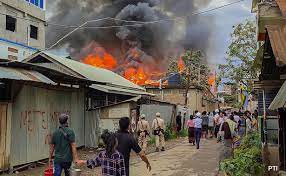
    The information you provided describes a recent incident of violence in Manipur, India, which occurred on September 12. Three people from the Kuki-Zo community were shot dead in Kangpopki district. The victims were identified as Satneo Tuboi (37) and Ngamminlun Lhouvum (30) from Kangchup Ponlen village and Ngamminlun Kipgen (32) from Lhangkichoi village.

    The violence took place near Ireng Naga village in the Kangpokpi district, which is a Kuki-Zomi-dominated area. It is located a few kilometers away from the boundary with Imphal West district, which is Meitei-dominated.

    The attack on the victims’ vehicle was reportedly carried out by multiple individuals. Central security forces stationed at a distance heard the gunshots and arrived at the scene, but the attackers had already left. The security official mentioned that the attack appeared to have been orchestrated by “trained people” as it likely involved crossing the buffer zone that security forces maintain between Meitei-dominated and Kuki-dominated areas.

    The victims were on their way to seek medical treatment in Kangpokpi for Ngamminlun Lhouvum, who had a high fever. They were traveling on a road created in response to the violence to allow people from their area to travel to Kangpokpi without crossing through the valley.

    This incident highlights the challenges faced by residents in accessing healthcare in Manipur due to the ongoing conflict in the region. Manipur has been experiencing ethnic conflict since May 3, resulting in numerous casualties and the displacement of tens of thousands of people. Ethnic divisions have become prominent, with both communities no longer inhabiting the same areas. The conflict has had a severe impact on the healthcare system and may have long-term consequences for the region.

  • Karan Thapar’s interview of Fali Nariman

    Karan Thapar’s interview of Fali Nariman

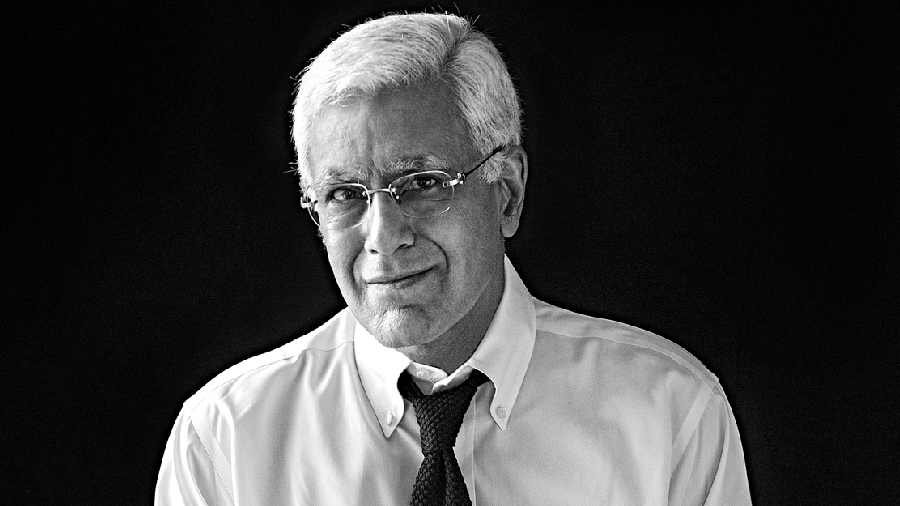
    The well known Indian journalist Karan Thapar recently interviewed the eminent lawyer Fali Nariman

    The interview was related to Mr Nariman’s new book ‘Ýou must know your Constitution’.

    In my opinion the most important thing in the interview is not what Mr Nariman said but what he did not say, what he slurred and glossed over.

    Mr Nariman talked of the Preamble to the Constitution, interpretation of the Constitution, the basic structure doctrine, whether we needed a new Constitution, one nation one election, lack of tolerance and polarisation of our society, quality of judges and the Collegium system in selecting judges, coalition govt, role of the opposition in Parliament, the Westminster model of Govt, etc

    What he left unsaid was this : the parliamentary system of democracy, which was created by the Constitution, is the root cause of most of the problems in India today.

    This is because parliamentary elections in India run largely on the basis of caste and communal vote banks ( as everyone knows ). When most voters go to vote they do not have in mind real issues like poverty, unemployment, child malnutrition, price rise, lack of proper healthcare and good education, etc. They do not see the merits of the candidate, whether he is a good man or bad, educated or uneducated, law abiding or criminal. They only see his caste or religion ( or the caste or religion his party claims to represent ). No wonder there are so many persons with criminal backgrounds in our legislatures.

    Casteism and communalism are feudal forces which must be destroyed if India is to progress, but parliamentary elections further entrenches them. How can the country progress under such a system ? Elections take place in some state or the other often several times an year. So the country is perpetually in an election mode, and our political leaders have to keep fanning caste and communal hatred all the time ( presently disputes over Gyanvapi and Mathura mosques are in the limelight, overshadowing what happened in Manipur and Haryana ). 

    Despite claims to the contrary, the truth is that today in India there is massive poverty, record and rising unemployment, appalling level of child malnutrition ( every second child in India is malnourished, according to Global Hunger Index ), skyrocketing prices of food and other essential commodities, almost total lack of proper healthcare and good education for the masses, etc.

    https://m.economictimes.com/news/india/level-of-hunger-in-india-serious-ranks-107-on-global-hunger-index-2022/articleshow/94876759.cms#:~:text=India%20ranked%20107%20out%20of,%2C%20regional%2C%20and%20national%20levels.

    It is claimed that India’s GDP is growing. But even assuming that is so, the question to be asked is who is getting the fruits of this growth, only a handful of big businessmen and corporates, or the Indian masses ? It is believed that 9 individuals in India own as much wealth as the bottom half of India’s 140 crore population.

    https://thewire.in/rights/9-richest-indians-now-own-wealth-equivalent-to-bottom-50-of-the-population

    Much was made of Chandraayan landing on the moon. But what bearing does this have on our people’s miserable plight ?

    Mr Nariman laments on growing intolerance in India. But he does not care to say that this was the inevitable consequence of adopting the parliamentary system of elections in our Constitution. With about 80% of our population being Hindu, the party claiming to represent them was one day bound to come into power, and to remain in power must keep the communal fire burning.
    Once one realises this one will immediately understand that the root cause of most of our massive socio-economic problems today in India is the parliamentary system of democracy which our Constitution has created.

     It is not that we cannot resolve these problems. We have thousands of bright scientists, engineers, etc ( our IT engineers are largely manning Silicon Valley in California, and there are numerous professors of science, engineering and mathematics in American Universities ), and immense natural resources. But without correct political leadership it is impossible to resolve them. 

    So we have to devise an alternative system of government under which the country can rapidly industrialise and modernise, for that alone can solve our problems.
    How that alternative system will be created, how much time it will take, who will be our modern minded leaders under that system, it is not possible to predict. One cannot be rigid about historical forms. The people will have to use their creativity in this connection and find out the answers to these questions.

    It seems to me that India is inevitably heading towards some kind of a French revolution in coming years. This may sound scary, but consider the facts.

    All our state institutions have become hollow and empty shells, and the Constitution has exhausted itself.

    We have a Parliament which hardly functions, with its members shouting and screaming, often all at the same time, and hardly any meaningful business can be transacted there. We have politicians who are mostly incorrigible rogues and rascals who have no genuine love for India, but have looted the country, and who know how to manipulate caste and communal vote banks, often by inciting caste or religious riots and tensions. Our bureaucracy has largely become corrupt, and so has part of the judiciary.

    Our democracy has been hijacked by the feudal minded politicians, and now elections in most places are on the basis of caste and religion

    A drastic and total change in the system is now required. Tinkering here and there will not do.

    https://nayadaur.tv/15-Nov-2019/a-french-revolution-is-coming-to-india

    The whole system in India, including our state institutions, is like a building which is totally dilapidated. Renovation and repairs will achieve nothing. It calls for demolition and fresh construction. We have to create a new just social order in which everyone, not just a handful of people, get decent lives.

    But it is not possible to achieve this within the system. The solutions to our country’s problems therefore lie outside the system, not within it, which means some kind of French Revolution.

    https://timesofindia.indiatimes.com/blogs/satyam-bruyat/a-french-revolution-is-approaching/

    https://www.theweek.in/news/india/2019/09/04/opinion-india-edges-closer-to-its-own-french-revolution.html?s=08

    https://indicanews.com/2023/07/13/justice-markandey-katju-on-bastille-day/

    https://www.firstpost.com/india/indias-moment-of-turbulent-revolution-has-arrived-and-it-is-going-to-be-a-long-and-bloody-one-writes-justice-markandey-katju-7891541.html

    https://www.newsclick.in/How-Make-India-Ungovernable

    I have great respect for Mr Nariman. But I submit his mind is closed within very narrow bounds, and he cannot conceive of all this