Author: SAQIB SHAFI

  • Article 370 is permanent, it cannot be abrogated

    Article 370 is permanent, it cannot be abrogated

    September 19, 2023 | New Delhi

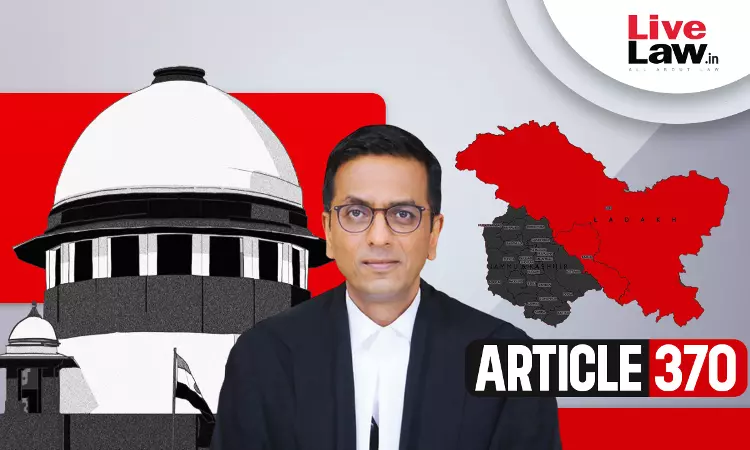
    In a pivotal 16-day hearing, India’s Supreme Court examined the intricate facets of Article 370, which governs the relationship between the erstwhile state of Jammu and Kashmir and the rest of the country. Here’s a comprehensive overview of the arguments presented by the petitioners, emphasizing the enduring significance of Article 370.
    Article 370

    In a riveting legal showdown, the fate of Article 370, a provision integral to Jammu and Kashmir’s unique constitutional status, hangs in the balance. A battery of legal luminaries, including names like Kapil Sibal, Gopal Subramanium, and Rajeev Dhavan, have passionately advocated for the petitioners, underscoring that the case holds far-reaching implications for the powers of state assemblies, Parliament, governors, and even the President.

    The Supreme Court bench, comprising the Chief Justice of India DY Chandrachud and Justices Sanjay Kishan Kaul, Sanjiv Khanna, BR Gavai, and Surya Kant, heard arguments over an extensive 16-day period. In this two-part series, we delve into the critical arguments presented by the petitioners, emphasizing that their intention is not to question India’s sovereignty, but to affirm that Jammu and Kashmir remains an integral part of the nation.

    Key Points:

    • Unique Constitutional Framework: The framers of India’s Constitution envisioned a distinct association with Jammu and Kashmir, rooted in historical and geopolitical context.
    • Instrument of Accession (IoA): The circumstances leading to the IoA signed by Maharaja Hari Singh highlighted J&K’s distinctive accession process compared to other princely states.
    • Preservation of Autonomy: Article 370 safeguarded J&K’s autonomy, as there was no “merger agreement” akin to other states.
    • Territorial Integrity Pledge: J&K was assured territorial integrity, setting it apart from other states.
    • Constitutional Applicability: Over time, Indian laws were extended to J&K, leaving little to integrate, questioning the rationale behind Article 370’s abrogation.
    • Founding Intentions: J&K’s Constitution was crafted by its Constituent Assembly, aligning with the broader ideals of India’s Constitution.
    • Element of Permanence: The absence of changes recommended by the Constituent Assembly over six years implied a lasting intent for Article 370.
    • Constituent Assembly’s Role: Article 370 required concurrence from the Constituent Assembly, which ceased to exist, lending it a sense of permanence.
    • Synergy of Constitutions: India and J&K’s Constitutions coexisted, with Article 370 reflecting an asymmetric federal relationship.
    • Abrogation Process Scrutinized: The abrogation process was challenged for bypassing the collaborative approach mandated by Article 370.
    • Article 356 Intricacies: The executive act of invoking Article 356 was critiqued for sidestepping democratic principles, impacting federalism.
    • State to Union Territory Transformation: The transformation of J&K into Union Territories raised constitutional concerns, disrupting representative democracy.
    • Constitutional Democracy Upheld: It was argued that the Constitution doesn’t permit converting a state into two Union Territories without due process.
    • Historical Context of Borders: J&K’s geographical connection to India was established through a historical decision by Lord Cyril Radcliffe.
    • Special Dispensation for J&K: A unique arrangement was created for J&K, addressing both domestic and international considerations.
    • Limited Power: Parliament’s authority under Article 370 was seen as circumscribed, contradicting claims of absolute power.
    • Presidential Action and Council of Ministers: The President’s actions were viewed as contingent on the advice of the council of ministers, aligning with democratic principles.
    • Parchment of Pride: J&K’s Constitution was held as a cherished document, symbolizing the state’s integral role in the Indian Union.

    In a landmark hearing, India’s Supreme Court examined the constitutional nuances of Article 370, shedding light on its enduring relevance in the context of Jammu and Kashmir. The arguments presented emphasized the unique historical and geopolitical backdrop that shaped this constitutional provision. The hearing will play a pivotal role in defining the powers of various state entities and reaffirming the values enshrined in India’s Constitution.

    For further details, refer to the full report on the Supreme Court’s hearing on Article 370.


    Summary:

    • The Supreme Court examines the enduring significance of Article 370 in a 16-day hearing.
    • Arguments highlight the distinctive historical and geopolitical context of J&K’s association with India.
    • The absence of a “merger agreement” and the IoA’s unique nature underscore J&K’s autonomy.
    • The Constitution’s applicability to J&K raises questions about Article 370’s abrogation rationale.
    • The hearing prompts a reevaluation of constitutional dynamics between J&K and the rest of India.

    Disclaimer: The views and arguments presented in this article are based on the perspectives put forth by the petitioners in the ongoing legal battle over Article 370. The final judgment may provide further clarity on this complex constitutional issue.
  • 6 MBBS Students Expelled and Fined for Ragging, Including two Female Students

    6 MBBS Students Expelled and Fined for Ragging, Including two Female Students

    Mandi, Himachal Pradesh – September 16, 2023

    In a firm stance against ragging, Shri Lal Bahadur Shastri Medical College and Hospital in Nerchowk, Himachal Pradesh, has taken decisive action against six students involved in an incident targeting their juniors. Among the offenders, two are female students. The college administration has imposed stringent penalties, including expulsion from the hostel for six months and a three-month ban on attending classes, alongside a fine of Rs 25,000 each.

    The incident was promptly brought to the attention of the college authorities, who swiftly convened a meeting of the anti-ragging committee. Following a thorough inquiry, the committee recommended the course of action against the guilty students.

    Dr. DK Verma, Principal of Nerchowk Medical College, emphasized the institution’s unwavering commitment to eradicating ragging, stating, “The college administration has zero tolerance towards ragging and strict action has been taken against the guilty.”


    Summary:

    • Six students, including two female, from Shri Lal Bahadur Shastri Medical College and Hospital, Nerchowk, Himachal Pradesh, have been penalized for their involvement in a recent ragging incident.
    • The students face a six-month expulsion from the hostel, a three-month ban on attending classes, and a fine of Rs 25,000 each.
    • College Principal, Dr. DK Verma, affirmed the institution’s strict stance against ragging and emphasized the implementation of severe consequences for such behavior.

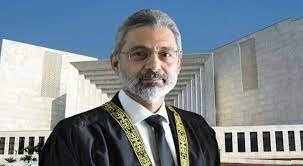
  • My email to the new Chief Justice of Pakistan

    My email to the new Chief Justice of Pakistan

    To Hon’ble Qazi Faez Isa

    Chief Justice Of Pakistan

    Islamabad

    Dear Brother,

    Congratulations on becoming the new Chief Justice of Pakistan

    I saw your oath taking on the internet, and was touched by your fine gesture of asking your wife to stand by your side while taking oath.

    However, I must tell you that you will be put to two tests :

    (1) You have taken a solemn oath to uphold the Constitution, which includes the fundamental rights of citizens of Pakistan, like the right to life and liberty.

    https://www.pakistani.org/pakistan/constitution/part2.ch1.html

    As you know, a fascist reign of terror has been unleashed in Pakistan by the Establishment after the events of 9th May. Over 10, 000 people, including former Prime Minister Imran Khan and several PTI leaders and workers/supporters have been arrested, many ( including women ) beaten, brutally tortured, jailed in horrible conditions, killed, or simply ‘disappeared’.

    It is therefore your solemn duty to get these 10,000 people released from jail forthwith, given adequate compensation, and those officials responsible for this outrage suitably punished.

    (2) It is your duty to enforce the Constitution of Pakistan, since you have taken an oath to uphold it. 

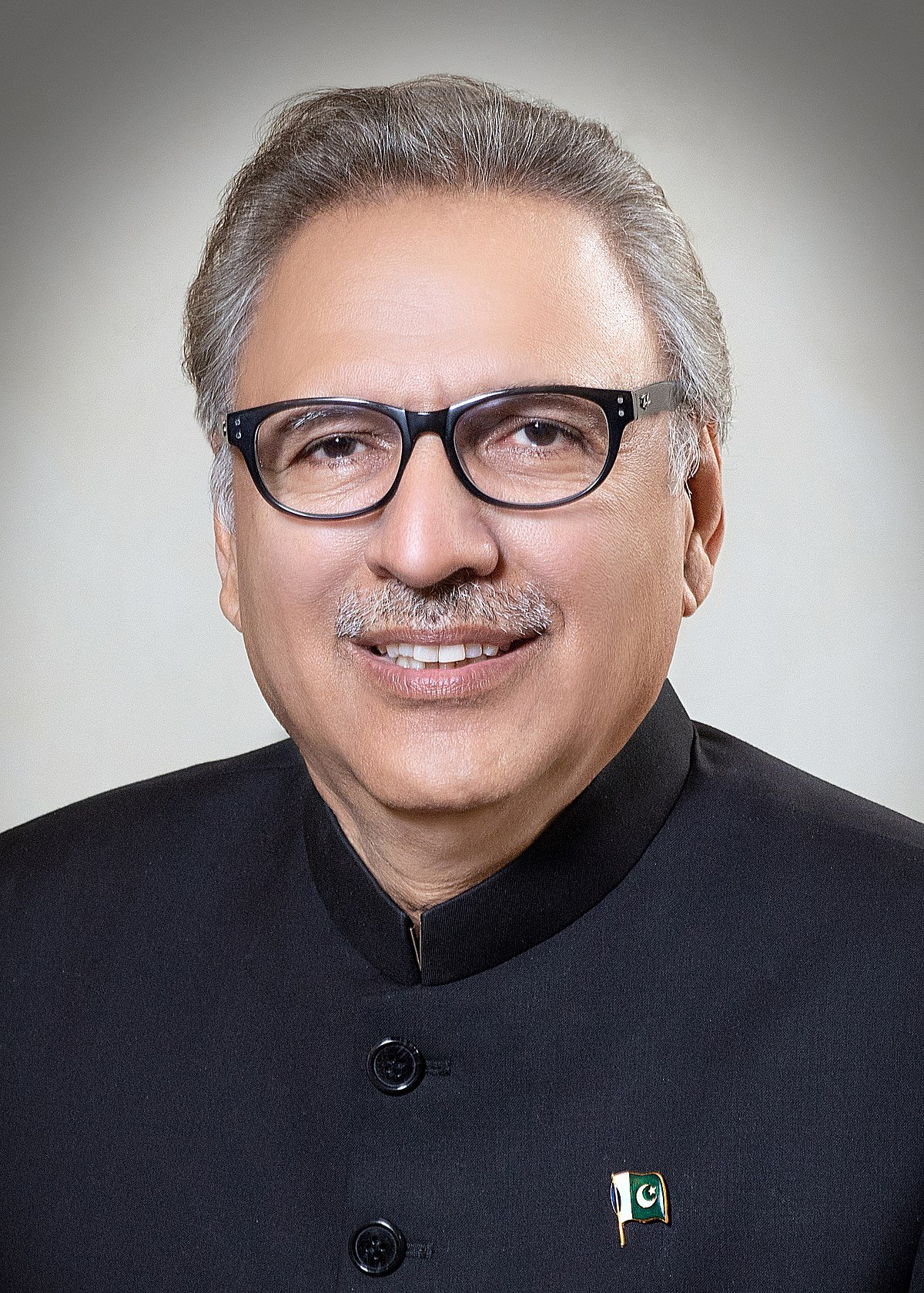
    Article 224(2) thereof states that free and fair elections must be held within 90 days of dissolution of Parliament, and even President Arif Alvi has proposed this. 

    It is therefore your duty to enforce Article 224(2).

    If you fail to meet these twin tests your name will be consigned to the dustbin of judicial history, and your 13 month long tenure as CJP will be marked as a big failure, like that of your predecessor Justice Bandial, who proved to be a spineless coward, who betrayed his oath, and was only concerned about his salary, perks and pension.

    Justice Markandey Katju

    Former Judge, Indian Supreme Court

    Noida, UP, India

    17.9.2023

    91-9821181334

  • In the name of God, go !

    In the name of God, go !

    The Chief Justice of Pakistan, Umar Ata Bandial, retired yesterday, 16th September, 2023. What is his legacy ? How will he be remembered ?

    No Judge is perfect. Some are short tempered and rude in court, some are dim witted and often cannot understand the lawyer’s argument, some know little law, some talk too much in court ( in violation of Bacon’s dictum ” A much talking judge is like an ill tuned cymbal ), some cannot get along with their colleagues,  some go off to sleep even when the lawyer is arguing, etc

    All these can be forgiven. But what cannot be forgiven is a Judge’s refusal to abide by his solemn oath to protect the rights of citizens under the Constitution. Let me explain.

    In feudal times the King was supreme, and the people had no rights.

    However, in his ‘Second Treatise on Civil Government’, written in 1690,  the British political philosopher John Locke propounded the idea that the people had certain ‘natural rights’ ( e.g. life and liberty ) which even the King could not violate.

     These were later incorporated in the Bill of Rights in the US Constitution of 1791, the Rights of Man proclaimed in 1789 by the French National Assembly, the Fundamental Rights in the Indian and Pakistan Constitution, etc.

    What was the purpose of having these rights in the Constitution ? That was because it was felt that Parliament, though elected by the people, may sometimes turn autocratic and anti-people. Hence the people had to be protected not only against autocratic behaviour of the executive, but also the autocratic behaviour of the legislature.

    When a Judge assumes office, he has to take an oath to uphold the Constitution, and since the Constitution incorporates certain fundamental rights of the people, that oath includes his undertaking to protect those rights.

    Did Justice Bandial abide by his oath ? Not at all.

    After the events of 9th May a reign of terror was unleashed in Pakistan, over 10,000 people arrested, beaten, tortured, jailed, killed or simply ‘disappeared’ in Pakistan, but Justice Bandial turned a Nelson’s eye to these atrocities and horrors, probably because all he had in mind was his salary, perks and pension. 

    He seemed to show courage by ordering Punjab Assembly elections on 14th May, but when it came to enforcing that order ( by taking contempt of court proceedings ) he beat a hasty retreat, thus making it clear to the Pakistan Establishment that the judiciary is only a paper tiger, that judges talk a lot but are not to be taken seriously.

    When the Pakistan Govt said that they would not obey the Supreme Court’s orders, Bandial should have closed down all courts in Pakistan until the govt announced that it agreed to abide by court orders, but evidently he had no backbone, gumption or spunk to take such a bold, but necessary, step.

    To sum up, Bandial’s legacy is of a weak, spineless, and cowardly judge, who betrayed his oath, and let his country and his institution down, causing misery to countless number of people.

    One can tell him, as Cromwell told the Rump British Parliament on 20 April 1653 :

     ” You have sat too long for any good you have been doing lately  In the name of God, go ! “

  • What is happening in India?

    What is happening in India?

    There were some people in India who thought, like Neville Chamberlain at Munich in 1938, that strife can be avoided by appeasement. So they accepted the handing over of the site of the demolished Babri Masjid to right wing Hindu organisations for building a ‘bhavya’ Ram Mandir there, thinking this will end communal strife and tensions in India.

    https://thewire.in/law/the-ayodhya-verdict-is-based-on-a-strange-feat-of-logic

    However, soon after demolition of Babri Masjid, cries were heard ”Abhi to yeh jhaanki hai, Kashi Mathura baaqi hai” ( i.e. ”This is only a glimpse, Kashi and Mathura remain” ). And  sure enough demands for demolition of Gyanvapi Masjid in Varanasi, and Shahi Masjid in Mathura, and building ‘bhavya’ Shiva and Krishna temples on the sites, have been growing louder and louder.

    But supposing these 2 mosques are also demolished, and Hindu temples built on the sites. Will the matter end there ? Surely not, for the communal pot must be kept boiling.

    Now a demand has come for demolition of Shivalay Masjid and Teele Waali Masjid in Lucknow, and restoring the Hindu temples which originally stood there.

     And some of those raising the demand want demolition of 50,000 masjids in India which were allegedly built by demolishing Hindu temples.

    There are even demands for demolishing Qutub Minar, Quwwat-ul-Islam mosque, Jama Masjid, Delhi, Taj Mahal, Agra, Atala Devi Masjid in Jaunpur, etc since these were allegedly built by demolishing Hindu temples there.

    The real issues like massive poverty, record and rising unemployment, skyrocketing price rise of food and other essential commodities, appalling level of child malnutrition ( every second child in India is malnourished, according to Global Hunger Index ), almost total lack of healthcare and good education for the masses, etc have all gone into the background.

    https://byjus.com/free-ias-prep/global-hunger-index/

    So what is going on in India ? Or, to use the words of the popular Bhojpuri singer Neha Singh Rathore, Bharat mein ka ba ?

    To understand what is going on, please see this video

    Please also read these articles :

    https://indicanews.com/2023/02/22/the-puppeteer-and-the-puppets/
    https://indicanews.com/2023/07/13/justice-markandey-katju-on-bastille-day/

    As explained therein, the basic problems of India, which are socio-economic, can only be solved by rapid industrialisation and modernisation, but the developed countries will oppose this tooth and nail ( for the reasons given in the above video )

    So our problems cannot be solved within the Constitutional framework but by a mighty, historical people’s revolution led by patriotic, modern minded leaders determined to rapidly industrialise and modernise the country, and give the people decent lives..

    https://www.theweek.in/news/india/2019/10/04/opinion-india-needs-modern-minded-revolution-to-become-a-first-world-nation.html

    But historical experience shows, as pointed out in the articles below, that before an actual revolution there is always an ideological revolution, in which the weapons used are not swords, guns or bombs but ideas ( e.g. as it happened in France before the French Revolution of 1789 ).

    https://www.ndtv.com/india-news/ideological-struggle-launched-by-voltaire-rousseau-needed-markandey-katju-2112351

    India is presently passing through the period of ideological revolution, i.e. the pre-revolutionary period.

    https://m.facebook.com/justicekatju/posts/1616869378353602/

    Patriotic Indians, who want to help the country, must first understand all this.

    The interest of people of the Indian subcontinent is to rapidly industrialise and become an industrial giant, like China, for only then can we abolish poverty, unemployment, hunger, and the other great evils which plague our society. On the other hand, the interest of the developed countries is that the Indian subcontinent must not be allowed to become an industrial giant, and must be kept backward ( for the reason I explained to Moeed Pirzada in his video interview ).

    Thus, our interests directly conflict, and the developed countries, through their agents ( the rulers of India and Pakistan, and the politicians of both countries ) will do their level best to prevent us from becoming an industrial giant, and they are doing that by making our people fight each other on the basis of religion, caste, language, race, etc.

    It is high time that our people understand this vile scheme, expose it to the public, and launch a mighty united people’s struggle ( in which tremendous sacrifices will have to be made ), under secular, modern minded leaders, for creating a just, modern political and social order in which all our citizens get decent lives

  • A social problem among many highly educated single ladies

    A social problem among many highly educated single ladies

    I recently received an email from a young Muslim unmarried lady, who obviously wants to get married. She is Qureshi by caste, and is a Ph.D. and an Asst Prof in Psychology in a degree college in Western UP.

    Her email, given below, depicts the plight of many single, highly educated, young ladies, of all communities, not just Muslims ( many of whom I know ) in the Indian subcontinent

    ” Hello sir, assalamualaikum (peace be upon you)

    Hope you are well. I really appreciate the way you connect with general folks and try to make them open minded and really educated, not on paper only, but in the real sense.

    I am writing to you to share a problem of mine, but of course its about numerous single, highly educated, Muslim girls of India.

    Sir, I am 34 years old, OBC Muslim ( Qureshi ), PhD from a top medical college. I am a senior assistant professor in a degree college in western UP, but despite all this I am unmarried. The reason is because Muslim men are not that educated among OBCs, and if they are, most have high demands, and sometimes not good in character and values, at least to my knowledge.

    Educated Muslim males are mostly found in general caste, but they want to marry in their own caste.

    Girls like me have been facing such an issue, which is very disturbing, because after doing a lot of hard work we are still struggling on the social front.

    Societal pressure, familial rumination, labeling, age shaming have become a part of my life. Sometimes I wonder is it ok to be highly educated with OBC caste. Because after all I will have to compromise with a person less educated if I get married in my community. And obviously it’s not a good situation for my mental health.

    I want your help in this matter. can you plz write up something on this issue very prevelant among educated Muslims. But plz don’t mention my name.

    Hope to hear from you soon .

    Regards ”

    I posted the above email on my fb page with my email id

    I also forwarded to the young lady, about whom I wrote the fb post, some marriage proposals I received by email in response to the fb post.

    I also wrote to her that there were over 400 comments on the fb post. This was her reply :

    ” Yes sir, I have read them all just a few minutes back.

    I thank you for sharing that, but after reading those posts I wonder is it really easy to share something on a social platform, and handle people who have a narrow perspective, who don’t see the actual message ?

    And it’s really disgraceful to see that some people are still shameless enough to blame girls for their high demands, unattractive features, etc.

    Is it wrong to make a career first, and wanting social and financial independence ? How many Muslims encourage their wives or daughters in law to continue higher education, get a good job, etc ? How many males can adjust with a wife superior to them on educational and financial level ? Very few.

    People are suggesting to me to get married with a divorcee or an old man, as if I were dying to get married.

    1000026955

    Sir, I wrote you to make people aware of the backward mindsets of most Muslim men, and about the stigma people have against single girls like me, the concept of age shaming, and the problems of girls like me in finding a suitable partner for marriage ( which we want ) ”

  • The proposal of Pakistan President Arif Alvi to hold national elections

    The proposal of Pakistan President Arif Alvi to hold national elections


    Moeed Pirzada, the eminent and upright Pakistani journalist, who has been in America for quite some time, and has been bravely fighting for restoration of democracy in Pakistan, has in a very recent vlog given his analysis of the sudden proposal by Dr Arif Alvi, the President of Pakistan, to hold national elections in Pakistan by 6th November.

    .https://t.co/3c106G8Cc5

    In his analysis, Moeed has largely gone by the legal provisions in Pakistan’s Constitution. All that is fine, but what Moeed forgets is that the Pakistan Establishment ( meaning principally the Pakistan army ) has in the past shown scant respect for the law. So a deeper analysis of the reasons for the President’s surprise announcement is called for.

    Politics is concentrated economics, and so the economic factors behind the President’s move must be considered carefully, but I am afraid Moeed has neglected to delve into this aspect at all, or into some other issues.

    In one of my articles I had explained that the US Government, which heavily influences Pakistan politics, and was till late extremely hostile to former Prime Minister Imran Khan ( because of some of his statements accusing the US Govt of interfering in the internal affairs of Pakistan, his visit to Russia during the war with Ukraine, etc ), was bound to change its attitude towards him, for its own economic interests

    US firms have huge investments in Pakistan, which would be jeopardised by instability and chaotic conditions ( which could spill over into some neighbouring countries too ). Hence the US Government would like peace and stability in Pakistan, but no such stability is possible without holding free and fair elections, which Imran Khan’s PTI party is bound to sweep, as about 90% Pakistanis support it ( as all opinion polls indicate ). Wisdom must have by now dawned on the US authorities, and they must have realised that their hostility to Imran Khan is counter productive to their own interests.

    Apart from that, the Pakistan army generals, who call the shots in Pakistan, and have unleashed a reign of terror in the country, must have by now realised that with 90% Pakistanis supporting Imran Khan they cannot continue this state of affairs much longer. A popular resistance to their rule, which is bound to develop into some form of guerilla war against the army, will sooner or later emerge, and then they may well find themselves in the situation which the Russian army found itself embroiled in Afghanistan, or the American army in Vietnam, with a lot of soldiers’ body bags accumulating. 

    An army can fight another army, it cannot fight the masses. A tiger can kill a prey, it cannot kill a swarm of mosquitoes

    Moreover, the army officers must have realised that their families will not be safe if popular hostility to the army grows. After all, their wives and children cannot remain cooped up in their guarded homes forever.The wives have to go for shopping and social visits, and the children to schools and colleges. These will be targets of attacks by bitter, unforgiving people whose family members were killed, tortured or imprisoned, and who are thirsting for revenge.

    I am sure that in recent Corps Commanders Conferences, where vital decisions affecting Pakistan are taken, the senior officers attending must have told the army chief Gen Munir this, and Gen Munir must have conveyed to President Arif Alvi that the army, which was earlier totally averse to holding early elections ( which would bring Imran Khan back to power ), has now no objection.

    Probably these are the real reasons for President Arif Alvi’s sudden announcement, which Mooed unfortunately has not mentioned or gone into

  • Karan Thapar’s interview of Fali Nariman

    Karan Thapar’s interview of Fali Nariman

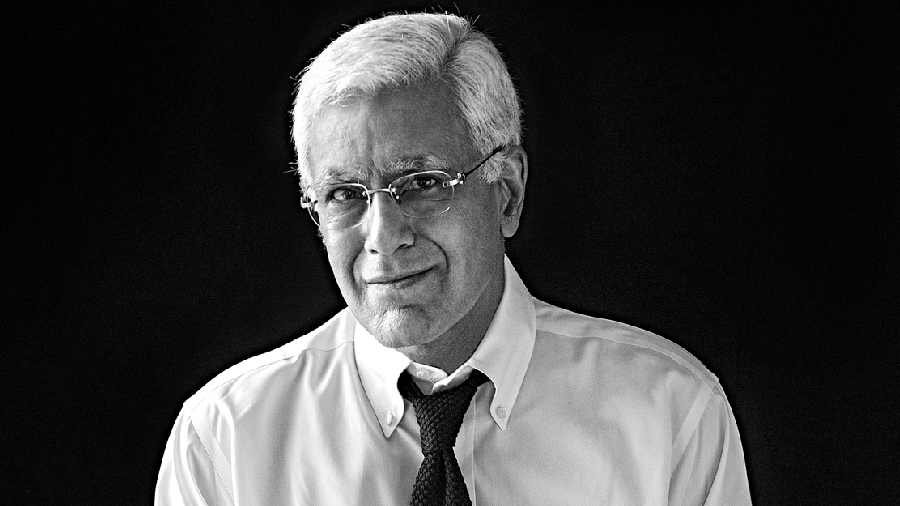
    The well known Indian journalist Karan Thapar recently interviewed the eminent lawyer Fali Nariman

    The interview was related to Mr Nariman’s new book ‘Ýou must know your Constitution’.

    In my opinion the most important thing in the interview is not what Mr Nariman said but what he did not say, what he slurred and glossed over.

    Mr Nariman talked of the Preamble to the Constitution, interpretation of the Constitution, the basic structure doctrine, whether we needed a new Constitution, one nation one election, lack of tolerance and polarisation of our society, quality of judges and the Collegium system in selecting judges, coalition govt, role of the opposition in Parliament, the Westminster model of Govt, etc

    What he left unsaid was this : the parliamentary system of democracy, which was created by the Constitution, is the root cause of most of the problems in India today.

    This is because parliamentary elections in India run largely on the basis of caste and communal vote banks ( as everyone knows ). When most voters go to vote they do not have in mind real issues like poverty, unemployment, child malnutrition, price rise, lack of proper healthcare and good education, etc. They do not see the merits of the candidate, whether he is a good man or bad, educated or uneducated, law abiding or criminal. They only see his caste or religion ( or the caste or religion his party claims to represent ). No wonder there are so many persons with criminal backgrounds in our legislatures.

    Casteism and communalism are feudal forces which must be destroyed if India is to progress, but parliamentary elections further entrenches them. How can the country progress under such a system ? Elections take place in some state or the other often several times an year. So the country is perpetually in an election mode, and our political leaders have to keep fanning caste and communal hatred all the time ( presently disputes over Gyanvapi and Mathura mosques are in the limelight, overshadowing what happened in Manipur and Haryana ). 

    Despite claims to the contrary, the truth is that today in India there is massive poverty, record and rising unemployment, appalling level of child malnutrition ( every second child in India is malnourished, according to Global Hunger Index ), skyrocketing prices of food and other essential commodities, almost total lack of proper healthcare and good education for the masses, etc.

    https://m.economictimes.com/news/india/level-of-hunger-in-india-serious-ranks-107-on-global-hunger-index-2022/articleshow/94876759.cms#:~:text=India%20ranked%20107%20out%20of,%2C%20regional%2C%20and%20national%20levels.

    It is claimed that India’s GDP is growing. But even assuming that is so, the question to be asked is who is getting the fruits of this growth, only a handful of big businessmen and corporates, or the Indian masses ? It is believed that 9 individuals in India own as much wealth as the bottom half of India’s 140 crore population.

    https://thewire.in/rights/9-richest-indians-now-own-wealth-equivalent-to-bottom-50-of-the-population

    Much was made of Chandraayan landing on the moon. But what bearing does this have on our people’s miserable plight ?

    Mr Nariman laments on growing intolerance in India. But he does not care to say that this was the inevitable consequence of adopting the parliamentary system of elections in our Constitution. With about 80% of our population being Hindu, the party claiming to represent them was one day bound to come into power, and to remain in power must keep the communal fire burning.
    Once one realises this one will immediately understand that the root cause of most of our massive socio-economic problems today in India is the parliamentary system of democracy which our Constitution has created.

     It is not that we cannot resolve these problems. We have thousands of bright scientists, engineers, etc ( our IT engineers are largely manning Silicon Valley in California, and there are numerous professors of science, engineering and mathematics in American Universities ), and immense natural resources. But without correct political leadership it is impossible to resolve them. 

    So we have to devise an alternative system of government under which the country can rapidly industrialise and modernise, for that alone can solve our problems.
    How that alternative system will be created, how much time it will take, who will be our modern minded leaders under that system, it is not possible to predict. One cannot be rigid about historical forms. The people will have to use their creativity in this connection and find out the answers to these questions.

    It seems to me that India is inevitably heading towards some kind of a French revolution in coming years. This may sound scary, but consider the facts.

    All our state institutions have become hollow and empty shells, and the Constitution has exhausted itself.

    We have a Parliament which hardly functions, with its members shouting and screaming, often all at the same time, and hardly any meaningful business can be transacted there. We have politicians who are mostly incorrigible rogues and rascals who have no genuine love for India, but have looted the country, and who know how to manipulate caste and communal vote banks, often by inciting caste or religious riots and tensions. Our bureaucracy has largely become corrupt, and so has part of the judiciary.

    Our democracy has been hijacked by the feudal minded politicians, and now elections in most places are on the basis of caste and religion

    A drastic and total change in the system is now required. Tinkering here and there will not do.

    https://nayadaur.tv/15-Nov-2019/a-french-revolution-is-coming-to-india

    The whole system in India, including our state institutions, is like a building which is totally dilapidated. Renovation and repairs will achieve nothing. It calls for demolition and fresh construction. We have to create a new just social order in which everyone, not just a handful of people, get decent lives.

    But it is not possible to achieve this within the system. The solutions to our country’s problems therefore lie outside the system, not within it, which means some kind of French Revolution.

    https://timesofindia.indiatimes.com/blogs/satyam-bruyat/a-french-revolution-is-approaching/

    https://www.theweek.in/news/india/2019/09/04/opinion-india-edges-closer-to-its-own-french-revolution.html?s=08

    https://indicanews.com/2023/07/13/justice-markandey-katju-on-bastille-day/

    https://www.firstpost.com/india/indias-moment-of-turbulent-revolution-has-arrived-and-it-is-going-to-be-a-long-and-bloody-one-writes-justice-markandey-katju-7891541.html

    https://www.newsclick.in/How-Make-India-Ungovernable

    I have great respect for Mr Nariman. But I submit his mind is closed within very narrow bounds, and he cannot conceive of all this

  • Are the Pakistani judges Muslims ?

    Are the Pakistani judges Muslims ?

    According to the Quran, after one’s death everyone has to appear before Allah on the roz-e-mehshar ( Judgment Day ) and account for his acts and omissions, and those who acted wrongly will get punishment for their misdeeds.

    There is a recorded historical event of 1490 AD ( see Prof Charles Stewart’s ‘History of Bengal’ ) when the Qazi-e-Subah of Bengal, Qazi Sirajuddin gave justice to a poor widow whose son had been accidently wounded by an arrow of Bengal’s Sultan.

    https://www.siasat.com/qazi-sirajuddin-my-ideal-judge-markandey-katju-1888812/

    https://indicanews.com/2023/08/17/justice-markandey-katju-pakistan-sc-judges-should-learn-from-qazi-sirajuddin/
    https://www.youtube.com/watch?v=8-Bxh7VvGQM&pp=ygUPcWF6aSBzaXJhanVkZGlu

    By summoning the Sultan to his court and ordering him to give adequate compensation to the widow, the Qazi risked his neck as the Sultan could cut it off for this gross impertinence. Yet, being a true Muslim, fear of God’s punishment on Judgment Day prevailed in him over fear of the Sultan.

    Also Checkout :

    Contrast this with the behaviour of Pakistan’s judges today. A reign of terror has been imposed by the Pakistan Establishment, with about ten thousand people imprisoned, beaten, tortured, killed or ‘disappeared’, and all kinds of atrocities committed on the people of Pakistan, but the judges have turned a Nelson’s eyes to these horrors. Court orders, like the one fixing 14th May for Punjab Assembly election, are flagrantly flouted, but they do nothing about it. 

    Dishonest judges like Humayun Dilawar, who had the support of the dishonest Chief Justice of Islamabad High Court, Aaamer Farooq, gave a flagrantly flawed verdict against former Prime Minister Imran Khan, denying him the right to produce his witnesses or to hear his lawyers

    And why ? Because the judges, like CJP Bandial, care only for their salaries, pensions, and perks.

    But what about roz-e-mehshar ? It is doubtful that they ever think of that.

    These judges profess to be Muslims, observing all formalities, quoting the Quran, offering namaz, and observing roza during Ramadan. But are they true Muslims ?

    They have taken an oath to uphold the Constitution and protect the fundamental rights of citizens of Pakistan mentioned in the Constitution, e.g. the right to life and liberty, but they have grossly violated their oath.

    https://phropak.org/fundamental-rights-in-pakistan/#:~:text=No%20person%20shall%20be%20deprived,Article%2010A.

     How will they answer to Allah on the roz-e-mehshar ?

    But do they even believe in roz-e-mehshar, as Qazi Sirajuddin believed, making them true Muslims ? I doubt it. When it comes to a choice between following the Quran and doing their duty, or preferring their comforts, they always opt for the latter. 

    Justice has been murdered in Pakistan, and these conscienceless and spineless judges are party to the murder, and will have to pay the penalty for their misdeeds and gross neglect of duty on Judgment Day

    https://www.hastakshepnews.com/2023/08/murder-of-justice-in-pakistan.html

  • The Indian government should consider discontinuing MotoGP races

    The Indian government should consider discontinuing MotoGP races

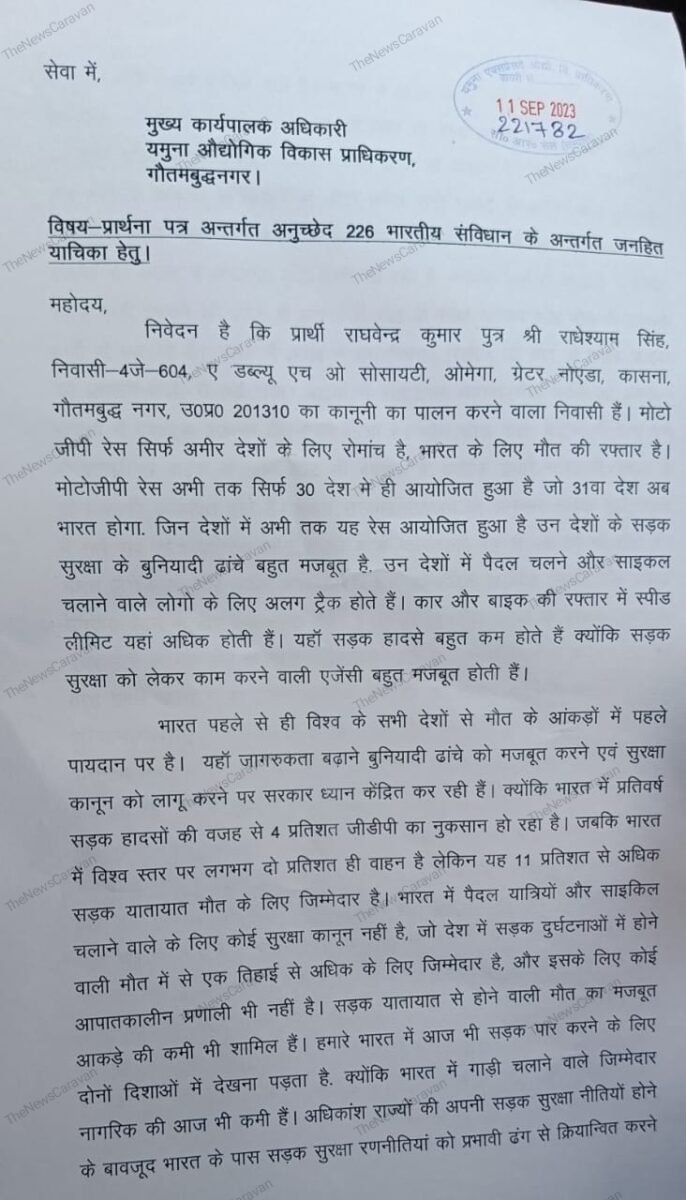
    Helmet Man of India, Raghavendra Kumar, has sent a letter to the President and Prime Minister regarding this. While MotoGP races are a source of excitement for affluent countries, for India, they represent a perilous pace. MotoGP races have only been held in 30 countries so far, with India set to be the 31st. The countries where this race has been held have a robust foundation for road safety. They have separate tracks for pedestrians and cyclists, and higher speed limits for cars and motorcycles. Road accidents are significantly fewer in these countries, thanks to the agencies working diligently on road safety.

    Motorcycle race at MotoGP event showcasing high-speed action on the track

    India already ranks highest in global death tolls due to road accidents. The government is focusing on strengthening the fundamental framework for road safety and implementing safety laws. Road accidents account for a 4% loss in India’s GDP annually. Although India has only about 2% of the world’s vehicles, it bears responsibility for over 11% of global road traffic fatalities. There are no specific safety laws for pedestrians and cyclists in India, making up over three-fourths of road accident fatalities in the country. Additionally, the lack of an emergency response system contributes to the high numbers. India still requires vigilance from both sides while crossing roads.

    Despite most states having their road safety policies, there is no major agency in India dedicated to effectively implementing road safety strategies. In India, over 50% of the population still travels by bicycle. After West Bengal, Uttar Pradesh stands second with 75.6% of people using bicycles for commuting. According to accident statistics, Uttar Pradesh leads among all states. Since the Formula One track was established in Gautam Buddha Nagar district, there has been a consistent rise in road accidents, mainly due to overspeeding by the youth. The popularity of speed bikes surged in India after the release of the movie ‘Dhoom’ in 2004. This led to an increase in noise pollution from bike silencers. Even bikes with plain seats underwent modifications to align with stylish trends, attracting people in India.

    Motorcycle race at MotoGP event showcasing high-speed action on the track
    Meet Raghvendra Kumar, India's 'helmet man' who left job, sold his house to distribute free helmets. Raghvendra Kumar has been distributing helmets to two-wheeler owners for free since 2014
    Meet Raghvendra Kumar, India's 'helmet man' who left job, sold his house to distribute free helmets. Raghvendra Kumar has been distributing helmets to two-wheeler owners for free since 2014

    According to the Ministry of Transport, 76.2% of those killed in road accidents in India fall between the age group of 18 to 45, who are the main workforce. In countries like India with low and middle-income status, there exists a clear correlation between social economic status and road usage patterns. Therefore, the probability of low-income individuals being involved in road accidents is higher. Road accidents, much like COVID-19, are negatively impacting India’s social and economic landscape. The Ministry of Transport in India has declared it to be equally detrimental as COVID-19. Minister Nitin Gadkari pledged to reduce road accidents by 50% in 2020-2021, but later stated that due to lack of cooperation from state governments, the goal was not achieved. Saving one life amounts to a saving of 90 lakhs (9 million) rupees. Road accidents are burdening the Indian society with a rising number of minor disabilities. The Ministry of Road Transport is working on policies to safeguard the interests of the poor in this perilous scenario.

    Strengthening the Road Safety Report in India poses significant challenges. I have been fighting against road accidents for the past 9 years, touring the roads of India to save the lives of Indian youth. Since the loss of my friend on the Noida Expressway 9 years ago, I vowed to befriend every citizen before turning them into smart road users. In this fight, I have distributed more than 56,000 helmets on Indian roads from my own pocket. I have saved hundreds of lives and successfully reached my mission to millions, making the world recognize us by the name ‘Helmet Man of India’. MotoGP races could potentially increase the speed on our Indian roads. This could escalate the fatality rate on our roads, as regular citizens share the same roads with speeding vehicles. Even after 77 years of independence, 40% of Indians remain deprived of education. 90% of people are not aware of road traffic rules. Therefore, organizing such thrilling races could lead to significant revenue loss for India and adversely affect the lives and property of 90% of the population.”

    Raghvendra Kumar, India’s ‘helmet man‘ who left job, sold his house to distribute free helmets. Raghvendra Kumar has been distributing helmets to two-wheeler owners for free since 2014.

    Meet Raghvendra Kumar, India's 'helmet man' who left job, sold his house to distribute free helmets. Raghvendra Kumar has been distributing helmets to two-wheeler owners for free since 2014