Tag: Markandey Katju Twitter

  • The mob lynching of Charvaka

    The mob lynching of Charvaka

    Apart from religious philosophies in ancient India, like Vedanta, there also came into existence a materialist philosophy called lokayat, the philosophy which denied existence of god, soul, angels, spirits, an afterlife, and other supernatural or metaphysical things, and did not accept the authority of the Vedas.

    https://en.wikipedia.org/wiki/Lokayata:_A_Study_in_Ancient_Indian_Materialism

    https://www.insightsonindia.com/indian-heritage-culture/philosophy/lokayata/

    https://prepp.in/news/e-492-charvaka-school-or-lokayata-philosophy-art-and-culture-notes

    At one time the lokayat philosophy was widespread in India, and numerous books written on it.

    However, the conservative elements in society ganged up against them, and destroyed all their books, and now we have some idea of the lokayat philosophy only from books like Madhavacharya’s ‘Sarva Darshan Sangrah‘ where the lokayat philosophy has been stated ( only to be attacked ) in the ‘poorvapaksha’ of the book ( see DP Chattopadhyaya’s ‘Lokayat’ ).

    https://en.wikipedia.org/wiki/Lokayata:_A_Study_in_Ancient_Indian_Materialism

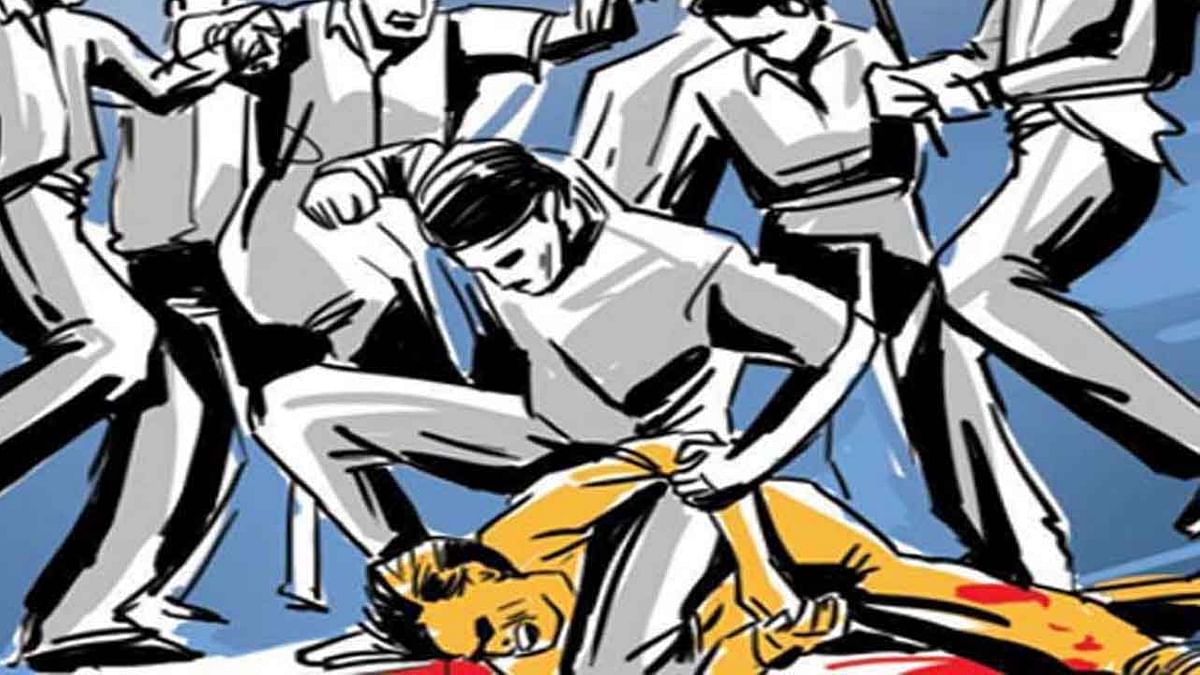
    The most systematic “lynching” (or mob violence against an individual or individuals) in India, described in the epic ‘Mahabharata’,  was that of India’s materialist philosopher Charvaka, as he was not just killed, but was demonised and his ideas distorted for generations. Charvaka was physically eliminated by a mob of servile brahmins because he could speak logical truth (so much for being called a “sweet talker” – a Charvaka!). 

    When the celebrations for the Pandavas’ victory in the Mahabharata war and Yudhishthir’s coronation were going on, the brahmins stood silently after paying their obeisance :

     निःशब्दे च स्थिते तत्र ततो विप्रजने पुनः

    At this moment Charvaka came forward and started addressing them. He accused Yudhishthir of killing his own relatives and gurus, and thus unfit to live:

    इमे प्राहुर्द्विजाः सर्वे समारोप्य वचो मयि।
    धिग्भवन्तं कुनृपतिं ज्ञातिघातिनमस्तु वै।।
    किं तेन स्याद्धि कौन्तेय कृत्वेमं ज्ञातिसंक्षयम्।
    घातयित्वा गुरूंश्चैव मृतं श्रेयो न जीवितम्।।

    His fearless statement stunned everybody. Yudhishthir and the Brahmins were speechless, afraid and ashamed:

    ततस्ते ब्राह्मणाः सर्वे स च राजा युधिष्ठिरः।
    व्रीडिताः परमोद्विग्नस्तूष्णीमासन्विशांपते।।

    However, these Brahmins then started accusing Charvaka of being a demon and a friend of Duryodhana, and eventually, they killed him.

    ततस्ते ब्राह्मणाः सर्वे हुंकारैः क्रोधमूर्च्छिताः।
    निर्भर्त्सयन्तः शुचयो निजघ्नुः पापराक्षसम्।।
    स पपात विनिर्दग्धस्तेजसा ब्रह्मवादिनाम्।
    महेन्द्राशनिनिर्दग्धः पादपोऽङ्कुरवानिव।।

    Since Yudhishthir was quite grief stricken and devastated at Charvaka’s accusation, a whole section is devoted where Lord Krishna consoles him, while demonizing Charvaka and justifying the act as preordained.

    स एष निहतः शेते ब्रह्मदण्डेन राक्षसः।
    चार्वाको नृपतिश्रेष्ठ मा शुचो भरतर्षभ।।

    See Mahabharata (Pancham Khand): Shanti Parva, 38.22-27, 39.2-11, Gita Press

    This incident has set a precedent. If you cannot logically refute your opponent’s argument, just call him a demon, burn all his books, and bump him off

  • The DMK has assured BJP victory in 2024

    The DMK has assured BJP victory in 2024

    I had earlier thought that the BJP will have to somehow whip up communal hatred and instigate communal riots to win the 2024 lok sabha elections.

    But now I think that it is unnecessary. The DMK, a coalition partner of the INDIA opposition alliance, has ensured victory for the BJP, without the latter doing anything.

    Udayanidhi Stalin, Minister in the ruling DMK state govt in Tamilnadu, and son of the Chief Minister MK Stalin, called Sanatan Dharma ( which most Hindus regard synonymous with Hinduism ) as a disease like dengue, malaria or covid, which must be eradicated, and far from expressing any regret he has repeatedly said that he stands by his statement.

    Udayanidhi’s father, Chief Minister MK Stalin, has supported his son

    Now, another DMK leader A. Raja, who is a former Union Minister, has gone further, and called Sanatan Dharma a disease like HIV or leprosy.

    None of the opposition leaders have condemned this statement, though some have said that they don’t subscribe to it. Congress leader Rahul Gandhi has not even commented on it

    80% of India’s population is Hindu, and, as already mentioned before, most Hindus equate Sanatan Dharma with Hinduism, and they have been deeply hurt by Udayanidhi’s statement 

     262 eminent people have written a letter to CJI Chandrachud asking for suo motu action against Udayanidhi 

    Since the DMK is part of the opposition alliance INDIA, and since the latter have not condemned Udayanidhi’s remark, all hopes of the opposition defeating the BJP in the forthcoming Lok Sabha elections, which were already doubtful, have now been dashed and are now buried.

    When the opposition has a friend like the DMK, the BJP needs no enemy. Udayanidhi Stalin’s and Raja’s speeches have put a nail in INDIA’s coffin, and sunk the INDIA alliance, like the iceberg which sank the Titanic.

    The BJP need to do nothing now to win the coming Lok Sabha elections. The opposition has ensured it.

  • INDIA is a stunt

    INDIA is a stunt

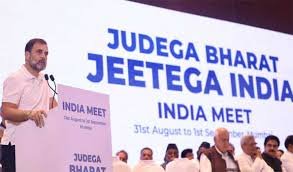
    With parliamentary elections looming in India in 2024, 28 opposition parties have formed an alliance called INDIA i.e. Indian National Developmental Inclusive Alliance. After its earlier meetings in Patna and Bengaluru, the 3rd 2 day meeting of INDIA just concluded in Mumbai, its main achievements being forming a 13 member Coordination Committee and 3 sub committees, and resolving to fight the forthcoming elections together ( but with the caveat ‘as far as possible’ ). However it did not announce any leader of the alliance, or convenor of the Coordination Committee.

    I am no supporter of the BJP, but to my mind formation of INDIA is just a stunt, and despite all its efforts the BJP will still get a majority in the coming polls, though maybe with reduced seats, and again come to power.

    https://www.youtube.com/watch?v=Si50ahsL6xM&pp=ygUXbXVtYmFpIG1lZXRpbmcgb2YgaW5kaWE%3D
    https://www.youtube.com/watch?v=UAmb1rBy4a8

    The biggest problem for the members of INDIA will be seat sharing. We may consider certain states :

    INDIA IS a stunt.

    1. In UP, the biggest state in India, while the BJP is perceived as the common enemy, Akhilesh Yadav’s Samajwadi Party is pitted against the Congress, both seeking the crucial Muslim vote bank.

    2. In West Bengal, Mamata Banerji would not be willing to give the Congress or CPM more than a token 2 or 3 seats each, because its main rival has become the BJP.

    3. In Maharashtra there will be a tussle between Sharad Pawar’s NCP and Uddhav Thakre’s Shiv Sena for seats.

    4. In Punjab and Delhi the tussle will be between Congress and Aam Admi Party

    5. In Kerala it will be between Congress and the Left.

    6. In Bihar it will be between Lalu Yadav’s RJD and Nitish Kumar’s JDU

    A common factor in formation of INDIA is the desire of non BJP parties to woo the Muslim vote bank, which is particularly large and crucial in North India. Muslims regard the BJP as their main enemy, and so welcome any move to oust it from power, like formation of INDIA. Hence parties not attending INDIA meetings become suspect in the eyes of Muslims. This is the reason why Mamata Banerji attended the INDIA meeting, though she does not need any support from Congress or the left parties in West Bengal, and can fight against BJP alone.

    The member parties in INDIA have nothing in common except common animosity for the BJP, just like the Janta Party formed in 1977 after the Emergency, whose constituent members had nothing in common except animosity for Indira Gandhi. 

    Members of INDIA have no idea how to solve India’s massive problems of poverty, unemployment, child malnutrition, lack of proper healthcare and good education, etc. Even if they come to power after winning the  2024 parliamentary elections, there will immediately be a scramble among its members for lucrative portfolios, and thereafter discord and disputes on several matters, leading to its break up, as happened to the Janta Party in 1979..

    Apart from the above, as I have repeatedly said, the test of every political activity or political system is one, and only one : does it raise the standard of living of the people ? Does it give them better lives ?

    The moment we ask this question we immediately realise that it matters little whether NDA or INDIA is in power. Their difference is like that between Tweedledum and Tweedledee, because in either case massive poverty, unermployment, malnutrition, lack of healthcare etc will continue under their rule.. 

    To get rid of these great evils will require a mighty, historical, united people’s struggle and revolution, not just changes in our present political leaders within the system of parliamentary democracy. I have explained this in detail in the articles below

    https://timesofindia.indiatimes.com/blogs/satyam-bruyat/a-french-revolution-is-approaching/

    https://www.theweek.in/news/india/2019/10/04/opinion-india-needs-modern-minded-revolution-to-become-a-first-world-nation.html

    https://www.firstpost.com/india/indias-moment-of-turbulent-revolution-has-arrived-and-it-is-going-to-be-a-long-and-bloody-one-writes-justice-markandey-katju-7891541.html

    https://www.ndtv.com/india-news/ideological-struggle-launched-by-voltaire-rousseau-needed-markandey-katju-2112351

  • Validity of Imran Khan’s trial in jail

    Validity of Imran Khan’s trial in jail

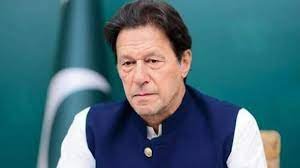
    After former Prime Minister of Pakistan Imran Khan was ordered to be released  on bail in the toshakhana case by the Islamabad High Court he was rearrested in the cypher case, and will be tried in Attock jail where he has been incarcerated.

    The question is whether such a trial away from the public gaze is valid ? In my opinion it is not.

    The Greek philosopher Plato in his book ‘Laws’ said that justice is not a private affair, and so citizens should be allowed to attend court proceedings. Similarly, the German philosopher Hegel said that judicial proceedings must be public, since the aim of the court is to do justice, which is universal.

     A Constitutional Bench of Indian Supreme Court in Naresh Shridhar Mirajkar & Ors Vs State of Maharashtra (1966 3 SCR 744)  laid down the importance of open court proceedings.

     The Court held :

    “It is well-settled that in general, all cases brought before the Courts, whether civil, criminal, or others, must be heard in open court. Public trial in open court is undoubtedly essential for the healthy, objective and fair administration of justice. Trial held subject to the public scrutiny and gaze acts as a check against judicial caprice or vagaries, and serves as a powerful instrument for creating confidence of the public in the fairness, objectivity, and impartiality of the administration of justice.

     Public confidence in the administration of justice is of such great significance that there can be no two opinions on the broad proposition that in discharging their functions as judicial tribunals, Courts must generally hear causes in open and must permit public admission to the courtroom.”  

    Similarly, in Chief Election Commissioner vs MR Vijaykumar ( 2021 ) the Indian Supreme Court observed :

    ” Courts must be open both in the physical and metaphorical sense. Save and except for in-camera proceedings in an exceptional category of cases, such as cases involving child sexual abuse or matrimonial proceedings bearing on matters of marital privacy, our legal system is founded on the principle that open access to courts is essential to safeguard valuable Constitutional freedoms.

     The concept of an open court requires that information relating to a court proceeding must be available in the public domain. Citizens have a right to know about what transpires in the course of judicial proceedings. The dialogue in a court indicates the manner in which a judicial proceeding is structured. Oral arguments are postulated on an open exchange of ideas. It is through such an exchange that legal arguments are tested and analyzed. Arguments addressed before the court, the response of opposing counsel, and issues raised by the court, are matters on which citizens have a legitimate right to be informed. An open court proceeding ensures that the judicial process is subject to public scrutiny, which is crucial to maintaining transparency and accountability. In the functioning of democratic institutions this is crucial to establish the public faith in them ”.

    In R. vs Socialist Workers Printers and Publishers, exparte Attorney General ( 1974 ) Lord Widgery observed :

    ” The great virtue of having the public in court courts is that discipline which the presence of the public imposes upon the court itself. When the court is full of  members of the public it is bound to have the effect that everybody is careful about what they do, and there is a disciplinary effect on the court which would be totally lacking if there were no critical members of the public or press present. When one has an order for trial in camera, all the public and press are evicted at one fell swoop, and the entire supervision by the public is gone. Public scrutiny fosters confidence in the process. Public discussion and criticism works as a restraint on the conduct of a judge ”.

    Similarly, in Naresh Shridhar Mirajkar vs State of Maharashtra ( 1966 ) CJI Hidayatullah observed :

    ” Hearing in open court of causes is of the utmost importance for maintaining confidence of the public in the impartial administration of justice: it operates as a wholesome check upon judicial behaviour as well as upon the conduct of the contending parties and their witnesses. An open court serves an educational purpose as well. The court becomes a platform for citizens to know how the practical application of the law impacts upon their rights ”.

    The virtues of openness were discussed by the Supreme Court of Canada in A.G. Nova Scotia v. MacIntyre which quoted eighteenth-century philosopher Jeremy Bentham:” In the darkness of secrecy, sinister interest and evil in every shape have full swing. Only in proportion as publicity has place can any of the checks applicable to judicial injustice operate. Where there is no publicity there is no justice. Publicity is the very soul of justice. It is the keenest spur to exertion and the surest of all guards against improbity. It keeps the judge himself while trying under trial ”. 

    According to the Supreme Court of Canada in Vancouver Sun (Re), the open court principle enhances the public’s confidence in the justice system:” Public access to the courts guarantees the integrity of judicial processes by demonstrating that justice is administered in a non-arbitrary manner, according to the rule of law. Openness is necessary to maintain the independence and impartiality of courts. It is integral to public confidence in the justice system and the public’s understanding of the administration of justice. Moreover, openness is a principal component of the legitimacy of the judicial process and why the parties and the public at large abide by the decisions of courts ”.

    The open court principle has long been recognized as a cornerstone of the common law in the UK. In its 1913 decision in Scott v. Scott, the House of Lords noted the right of public access to the courts is “one of principle, turning not on convenience, but on necessity”. Viscount Haldane L.C., noted that “Justice is not a cloistered virtue”. 

    In the 1936 decision of Ambard v. Attorney-General for Trinidad and Tobago, Lord Atkin noted “Publicity is the very soul of justice. It is the keenest spur to exertion, and the surest of all guards against improbity.”[

    Thus, all over the world it is accepted that court proceedings should ordinarily be open to the public gaze, except in some cases like sexual offences, child molestation and matrimonial proceedings. Unlike hearings by bureaucrats of public grievances, which can be in their offices behind closed doors, ordinarily all court proceedings must therefore be open to public view.

    Section 352 of the Code of Criminal Procedure, Pakistan states :

    ”   Courts to be open: The place in which any Criminal Court is held for the purpose of inquiring into or trying any offence shall be deemed an open Court, to which the public generally may have access, so far as the same can conveniently contain them: 

    Provided that the Presiding Judge or Magistrate may, if he thinks fit, order at any stage of any inquiry into or trial of, any particular case, that the public generally, or any particular person, shall not have access to, or be or remain in, the room or building used by the Court ”.

    Thus this provision accepts the general principle that criminal trials should ordinarily be in open court, to which the public should have access.

    The exceptions may be, as mentioned above, in cases of sexual offences, child molestation, matrimonial cases etc but Imran Khan’s cypher case does not fall in these exceptional categories. 

    An exception cannot override the general rule. If it was felt that a huge crowd will come if Imran Khan is tried in open court causing law and order problems, security arrangements could surely have been made. Also restriction on the number of people who are granted entry into the courtroom could have been placed, as in the Eichmann trial of 1961 in Israel in which too the people wanting to attend was far in excess of the seating capacity in the courtroom, and hence lots were drawn, and only those who got tickets were granted entry.

    It is obvious that the real reason for not holding the trial in open court was the fear in the minds of the Pakistan Establishment that public viewing of the brave man whose spirit could not be crushed by his incarceration would further increase his popularity. However, to my mind this cannot be said to be a valid reason for not holding the trial in open court