Tag: Industrialization

  • A Tale of Two World’s

    A Tale of Two World’s

    Before the Industrial Revolution which starting from England in the 18th century spread to many parts of the world, there were feudal societies everywhere. The means of production in feudal society were so primitive and backward that little wealth could be generated by them, and so only a handful of people ( kings and aristocrats ) could be rich, while the rest had to be mostly poor.

    "Katju Urges Global Solidarity for Underdeveloped Nations' Industrialization"
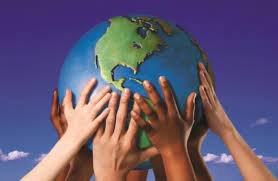
    Global Unity

    In sharp contrast to this situation, after the Industrial Revolution modern industry has become so big and powerful that enough wealth can be generated by it, and now no one on earth need be poor, and everyone can have a decent life.

    Yet the situation in the world today is that there are actually two worlds

    (1) the world of the developed countries i.e. North America, Europe, Japan, Australia, and now China, where most people are relatively rich, and

    (2) the world of the underdeveloped countries, which comprise the majority of the world’s population, where the vast majority of the people are poor.

    I have explained in the articles and video below that there is a secret, unwritten, and unspoken rule in the developed countries that underdeveloped countries must not be allowed to become developed, for if they do, the industries of the developed countries, which have expensive labour, will not be able to withstand the competition from those of the underdeveloped countries, which have cheap labour, and then the former will have to close down, throwing millions of workers out of employment.

    https://indicanews.com/justice-markandey-katju-on-dr-pervez-hoodbhoys-superficial-understanding/

    The developed countries no doubt have disputes amongst themselves, such as the present one between USA and Europe on the one hand, and China and Russia on the other. But when it comes to the underdeveloped countries they gang up, to prevent these countries becoming developed, for the reason abovementioned.

    And how do they prevent it ?

    They prevent it by making the people of these countries fight each other in the name of religion, caste, race or language, using their local agents e.g. the political leaders in these countries, who polarise society and incite hatred between local communities.

    https://indicanews.com/the-puppeteer-and-the-puppets/

    The basic struggle in the 21st century will therefore be the struggle between the underdeveloped countries to rapidly industrialise and modernise, for only then can they hope to escape from grinding and massive poverty, unemployment, malnutrition, lack of proper healthcare, etc, and the developed countries which will oppose this transformation tooth and nail.

    India is the most developed of the underdeveloped countries. It will therefore have to give leadership to the underdeveloped countries in this historical struggle.

    https://indicanews.com/justice-markandey-katju-india-will-provide-leadership-to-the-world-in-21st-century/

    https://www.linkedin.com/pulse/indian-century-markandey-katju?trk=portfolio_article-card_title

    But for doing that Indians must unite, rising above casteism and communalism

    https://indicanews.com/justice-markandey-katju-why-indians-need-to-remain-united/
    https://indicanews.com/justice-markandey-katju-on-bastille-day/

    Also, the whole system in India has to be changed

    https://timesofindia.indiatimes.com/blogs/satyam-bruyat/a-french-revolution-is-approaching/

    https://www.theweek.in/news/india/2019/09/04/opinion-india-edges-closer-to-its-own-french-revolution.html

    https://nayadaur.tv/15-Nov-2019/a-french-revolution-is-coming-to-india

    For this, an ideological revolution is required

    https://www.ndtv.com/india-news/ideological-struggle-launched-by-voltaire-rousseau-needed-markandey-katju-2112351

    Indians must therefore do their duty to the rest of the underdeveloped countries, and prepare for a long, arduous struggle, in which tremendous sacrifices will have to be made

    https://www.firstpost.com/india/indias-moment-of-turbulent-revolution-has-arrived-and-it-is-going-to-be-a-long-and-bloody-one-writes-justice-markandey-katju-7891541.html

  • Putin’s Russia summons Stalin from the grave as a wartime ally

    Putin’s Russia summons Stalin from the grave as a wartime ally

    [ad_1]

    Press play to listen to this article

    Voiced by artificial intelligence.

    MOSCOW — As Russia enters the second year of its war against Ukraine, fans of Joseph Stalin are enjoying a renewed alignment with the Kremlin.

    On Sunday, the hundreds of Stalinists who came to Red Square to mark the 70th anniversary of the Soviet dictator’s death were full of bravado and admiration for a man responsible for mass executions, a network of labor camps and forced starvation.

    But that was not a side of the dictator that was at the forefront of the minds of those who showed up to commemorate him.

    “Stalin stood up to Nazism,” Maxim, a 19-year-old medical student in a blue wooly hat, who like others interviewed for this article declined to give his last name, told POLITICO. “And now our current president has led the charge to take it on again.”

    Irina, a 35-year-old marketer, brought a bouquet of red carnations to lay at Stalin’s grave at the Kremlin Wall Necropolis. On February 24 last year when President Vladimir Putin declared war on Ukraine, a triumphant Irina posted a picture of a hammer and sickle on Instagram. “That symbol for me said it all.”

    Standing in front of Soviet founder Vladimir Lenin’s mausoleum on Red Square, longtime Communist Party leader Gennady Zyuganov told journalists Putin could learn “lessons” from Stalin: “It’s time to take action and start fighting in a real way.”

    But as Stalin’s reputation undergoes this rehabilitation, those dedicated to documenting Soviet-era mass repression have felt the full force of the state apparatus used against them.

    Across town from Red Square, in Moscow’s north-eastern Basmanny district, about two dozen people gathered outside a faded yellow four-storey building on Sunday. They came to install a plaque commemorating the site as the last home of Vladimir Maslov, an economist accused of spying for Poland in a fabricated case and shot at the height of Stalin’s Great Purge. One of the attendees wore an olive-green jacket adorned with a Dove of Peace — a risky political statement in Putin’s Russia.

    The “Last Address” campaign, which attaches the plaques to the former homes of the victims of Soviet repression, is one of very few such projects remaining after a merciless purge of Russia’s most established human rights groups — Memorial, the Sakharov Center and the Moscow Helsinki Group have all been forced to close.

    For now, their loosely organized volunteers, armed with drills and step stools to attach the plaques on façades, have been spared. But they face increasing hurdles: The required unanimous consent of a particular building’s residents has become harder to come by; plaques have even been taken down. 

    “People have become more careful, they are scared that acknowledging the dark episodes of the past will be taken as a nod to what’s going on today,” said volunteer Mikhail Sheinker. “In times like these, past and present converge until they almost blend together.”

    The day Stalin’s death was announced — March 6, 1953 — is seared into Sheinker’s memory: “I was four at the time and was making the usual ruckus, but my mother told me to be quiet out of respect.” 

    GettyImages 1245763191
    Russian Communist party supporters march to lay flowers to the tomb of late Soviet leader Joseph Stalin | Alexander Nemenov/AFP via Getty Images

    Today, in wartime Russia, the specter of Stalin could once again be used to further silence dissent. 

    On Sunday, state-run news agency RIA Novosti published an opinion piece headlined: “Stalin is a weapon in the battle between Russia and the West” arguing criticizing Stalin is “not just anti-Soviet but is also Russophobic, aimed at dividing and defeating Russia.”

    But while World War II — which Russians refer to as “the Great Patriotic War” — continues to be a central trope of Putin’s rhetoric when it comes to his invasion of Ukraine, the president casts himself more as a successor to the czars than Soviet leaders. Accordingly, state media paid relatively little attention to the 70th anniversary of Stalin’s death.

    Former Kremlin adviser Sergei Markov said that’s because Stalin is still too divisive and Russia’s ruling elite is loathe to commit to any specific ideology. But “if Russia is going to suffer further setbacks [in Ukraine], Stalin will become a main theme,” Markov wrote on Telegram.  

    Strange bedfellows

    The alliance between Putin’s Kremlin and revanchist Communists is an uneasy one. 

    In Russia’s lower house, or the State Duma, the Communist Party closely toes the Kremlin line — but at a regional level, its members are at times less disciplined.

    Last month, Mikhail Abdalkin, a Communist lawmaker in the region of Samara, posted a video of himself listening to Putin’s annual address to the entire ruling elite with noodles hanging from his ears. It was a nod to a Russian idiom “hang noodles on one’s ears” that refers to being taken for a ride or being fed nonsense.

    GettyImages 1247765172
    A Russian Communist party supporter holds a portrait of late Soviet leader Joseph Stalin | Kirill Kudryavtsev/AFP via Getty Images

    Last week, Abdalkin said he had been charged with discrediting Russia’s armed forces, with the case to be heard on March 7. If he’s convicted, Abdalkin could be fined.

    On Red Square on Sunday, some Communist supporters volunteered criticism of Putin, too — but not of his war on Ukraine. 

    “Stalin gets criticized for having blood on his hands. But what about Putin’s policies? Outside big cities, people need to travel hundreds of kilometers on muddy roads to get health care,” said Alexander, a pensioner in his 60s.


    [ad_2]
    #Putins #Russia #summons #Stalin #grave #wartime #ally
    ( With inputs from : www.politico.eu )