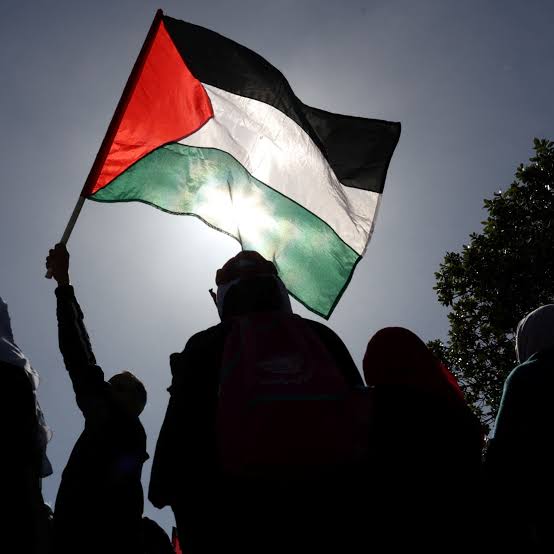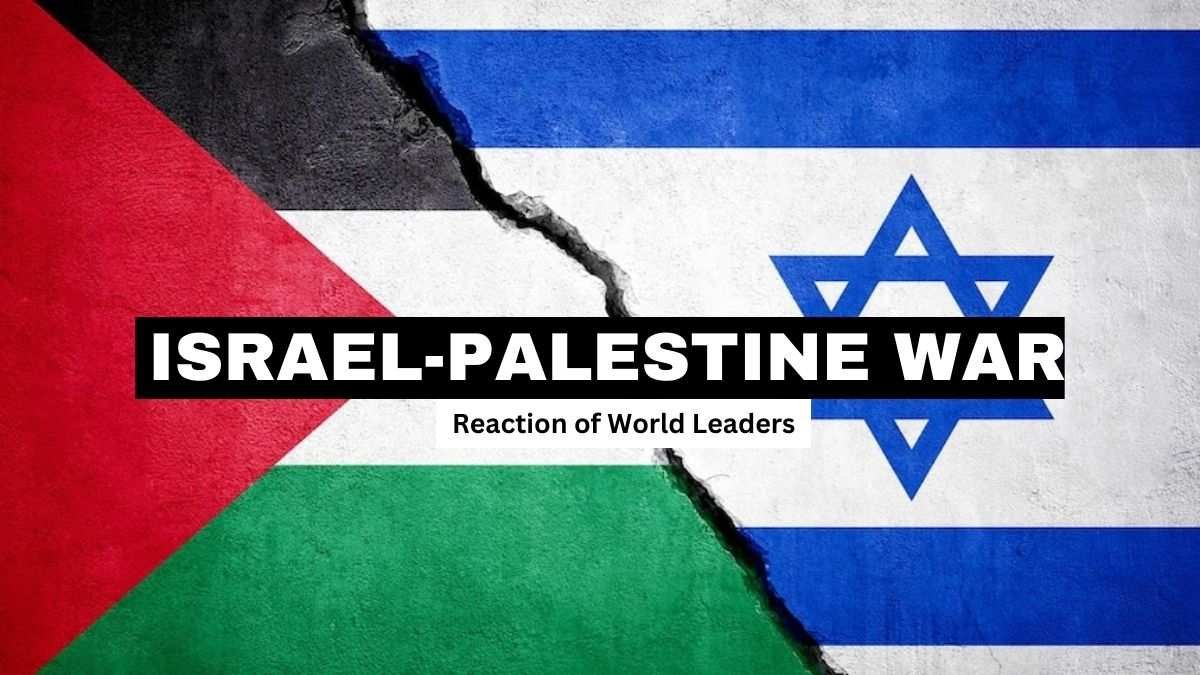
There are today two stormy centres of turbulence, crisis, and confrontation in the world today, Gaza and Pakistan.
As regards Gaza I have already written several articles and posted a video interview on the origin and nature of the events leading upto the events of 7th October, so I am not repeating the same.
In Pakistan, the situation has not yet reached the same level of insurrection as in Gaza, but the situation is potentially explosive, and may soon become a rebellion against the army, which has, after the events of 9th May, ( which many Pakistanis believe were stage managed ) imposed a reign of terror in Pakistan, arresting and imprisoning over 10,000 people, torturing many, and even ‘disappearing’ some, muzzling most of the media, and rendering the judiciary impotent.
The Pakistan army is now trying to foist on the Pakistani people the hated and corrupt former Prime Minister Nawaz Sharif, who had been sentenced to 10 years imprisonment by a Pakistani court for massive corruption, as evidenced by the Panama Papers, but fled to England thereafter.
About 90% people of Pakistan solidly support former Prime Minister Imran Khan, who has been locked up in jail since early August, along with many of the leaders and supporters of his PTI party.
It is thus a Pakistani army versus the Pakistani people situation.
Presently many Pakistanis are lying low out of fear of being arrested ( though there have been massively attended meetings in KP and elsewhere in Imran Khan’s support ).
But this situation cannot last long. National parliamentary elections are scheduled for 8th February, and the Pakistan army will resort to every means of opposing Imran Khan’s coming to power ( which he certainly will if elections are free and fair, considering his popularity ), so the army will get the PTI banned, or resort to massive rigging.
This will not be tolerated by the Pakistani people, who will then devise means of combating the army, by Guerilla War or other ways.
‘Nakba‘ ( catastrophe ) is the name given to the exodus of about 700,000 Palestinian Arabs in 1948 from the present territory of Israel, who fled out of fear after many were massacred by Israelis, including women and children.
Before Israel was established as a state, about 90% people living there were Arabs. Due to the Nakba only about 20% were left. The remaining fled to Jordan, the West Bank, Gaza, Lebanon, Syria, etc, and their descendants are still living there in horrible conditions.
Now after the events of 7th October, when Hamas attacked Israel, and the Israelis struck back, and the Israeli government’s announcement that people living in northern Gaza must move to the south within 24 hours as Israeli forces are going to move in there , a second Nakba has started, from north Gaza to the south.
Gaza is a tiny coastal strip of land, 25 miles long and 7 miles wide, heavily congested with about 2.2 million people.
Now half the population, i.e. over 1 million people living in northern Gaza, have been told to move to the south.
But where will they go ? Where is the housing, food, water, electricity etc for them ? And what will they do there ? Where are the jobs for them ? The Israeli order will convert the southern part of Gaza, which is already congested, into another Warsaw Ghetto during Nazi rule, deprived of essentials. And it will convert the majority of citizens of Gaza, who were hitherto peaceful, into militants, and make them join Hamas. As is said in Hindi ” Marta kya nahi karta ” ( A person facing death can do anything ). So far from solving any problems, this new step by the israelis will multiply them manifold.
The Israeli government claims that this step was necessary because Hamas launches missiles on Israel from northern Gaza, and since the missile sites are hidden in civilian buildings, it is impossible to destroy them without collateral; damage. So Israeli forces have started moving into northern Gaza, and the civilian population there has been told to move southwards.
But this Israeli step is likely to be counter productive, for the following reasons :
(1) It is an overkill to the Hamas attack of 7th October, and will revive another ‘intifada’ generally in the region.
Israeli planes have destroyed many apartment buildings containing civilians ( and allegedly even a huge hospital ), and killed over 10,000 people, many of them children.
I am reminded of an interview I saw of Bill Erhart, a Vietnam war veteran, who said ( see the full interview below) ” The notion I had in High School was that the Vietcong terrorised the Vietnamese population and forced them to fight against the Americans on pain of death. What I began to understand in Vietnam was that they did not need to do that. All they had to do was to let a marine patrol go through a village, and what was left of the village gave them all the recruits they needed ”.
(2) In Gaza specifically, it will increase militancy against Israel, as more and more people there will join Hamas out of desperation and vengeance for the thousands killed in the recent hostilities.
(3) Till now while Hamas had ruled only Gaza, the much larger West Bank, which had been conquered by the Israelis after the 1967 war, was ruled by the relatively moderate PLO ( Palestine Liberation Organisation ) headed by Mahmoud Abbas. Now more and more Palestinians living in the West Bank, who were fed up of being displaced by Israeli settlers, will switch their support to Hamas, and it will become the defacto ruler of the West Bank, instead of the PLO ( whose leaders are perceived by many Palestinians as being hand in glove with Western powers ). So the West Bank, which was largely quiet till now, will, like Gaza, become another hotbed of insurgency.
(4) There are broadly two coalitions of powers in the world today (a) the coalition of Western powers led by USA and including most European countries, and (b) the coalition of Russia, China and Iran. The former are overtly supporting Israel and giving it weapons and other supplies, while the latter are covertly supporting Hamas, and giving it weapons and other supplies.
Both coalitions are increasing supply of weapons etc to the ones they back, and this will naturally increase militancy in the region
I fear that the situation is going to get worse, and spread to neighbouring regions, and no one can predict when and how it will end, and how many will be the casualties. Probably we are in for the long haul.
Ever since Israel declared itself a sovereign state on 14th May 1948, Israelis, knowing they have the backing of Western powers, have been kicking around the Palestinians, as if the latter were dogs.
Earlier, over 90% people living in the territories of Israel were Arabs. After creation of the state of Israel, many of them ( including women and children ) were killed, and most fled in panic and fear, and now only about 20% population of Israel is Arab. Those who fled are still living in horrible and squalid conditions in Jordan, the West Bank, Gaza, Lebanon, etc.
I had a long talk about the present Israel Hamas conflict with a friend living in UK. These are the points we discussed
1. He said that Israel had a right to defend itself if attacked.
I replied that if someone forcibly occupies my house after throwing me out, and I fight to get it back, will you support me, or the person who forcibly occupied my house in the first place ?
2. He then said that Jews in Europe and elsewhere were always longing to go back to Palestine. I said this was rubbish, and I referred him to my two articles, given below :
The Holocaust was not perpetrated by the Palestinians Arabs but by Germans and their European collaborators. So why should the former be punished for the fault of the latter ?
3. He then said that the Jews have converted a desert into a green, blooming paradise.
I replied that if you forcibly occupy my house and throw me out, how does it matter to me that you have converted my house into a luxurious mansion ? I am still living on the road.
The Jews who came into Israel were mostly Europeans, who brought their advanced technical skills with them. This made the desert bloom, and was like the European immigrants pouring into North America from the 17th century onwards, bringing with them their technical skills, which led to rapid development of North America.
But this does not resolve the plight of Palestinians rendered homeless, and living in horrible conditions, just as it does not resolve the plight of the native Americans, who were displaced by European immigrants, and many of whom are still living in reservations in bad conditions.
4. He then contested my thesis that Israel was created by Western powers to control and safeguard the oil supplies for Western industries from the Middle East region. He said that the Israeli army has rarely invaded other countries near Israel which have huge oil deposits.
I replied that armies everywhere in the world are rarely fighting all the time. But they have yet to be maintained, just in case a need arises at a particular time.
The situation in Arab countries is that though the people are mostly anti-Western, the rulers are pro-Western ( in fact Western puppets ). So there is no need of sending the Israeli army into the oil producing countries, because even without that the rulers of these countries ensure oil supplies to the West. When Iranian Prime Minister Mossadegh nationalised the Anglo-Iranian Oil Company in March 1951 he was promptly deposed by the CIA, and the puppet Shah Reza Pahlavi installed.
5. He then said that many Arab countries have recognised Israel, and Saudi Arabia is about to do so.
I replied that the rulers of Saudi Arabia and most Arab countries are Western puppets, and so is Israel. So this was only to be expected. But has the wish of the peoples of these Arab countries been taken into account ?
6. He lastly said that Israel has a right to exist. I said that I am not against Jews, and I am not in favour of expelling Jews from Israel. After all, the Jews presently inhabiting Israel are not immigrants ( like their grandparents or great grandparents ) but were born and brought up in Israel.
But I believe that the only just solution to the conflict is creating a secular, democratic, State of Palestine, uniting Israel, Jordan, the West Bank, Gaza, the Golan Heights, and Lebanon, where Arabs, Jews, Christians, etc can all live peacefully, amicably and in harmony.
There is no other way, and unless this is accepted there will be no peace in the region.
Israel’s air strike killed 13 Palestinian civilians including three top commanders of the militant group Islamic Jihad in the Gaza Strip.
The strikes took place in the wee hours of Tuesday when 40 Israeli warplanes and helicopters attacked several places across the Gaza strip, the deadly strike hit homes and created a panic situation among residents.
Following the air strikes, Palestinian health officials confirmed that eight women and children were among the dead people and another had received severe injuries.
“Four children and four women were among those killed in the strike. most of the injured were women and children and many were in critical condition in hospital,” officials added.
Meanwhile, Israel issued a statement and claimed that they had only targeted militants who pose an imminent threat to their citizens.
Israel further stated that Islamic Jihad is a vindictive group and is expected to respond with rocket fire into Israel.
Reports suggested that at least two apartments with their fronts collided down strongly.
Russian representative office located in Palestinian territories announced a Russian citizen named Dr Jamal Khuswan, a former chairman of the Gaza Dentists Association, was also killed in the strike along with his wife and son.
As per BBC reports, Mohammed Khuswan was a prominent dentist and during the Isreal strike, he and his family were inside their home when it was hit by a missile.
Meanwhile, Islamic Jihad’s military wing, the al-Quds Brigades, confirmed the deaths of three of its
Al-Quds Brigades, the military wing of the Islamic Jihad group confirmed the death of three commanders along with their wives and children.
They identified them as Jihad Shaker al-Ghannam (secretary of the al-Quds Brigades’ Military Council), Khalil Salah al-Bahtini (the commander of its Northern Region) and Tariq Mohammed Ezzedine (head of the military action in the occupied West Bank).
Jerusalem: Israel has launched a sustainable energy transition plan in the Gaza envelope area seven km from the Gazan border in southwestern Israel, the country’s Ministry of Energy and Infrastructure said.
The plan is part of the government’s efforts to strengthen civil resilience in the region, which has for many years suffered from rocket and missile attacks, Xinhua news agency reported.
With an investment of five million shekels ($1.38 million), the plan will promote projects of energy efficiency, energy management, storage, and transportation, and accelerate the transition to sustainable energy in household and business sectors in the region.
Facilities will also be planned for optimising solar power generation in agricultural areas in the border towns.
In addition, the electricity network in the region will be upgraded with the establishment of new electricity facilities.
Gaza: Thousands of Palestinians in Gaza marked the International Quds Day with protests against Israeli police raids into the Al-Aqsa Mosque compound in East Jerusalem, the third holiest site in Islam.
Raising Palestinian flags and displaying the image of the Al-Aqsa mosque, protestors grouped across the besieged Palestinian enclave and chanted slogans slamming “Israeli violations against Jerusalem and the Palestinian worshippers in the area”.
Quds Day is a pro-Palestinian event initiated by Iran in 1979 and observed annually on the last Friday of the Muslim holy month of Ramadan, which falls on April 14 this year.
During a demonstration, senior Popular Front party official Louay al-Qaryouti delivered a speech on behalf of Palestinian factions, in which he called for unified Arab and Islamic efforts to confront Israel’s occupation and stay committed to the Palestinian cause, Xinhua news agency reported.
The Gaza-ruling Islamic Resistance Movement (Hamas) said in a statement that “Quds Day represents an opportunity to unify efforts in support of the steadfastness of the Jerusalemites, the stationed, and the defenders of the holiest place”.
Earlier in the month, the Israeli forces carried out raids for two consecutive days on the Al-Aqsa Mosque compound in Jerusalem, firing teargas canisters and stun grenades to disperse Palestinian worshipers.
The Israeli raids came during a sensitive time when Muslims are observing the holy month of Ramadan with prayers at the Al-Aqsa Mosque compound, while Jews were commemorating the Passover holiday.
The raids were condemned by countries in the Middle East and triggered an escalation of conflicts along Israel’s borders.
Jerusalem: Tensions have remained high despite an easing of the fightings between Israel and militants in Lebanon and the Gaza Strip, lowering fears of a major escalation in the region.
On Friday night, a tourist was killed and five others were injured during a shooting and run-over attack in the Israeli capital city of Tel Aviv, reports Xinhua news agency.
The attacker was identified as an Arab citizen of Israel from Kafr Qasim, east of Tel Aviv, Israel’s state-owned Kan TV news reported.
Also on Friday, two British-Israeli sisters, aged 16 and 20, were killed in a drive-by shooting in the northern West Bank, and their mother was critically injured, according to Israel’s Magen David Adom rescue service.
Friday’s Ramzan prayers at the Al-Aqsa Mosque compound in East Jerusalem concluded without any major incidents after consecutive nights of violence.
Israel lifted the high alert level in the south, which had required residents in communities near the Gaza Strip to stay indoors and close to shelters.
However, Israel’s Chief of the General Staff called up reservists, particularly from the Air Force, citing concerns of further escalation.
Following the attack in Tel Aviv, Prime Minister Benjamin Netanyahu ordered the border police and military to call up reserve forces “in the wake of terrorist attacks,” according to a statement issued by his office.
On Thursday, militants in Lebanon fired 34 rockets at northern Israel, in the largest rocket attack since the 2006 war between Hezbollah and Israel.
The attack injured two civilians and caused damage to several buildings and cars.
Israel accused Hamas, the Palestinian militant group that governs Gaza, of being responsible for the attack.
In response, Israel carried out airstrikes in southern Lebanon and the Gaza Strip late Thursday night, targeting Hamas sites.
The escalation was triggered by two consecutive days of Israeli raids at the Al-Aqsa Mosque compound in Jerusalem.
Israeli police forces fired gas canisters and stun grenades at Palestinian worshipers.
It came during a sensitive time when Muslims are observing the holy month of Ramzan with prayers at the Al-Aqsa Mosque compound, while Jews were commemorating the Passover holiday.
Despite the heightened tensions, conflicting sides expressed a desire to avoid a full-fledged war, with Israel’s army spokesman stating that “quiet will be answered with quiet” during a press briefing.
The peacekeeping UN Interim Force in Lebanon (UNIFIL) has appealed for calm and stated that it was in contact with Israeli and Lebanese authorities.
Gaza: Israel on Friday intensified airstrikes on military posts in the Gaza Strip and Lebanon, in response to rockets fired at several parts in the Jewish state, escalating tensions with Palestine over the past three days the Israeli police and Palestinian worshippers clashed at the Al-Aqsa Mosque in East Jerusalem.
Hamas security sources said that Israeli reconnaissance drones and fighter jets launched dozens of airstrikes on military posts and facilities that belong to the Al-Qassam Brigades, the militant group’s armed wing, reports Xinhua news agency.
Rsidents told Xinhua that they heard the buzz of the fighter jets and drones hovering over the Hamas-controlled Gaza Strip and that bombings were heard all over the coastal enclave.
وزارة التربية والتعليم العالي: “تعرض مركز التدريب التربوي التابع لمديرية تعليم شرق غزة لأضرار بسبب العدوان الإسرائيلي على القطاع”. pic.twitter.com/zcdNeVfWWJ
— المركز الفلسطيني للإعلام (@PalinfoAr) April 7, 2023
Medical sources in Gaza said that no injuries were immediately reported and hospitals and clinics have declared a state of emergency and readiness to receive possible casualties.
The Al-Qassam Brigades and other minor militant groups said in separate statements that their militants fired anti-craft missiles at the Israeli jets that hovered over the Gaza Strip.
The joint Palestinian chamber of operations, which comprises several armed wings of Palestinian factions, including Hamas and the Islamic Jihad, said earlier that their militants “are ready to confront any Israeli attack”.
“In light of the enemy’s threats to our resistance and our people in Gaza, we affirm our readiness to confront and respond with all force to any aggression and to defend our people in all places of its presence and our sanctities,” it said in a statement.
Meanwhile, an Israeli army spokesman said that sirens were turned on in southern Israel after barrages of projectiles and rockets were fired from the Gaza Strip and that Israeli fighter jets bombed several Hamas posts and facilities in the southern, central, western and northern Gaza Strip.
“The Israel Defense Forces (IDF) attacked tonight, using a remotely manned aircraft, a heavy launcher from which missiles were fired at IDF aircraft and Israeli territory,” said the spokesman.
The Israeli army on Friday confirmed that the country’s air force struck southern Lebanon as Israel accused Hamas and other militant groups of being responsible for firing at least 34 rockets from south Lebanon at northern Israel.
According to the army, 25 rockets were intercepted by the IDF Aerial Defense Array, while five landed in Israeli territory and four additional launches were under review.
The Israeli military warned that it will not permit Hamas, which runs the Gaza Strip and has a smaller presence in the Israeli-occupied West Bank, to operate from within Lebanon, and that it “holds the state of Lebanon responsible for every directed fire emanating from its territory”.
The Israeli airstrikes began as Prime Minister Benjamin Netanyahu was convening his Security Cabinet to discuss possible military responses to the rockets fired from Lebanon — the biggest single barrage in 17 years.
إذاعة جيش الاحـ ـتلال: “قبل وقت قصير تم تفعيل صفارات الإنذار في منطقة مفتوحة بغلاف غزة”.
— المركز الفلسطيني للإعلام (@PalinfoAr) April 7, 2023
The latest escalation comes during a sensitive holiday time as Muslims were observing the holy month of Ramadan with prayers at the Al-Aqsa Mosque compound and Jews were commemorating the Passover holiday.
The clashes erupted after Israeli police had raided at the Al-Aqsa Mosque compound, the third holiest site to Muslims for two consecutive days, firing gas canisters and stun grenades at worshipers.
Earlier this week, militants in Gaza fired about 20 rockets at southern Israel in a response to Israeli raids at the Al-Aqsa Mosque compound.
In the past as well, the shrine has often witnessed clashes between Palestinian worshippers and Israeli security forces, triggering wider unrest.
In May 2021, an Israeli raid here contributed to an 11-day full-scale conflict between Israel and Hamas, the Islamist militant group which governs the Gaza Strip.
Israel has launched a retaliatory strike against Lebanon and Gaza, following a second night of violent clashes in Jerusalem. The clashes at the Al-Aqsa mosque compound in the Old City of Jerusalem have raised tensions between Israelis and Palestinians, leading to rocket fire from both sides.
Israel is bombing Gaza (Hamas tunnels and weapons production centers), Gaza is shelling Israeli settlements near the border with the sector pic.twitter.com/lxsUzGNe4T
The violence began on Monday when Israeli police stormed the Al-Aqsa mosque compound, which is considered one of the holiest sites in Islam, during Ramadan prayers. The move sparked outrage among Palestinians, who responded by throwing rocks and other objects at Israeli police. The police responded with stun grenades and tear gas, leading to violent clashes that left over 300 Palestinians and over 20 police officers injured.
The violence continued on Tuesday night, with Palestinians throwing rocks and fireworks at Israeli police, who responded with rubber bullets, stun grenades and tear gas. The clashes continued into Wednesday, with Israeli police using stun grenades and tear gas to disperse the crowds.
In response to the escalating violence, the militant group Hamas fired rockets into Israel from Gaza on Tuesday evening, prompting Israel to respond with air strikes on Gaza. The Israeli military said it had hit a number of targets in Gaza, including a weapons manufacturing site and a military post.
On Wednesday, the Israeli military said it had launched further air strikes against targets in Gaza, including a Hamas tunnel network. The military said the strikes were in response to continued rocket fire from Gaza into Israel.
In addition to the rocket fire from Gaza, Israel also launched retaliatory strikes against Lebanon on Tuesday, after thirty rockets were fired into northern Israel from Lebanese territory. The Israeli military said it had hit the launch sites in Lebanon.
The situation in Jerusalem remains tense, with Israeli police patrolling the Old City and Palestinian protesters vowing to continue their demonstrations. The clashes have raised concerns about a potential escalation of violence in the region, as well as the wider implications for Israeli-Palestinian relations.
The United States and other world powers have called for calm and urged both sides to avoid any further escalation of violence. The UN Security Council is due to meet later on Wednesday to discuss the situation.
Jerusalem: A rocket fired from the Gaza Strip hit an open area landed in southern Israel, according to the Israeli military.
There were no immediate reports of injuries and claim of responsibility for the attack, Xinhua news agency reported, citing Israeli media reports.
The rocket attack comes at a time of heightened tensions between Israelis and Palestinians, with over 80 Palestinians killed by Israeli forces and 14 Israelis died in Palestinian militants’ attacks since the beginning of this year.
Earlier this week, four Palestinians, including a teenager, were killed in an Israeli military raid in the West Bank city of Jenin, according to Palestinian health officials. After the raid, the Palestinian Islamic Jihad vowed revenge.
Tensions are expected to escalate in the coming days when the Muslim holy month of Ramadan and the Jewish weeklong holiday of Passover overlap in April.