SRINAGAR: In the picturesque Lahaul valley of Himachal Pradesh, an ecological disaster is unfolding as the willow trees that have sustained the region’s inhabitants for generations are dying. A mysterious disease, coupled with improper irrigation resulting from a lack of winter snowfall, is the cause of this devastation. The valley’s residents rely on the willows for firewood and fodder, making this an urgent situation that requires immediate attention.
To address this crisis, the Himachal Pradesh government has announced a plan to grow Kashmir willows in nurseries before planting them in the forest. The government has already planted 3.4 lakh trees, but more action is needed to save the valley’s source of livelihood.
Lahaul-Spiti legislator Ravi Thakur brought the issue to the assembly’s attention, stating that the willow trees had decayed in just 18 years, impacting every household in the valley. He proposed that more Kashmir willows be planted to replace the decaying trees.
Chief Minister Sukhvinder Singh Sukhu responded by saying that the government is searching for a cure and replacement for the decaying trees. The government is currently conducting studies to find the cause of the decay at Palampur’s Himachal Pradesh Krishi Vishavvidyalaya and Nauni’s Dr Y S Parmar University of Horticulture and Forestry. The government has also enlisted the help of Shimla’s Himalayan Forestry Research Institute to find the cause of decay and develop disease-resistant cloned varieties of willow for Lahaul-Spiti.
To ensure the survival of the trees, the forest department has recommended growing willows in polybags at nurseries instead of planting them as naked rootstock. The department is also advising local landowners to use this technique. Additionally, the plantation site must be located near irrigation facilities since willows need a lot of water to grow. Rootstock for plantation should be selected from healthy, young, and vigorous plants, with pollarding done scientifically to avoid mechanical damage.
While the government has recommended a mixed plantation of willow species based on local suitability, it has stated that it will not replace the decaying forest trees with Kashmiri willow trees to prevent the spread of disease caused by monoculture.
SRINAGAR: In a meeting, health experts on Tuesday assured Chief Secretary, Dr Arun Kumar Mehta that there is no need to panic in view of little spike in Covid-19 cases reported across the UT recently.
The meeting was attended by the Secretary, Health; Director SKIMS; Principals of Medical Colleges and Heads of Medicine and Microbiology of Medical Colleges; Directors of Health Services Kashmir/Jammu besides other experts from the Medical field.
Dr Mehta enjoined upon all these health experts to take all the necessary measures to tackle any issues that may arise full, an official spokesman in a statement said.
Mehta asked them to perform the precautionary testing of individuals as per the set protocols and not to resort to either under testing or over testing in the health facilities. He impressed upon them to create ample awareness among public so that no unnecessary scare was created among them.
The Chief Secretary also emphasised on taking stock of medicines and other paraphernalia beforehand so that people are served better. He asked the department to give booster doses to the vulnerable groups like elderly and persons with comorbidity. He also directed them for encouraging people to observe the Covid appropriate behavior for safety of all.
On the occasion the Chief Secretary directed for constituting a three member committee under Director SKIMS with Principals of Government Medical Colleges of Jammu and Srinagar as members for working out a standard protocol for treatment of patients across the health facilities of J&K for various ailments.
He also urged the committee to look into the reasons of high rate of C-section births in the UT and advised them to suggest the corrective measures to address this issue.
He further asked them to frame a mechanism in consonance with the hospitals in other regions regarding a policy for taking off days in lieu of night duty and working of medics. He also asked the Department to ensure that various wings in all hospitals must follow an inclusive approach with respect to all doctors working in the wing for ensuring equitable opportunities and due process of consultations in management of patients.
The Secretary Health informed the meeting that currently there is no ICU bed occupancy related to covid in the health facilities of the UT. He made out that the testing capacity of J&K has been augmented by many folds. He made out that the full Genome Sequencing facility has been started at SKIMS recently and other at GMC Jammu shall be started soon. He also revealed that every sample of a positive person is sent for its genome analysis as per the GoI guidelines.
The Secretary apprised the meeting that Mock Drills were conducted in 162 health facilities across the UT on 10th April to ensure Operational Readiness for management of COVID at all identified dedicated facilities including GMCs/ DHs and CHCs with specific focus on Oxygen Plants (LMO/ PSA/ Manifold), Ventilators, Logistics & Human Resources.
He said that the covid vaccination doses given in the age groups of 18 years & Above, 15-17 years and 12-14 years in the UT are above that of the National Average which was quiet encouraging. He ascertained that there is no reason to worry and only caution can evade its possible implications.
Moreover the health experts also gave their suggestions regarding the current scenario and preparedness of J&K UT. They informed that the virus is not so lethal this time although the spread may be faster. They advised people to only take precautions so that they keep themselves safe as well as others.
It was revealed that J&K has identified around 3000 Covid beds, 1966 isolation beds, and 330 ICU beds in its hospitals. It has a capacity to generate 1,14,366 LPM of oxygen from its 154 plants. The UT also has 4 CBNAAT, 15 TRUENAT labs in its hospitals to generate tests more accurately and expeditiously.
It took a long time to undo the government’s monopoly over the printing press. Scholar Nayeem Showkat details the evolution of the printing facility and allied newspaper sector in Jammu and Kashmir since 1858
Rising Kashmir Printing Press
Four centuries past the invention of Gutenberg’s press, dotted by fervent production of information, the Dogra rulers of the erstwhile State of Jammu and Kashmir acquired its first printing press Vidya Vilas Press in 1858. Its purpose was the printing official documents in Jammu. The facility was equipped with facilities to also print Persian and Devnagri script and it has published several books as well.
Pandit Bankat Ram Shastri from Banaras is said to be instrumental in helping the Maharaja in the establishment of the press. Meanwhile, Saligram Press was also established in the erstwhile State of Jammu and Kashmir. It is noteworthy that both the presses were endowed with the technology to print Urdu script as well, and as mentioned in Akhtar Shehanshahi, these facilities were cardinal for the birth of Urdu journalism in Jammu and Srinagar.
Translation Department
Roping in various eminent scholars under the supervision of Pandit Govind Koul, Maharaja Ranbir Singh, concurrently, established a translation department to translate books from Sanskrit, Arabic, Persian and English into Dogri, Urdu and Hindi. The books encompassing extensive areas of astronomy, geology, mathematics, physics, zoology, and chemistry, were printed for free distribution to scholars of government schools, pathshalas and madrasas.
With aforethought of higher studies in oriental languages, schools were instituted in every wazarat and tehsil, with two such principal pathshalas in Raghunath Temple, Jammu, and Utterbhani respectively, imparting instructions in Vedas, grammar, Kavya Shastra and Nyay. For the accomplishment of the desired goals, books were supplied free of cost, and scholarships were granted to the scholars and teachers.
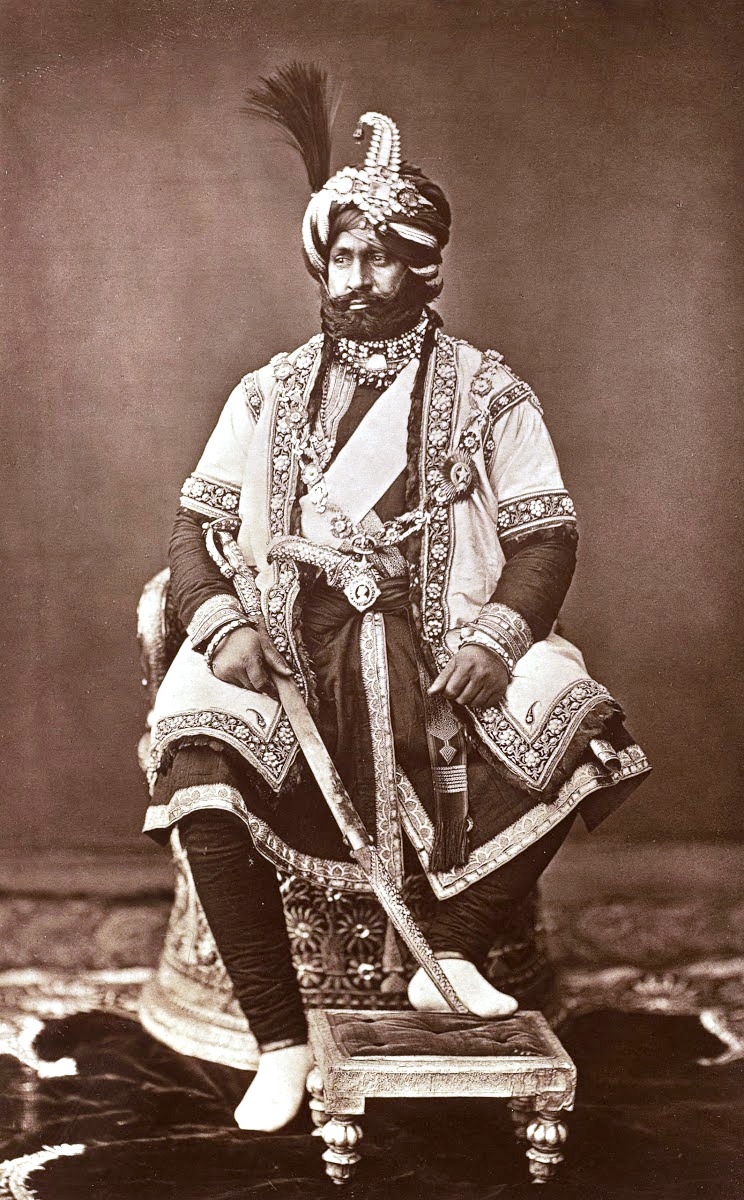
A portrait of Maharaja Ranbir Singh, Pic: National Portrait Gallery London
Besides, Maharaja Ranbir Singh also constituted a body of scholars in view of the translation of shahparas (writings) of various languages into Urdu and Hindi, which triggered debates on their critical and historical context. The rationale behind his intention of floating an organisation called Vidya Vilas Sabha, was to bring together various intellectuals and literati as its members, to discuss and debate different literary issues for the promotion of various languages including Sanskrit, Persian, Hindi, Dogri and Urdu.
It was in that era that numerous manuscripts of Sanskrit and Persian were printed and translated into Dogri, Hindi, and Urdu. It is worth mentioning that a substantial number of texts written in the Sarada script of Kashmiri were transcribed into Devanagari. The library then consisted of around 5000 manuscript volumes, some of which were printed in Vidya Vilas Press.
The News Media
The watershed moment in the history of news media in Jammu and Kashmir came when Vidya Vilas Sabha started to publish a double-column bilingual – Urdu and Hindi (Devnagari script) – a weekly newspaper, Vidya Vilas Jammu, covering the proceedings of this sabha. This laid the foundation of the first-ever newspaper of the erstwhile State of Jammu and Kashmir.
However, according to the First Press Commission Report, an independent periodical namely Vrittanta Bilas was published from Jammu in 1867. Surprisingly, no evidence could be found to further substantiate it.
The reference of Vidya Vilas is found in Savaaneh Umri Akhbarat, which was published in June 1896 with the name of Akhtar Shehanshahi from Lucknow by Akhtar u Daula Haji Sayed Mohammad Ashraf Naqvi. The newspaper is said to have been started by Maharaja Ranbir Singh at the suggestion of Munshi Harsukh Rai, the editor of a Lahore-based popular Urdu newspaper Kohi-i-Noor.
Published from Vidya Vilas Press, Jammu, this newspaper came into existence in 1867. In contradiction with other writers, DC Sharma claims the year of its publication to be 1868.
Growing up in the shade of the palace, this weekly newspaper contained eight pages. However, according to Tahir Masood, the newspaper comprised 16 pages. The news on its right column used Urdu script and the left column had Devnagari script.
Most historians have referred to this news sheet as Bidya Bilas. It is notable that both the Hindi words Vidya and Vilas denote The Luxury of Knowledge. However, the word Bidya is the same in Urdu as Vidya, while no such word called Bilas exists in either Urdu or Hindi language.
It raises certain doubts regarding the usage of these words either due to the local parlance or it could have simply been a mistake of an inscription. So, the title of the newspaper may be written as either Vidya Vilas or Bidya Vilas.
With a subscription rate of 12 rupees per annum, the newspaper was published every Saturday. Khojo Shah Sadrullah was the manager, while Bakshi Krishan Dayal was the editor of the weekly. According to Akhtar Shehanshahi, Maharaja himself was the patron, with Pandit Bankat Ram as its owner.
Maharaj Ganj Press
Following his ardent interest in the development of the Urdu language, Deewan Kripa Ram recommended Munshi Harsukh Rai of Koh-i-Noor to establish a private Urdu printing press in Srinagar, alsopromising to offer him certain facilities for it. Consequentially, in response to the offer, came to the fore the printing press Tohfa-e-Kashmir, which was established by Rai in Sheikh Bagh Maharaj Ganj area of Srinagar in 1875.
The press brought out a weekly newspaper with the same name, Tohfa-e-Kashmir from Maharaj Ganj the next year. This is said to be the first newspaper ever published fromthe province of Kashmir, though the practice couldn’t sustain for long. It is the same press where Abdul Salam Rafiqi’s weekly Al-Rafiq was printedin 1896.
The periodical’s critical approach, however, led to its closure as well as that of the printing press Tohfa-e-Kashmir Press. Rafiqi, later on, is said to have published the newspaper from Rangoon. However, the claim of certain historians that Rafiqi resumed publication of this newspaper from Rangoon in 1906with the support of Sir Syed Ahmad Khan in Aligarh looks dubious as Sir Syed had died in 1898.
Further, the development of the printing press received a major setback when Muhammad Din Fauq submitted an application in 1904 seeking permission to initiate a newspaper from Srinagar. This request evoked an opposite reaction with the prime minister issuing a command for the formulation of a decree banning the setting up of a printing press. It was the time when the Moravian Mission under the leadership of Father FA Red Solob as the superintendent had already instituted a litho-press with an aim to publish the translated books in its Leh office.
Ranbir Takes Off
With no visible impact of the invention of the printing press five centuries ago on the erstwhile State of Jammu and Kashmir, the press here took a long to set in motion and develop. It was on March 27, 1924, Mulk Raj Saraf was conveyed the State Council’s order permitting the initiation of a newspaper in lieu of cash security of Rs 500 as laid down in the Jammu and Kashmir State Press and Publications Regulation Samvat 1971. Besides issuing a newspaper Ranbir, he was granted permission for initiating a printing press in Jammuunder section 5 of the Act.
However, with no clue about the printing press, Saraf on his query was apprised by the establishment that “the permission to a newspaper implied the starting of a press as well.” Maharaja also agreed to donate Rs 50 per year to Ranbir. Thus began the journey of the State’s first regular Urdu weekly Ranbir. Saraf in his autobiography claims to have initially thought to name his newspaper Pahari and printing press Dogra Press in place of Ranbir and Public Printing Press respectively.
The office of Ranbir was set up in Thakur Kartar Singh’s cutcha quarter near Rani Talab. Unable to afford a power-driven plant, a hand-driven litho printing machine was installed for printing Ranbir.
Besides that, owing to the lack of katibs (calligraphists) and machine men in Jammu and Kashmir, a government katib Munshi Taj Din assumed the job of calligraphist on the condition that the necessary material be supplied to him at his home instead of him coming to Ranbir’s office.
A Government Monopoly
It is noteworthy that the government had a complete monopoly on the printing press till that time. All the earlier Census reports including the report of 1911 were silent on the inception or existence of printing presses or periodicals in the State.
For the first time, it was only the Census report of 1921, which mapped the printing presses prevalent in the State of Jammu and Kashmir. The Census report of 1921 mentions a total of four printing presses in the industry of luxury category. Revealing that no private printing press remained in existence, all the printing presses have been specified as ‘Government of Local Authority’.
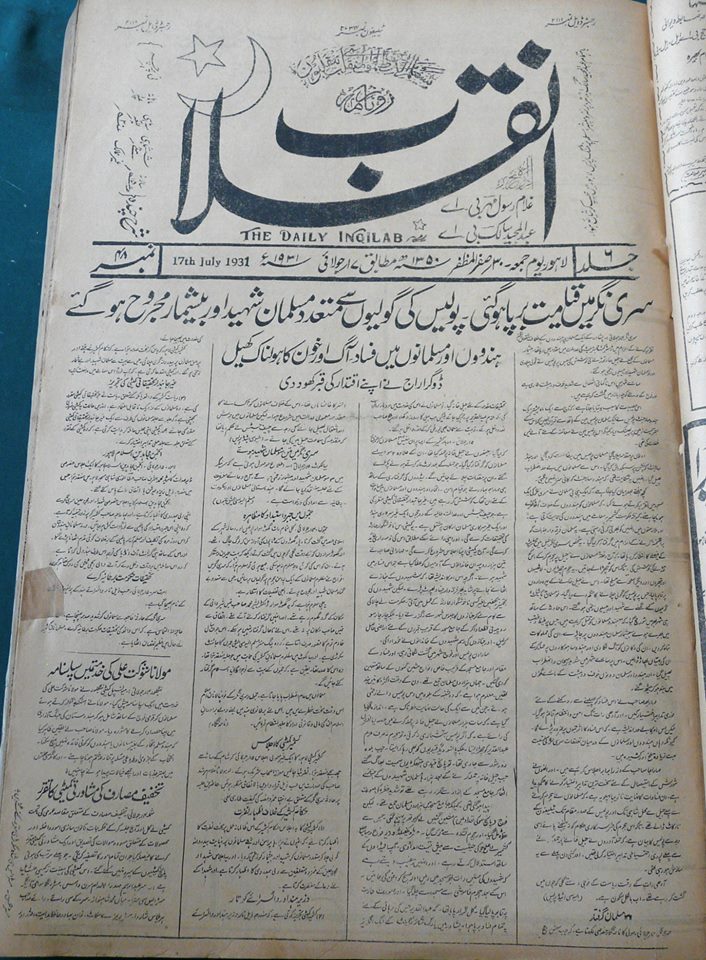
Front page of newspaper, Inquilab on July 17, 1931
It is recorded that one printing press was installed in Jammu, one in the central jail, and the remaining two litho presses also in central jails. The report further delineates that there was a printing press in the Jammu district employing 165 people including one direction manager, one supervising and technical staff, 17 clerks, 133 skilled workmen and 13 unskilled labourers.
One printing press called Printing Press (Jail) was also functioning in the Jammu district employing 31 workers including supervising and technical staff, two clerks, eight skilled workmen and 18 unskilled labourers. Similarly, there were two printing presses (jail) in Kashmir South, hiring 116 employees including four supervising and technical staff, two clerks, 37 skilled workmen and 73 unskilled labourers.
The Glancy Commission
In light of a paradigm shift across the world, Maharaja Hari Singh eventually accepted Glancy Commission’s suggestions and repealed the Jammu and Kashmir State Press and Publications Regulation Samvat 1971 on April 25, 1932. A new act, Jammu and Kashmir State Press and Publications ActSamvat 1989 came into force on the same day.
Largely on the lines of a similar law in vogue in British India, this Act liberalised the press in Jammu and Kashmir. This ‘gambit’ of Maharaja Hari Singh to liberalise the press in the princely State was not only lauded in the territory but across British India. The new Act legitimised publication of dozens of newspapers since May 1932.
Within a demi-decade of the enforcement of the new Act, a spurt in publication rate was witnessed in Jammu and Kashmir, subsequently resulting in the birth of several dozen newspapers. It is estimated that the number of newspapers increased to three dozen by the end of 1937.
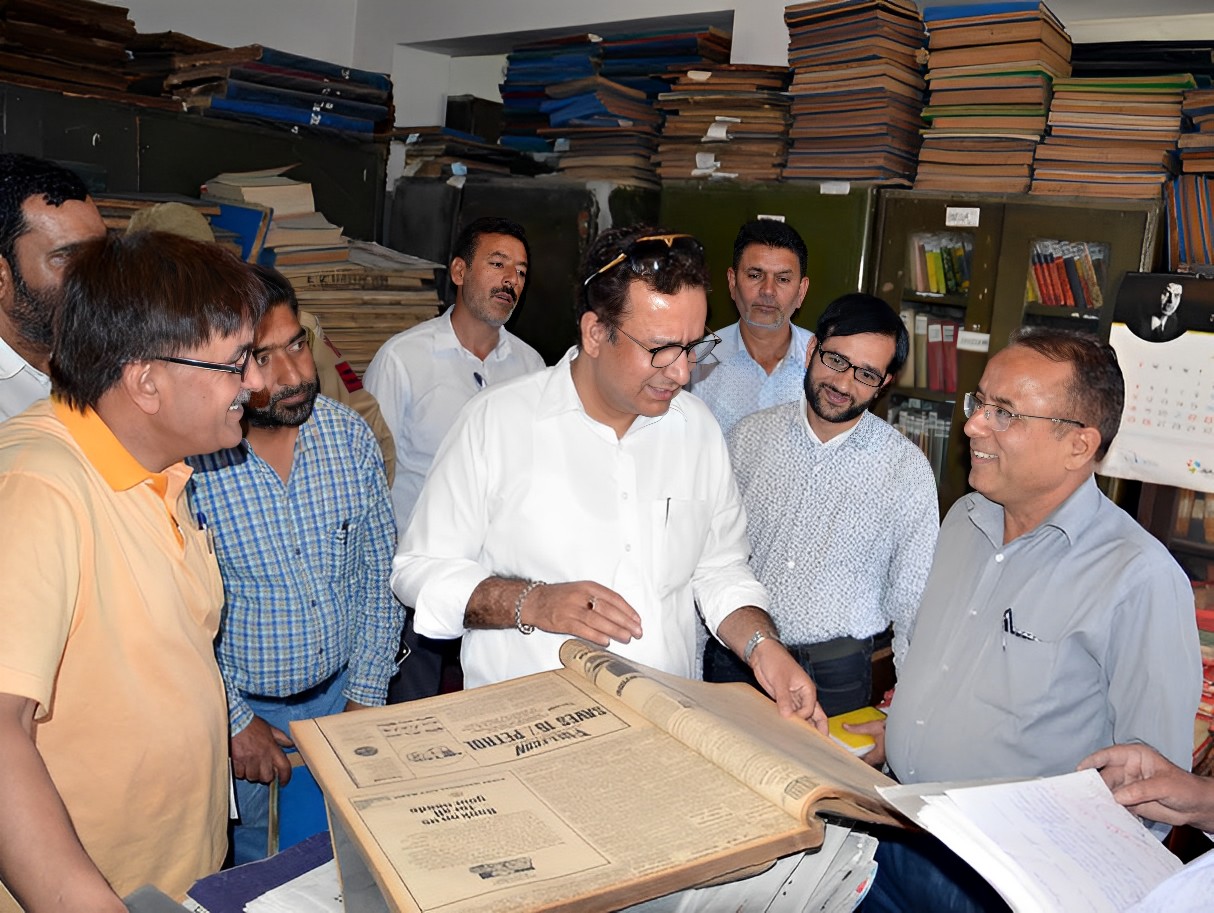
Erstwhile Information Minister, Choudhary Zufiqar inspecting the archives section of DIPR Jammu and Kashmir in Srinagar.
According to the Census of India, 1941, the Indian union had some 3,900 newspapers including 300 dailies and 3,600 others, with a cumulative circulation of seven million. However, according to the Report, there were 44 newspapers in the State in the spring of 1941.
The document reveals that the growth of newspapers during the period (1931 to 1941) in Jammu and Kashmir was significant. In 1931, Jammu province had only one newspaper, and Kashmir province had none. However, in 1941, Jammu province had 24 newspapers, and Kashmir had 20 newspapers, making a total of 44 newspapers in the state. Interestingly, the report also mentions that Frontier districts did not have any newspapers until 1941, as indicated in the Census document.
Proclaiming that a fair number of such newspapers were issued punctually and regularly, the census data further revealed that while a portion of it couldn’t last long, others were published at uncertain intervals. The Census discloses that local newspapers were mostly printed in Persian (Urdu) script; a few were also printed in English (Roman) and Hindi (Devanagiri) script.
Though expounding that the standard of journalism has improved like never before, yet the Census data divulges that the influx of newspapers at that time was so high for a minimal newspaper-reading public that most of such newspapers would hover between life and death.
Surprisingly, the Census of India 1941 betrays that the first printing press in Jammu and Kashmir was installed in 1912. It further documents the growth of printing presses between 1931 and 1941, stating that in 1931, State of Jammu and Kashmir had eight printing presses, with four installed in Jammu province and four in Kashmir province.
In 1941, the number of printing presses in the State of Jammu and Kashmir had increased to 37, as per the Census of India report. Of these, 22 printing presses were present in Jammu province, while 15 in Kashmir. Needless to say, the Frontier districts remained without any printing press during both the time intervals discussed.
Text Books
The Census Report of 1941 notes that information about the publication of non- educational books in Jammu and Kashmir is mostly unknown. Albeit, it highlights that the number of non-educational books was small but increasing in the region.
No textbook, according to an official document, was printed in the erstwhile state of Jammu and Kashmir till 1936. It was during Maharaja Hari Singh’s reign only that the textbook business was nationalised in the late 1940s. To ensure prompt publication of the approved manuscripts, and further accelerate the process of printing in the State, the services of all the private presses were rendered.
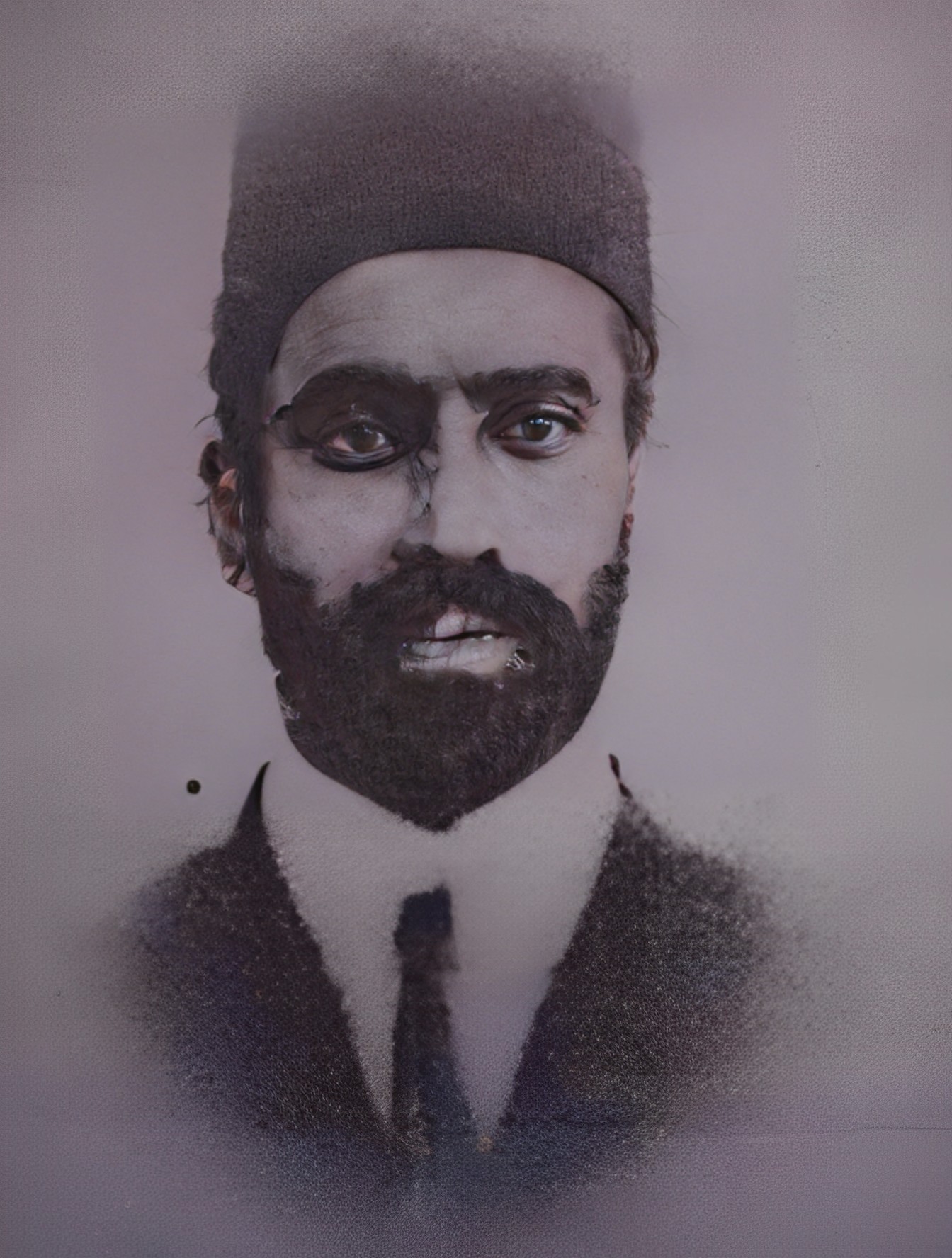
Abdul Salam Rafiqi, the first Kashmir journalist
The opulence of this milieu, armed with the freedom of expression, was further reinforced with various other platforms of generating public opinion like sabhas and societies set in motion. The Census of India betrays that a total of 435 sabhas and societies had been instituted in the princely State till the spring of 1941.
Since then, some of those itemised would perhaps have become obsolete whereas others may have emerged. Of these, 125 were classified as social, 258 as religious and 52 as political in nature.
It was the time when a foreign electronic printing machine from Lahore was also imported to Kashmir in 1932 along with an experienced machine-man namely Pandit Balik Ram for Ranbir. In 1943, Saraf purchased new machinery for his printing press – which was later named Prem Printing Press – for the purpose of enabling it to print English, Urdu, Hindi, Sanskrit, etc. An adequate number of newspapers from Jammu were now published at Prem Printing Press.
Post Partition Era
As a result, the literary activities in Jammu and Kashmir were further enhanced with the literati starting book shops and printing presses for the mass dissemination of literature across the length and breadth of the erstwhile State of Jammu and Kashmir.
Further, in an attempt to modernise the printing presses, the government of Jammu and Kashmir led by Sheikh Mohammad Abdullah installed new machinery in the government presses in the State. The presses were developed under a three-year plan and a team of officers was sent to visit the presses in other parts of India.
The government also intended to send some students to England for getting the requisite training in handling the modern printing press. The machinery costing Rs 94,000 was procured for Srinagar, while Rs 50,000 for Jammu.
These decisions were taken at a time when Kashmir had many printing facilities, up and running: Brokas Press, Nishat Press, Srinagar, Clifton Press, Srinagar, Guru Nanak Printing Press, Srinagar, New Kashmir Printing Press, Commercial Printing Press, Srinagar, to name a few.
However, it seems that the events that unfolded in the backdrop of partition had an impact on the press and printing industry of the erstwhile State of Jammu and Kashmir to the extent that the whole printing industry was back to square one.
Owing to the topography of Jammu and Kashmir and only a few printing presses in place, it is conspicuous from the Census report of 1961 that the state couldn’t progress much in the field of printing. So was the condition of those minuscule presses that most of the printing work of the erstwhile State of Jammu and Kashmir was outsourced to Aligarh Press. It was still the government press in Jammu and Kashmir which was well equipped, but not to the extent that it could handle large consignments.
A Grim Situation
The situation in the erstwhile State remained quite unchanged even two decades after partition. As is evident from the Report of the Enquiry Committee on Small Newspapers, Ministry of Information and Broadcasting, Government of India, New Delhi, 1965, the periodicals in Jammu and Kashmir mostly don’t own the premises housing the periodical.
Besides, the equipment used by the majority of the newspapers also doesn’t belong to them. It was also revealed that the majority of the press undertook works other than printing newspapers to sustain itself.
It came to the fore that a major chunk of newspapers in Jammu and Kashmir had no printing facilities of their own and used to print their newspapers at other presses. To much surprise, it was found that not a single newspaper in Jammu and Kashmir had subscribed to any news agency at that time.
Further, according to the report most of the newspapers in the State were not illustrated at all. It is remarkable that no newspaper in Jammu and Kashmir had its own block-making facility. The newspapermen in Jammu and Kashmir were of the opinion that a financial corporation should be established which would grant loans to newspapers for the purchase of printing presses and equipment.
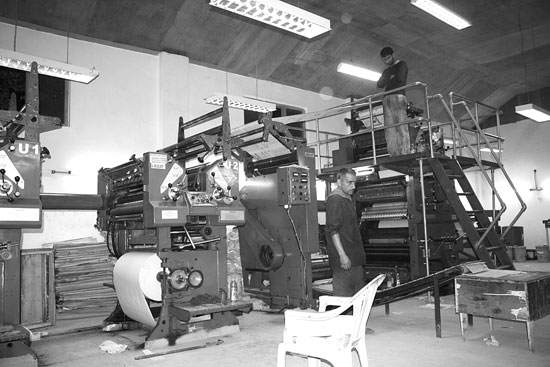
One of the major concerns of the newspaper industry at that time was the lack of good printing presses in the erstwhile State. The report also unveils that otherwise obsolete and out-of-fashion litho presses were ubiquitous in Jammu and Kashmir.
The output of these presses was as little as 600-700 copies an hour. During the Committee’s visit to two printing presses in Srinagar, it was also revealed that most of the presses were installed on premises which were unsanitary.
The newspapers were informed by the Committee that since the government had taken some steps to facilitate the printing of certain newspapers at the government presses, yet owing to newspapers’ failure of paying the printing charges, the experiment failed.
With an intent to avail printing facilities at economical rates, the Committee was told by the publishers of various newspapers that the government should consider the establishment of printing estates on the lines of industrial estates.
The Calligraphists
Not only the lack of efficient printing presses but also the printing of Urdu script through the litho process was impossible without the help katib (scribe). It is noteworthy that Urdu newspapers had a monopoly in the media industry of Jammu and Kashmir.
So, there was an unprecedented demand for katibs, who were employed on a salary as well as a job-rate basis, with the development of the press in Jammu and Kashmir. The getup of a newspaper relied completely on a katib.
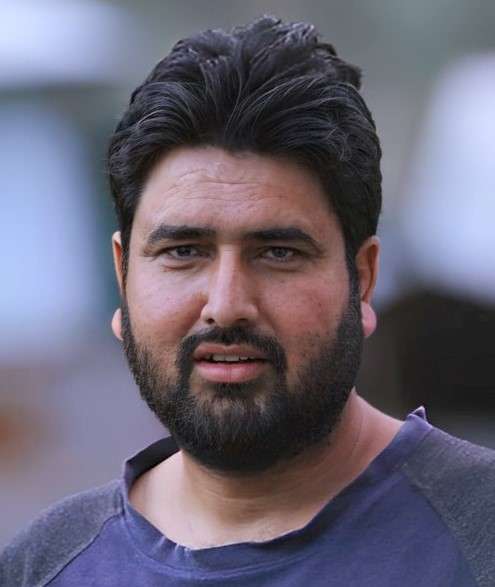
Nayeem Showkat (Media Scholar)
As per the recommendations of the Enquiry Committee on Small Newspapers, the katibs were to be provided training in Polytechnic Schools so as to standardise Urdu calligraphy. This recommendation was further supplemented with a note by Hayat Ullah Ansari, according to whom Urdu calligraphy was standardised centuries back, that instead of the breadth of the nib as a unit to fix the dimensions of letters, the measurement of graph paper should be used so that writings of different katibs would look similar.
Ansari also suggested some changes, particularly in joints of the letters, like meem goes so much down that it occupies upon the second line and in the same way markaz goes so high that it touches the upper line. These changes would further improve the quality of Urdu writing and will save much space, he suggested.
What made the erstwhile State of Jammu and Kashmir quite a peculiar case in this regard is that no school for katibs was established in the erstwhile State or in any other neighbouring state, thereby resulting in numerous printing faults arising from the low efficiency of katibs as was observed by the Committee.
(The writer is a Post-doctoral Fellow in Media Studies at the Indian Council of Social Science Research, New Delhi.)
SRINAGAR: Anjuman Auqaf Jamia Masjid Srinagar on Tuesday reviewed the arrangements for facilitating the worshipers and devotees thronging Jama Masjid for Jumma-tul-Vida, Shab-e-Qadr and Eid-ul-Fitr prayers.
In a statement issued by the Auqaf, it stated that the Jumma-tul-Vida prayer will be offered at 02:00 pm and Shab-e-Qadr at 10:30 pm at the Jama Masjid.
About the Eid-ul-Fitr prayer the statement read that the Eid prayers will be held at the historic Eidgah, Srinagar at 10:00 am, as per past practice.
However, in case of inclement weather, the Eid prayer will be held at the Jama Masjid Srinagar same time, it said.
SRINAGAR: No significant change in weather is expected and it is likely to be mainly dry, the meteorological department said even as the minimum temperature recorded an increase at most places in Jammu and Kashmir on Wednesday.
“Mainly dry weather is expected during the next 24 hours,” a meteorological department official said, adding, “no significant change is expected and it is likely to be mainly dry for subsequent two days.”
Regarding the temperature, the MeT official said that Srinagar recorded a low of 7.4°C against 7.1°C on the previous night and it was 0.2°C below normal for the summer capital.
Qazigund, he said, recorded a low of 4.4°C against 4.8°C on the previous night and it was 2.1°C below normal for the gateway town of Kashmir.
Pahalgam, he said, recorded a low of 2.5°C against 3.0°C on the previous night and it was 0.3°C above normal for the famous tourist resort in south Kashmir’s Anantnag district.
Kokernag recorded a low of 7.5°C against 7.7°C on the previous night and it was 1.4°C above normal for the place, the officials said.
Gulmarg recorded a low of 3.6°C against 3.5°C on the previous night and it was 2.1°C above normal for the world famous skiing resort in north Kashmir’s Baramulla district, he said.
In Kupwara town, he said, the mercury settled at 5.8°C against 5.2°C on the previous night and it was 0.5°C below normal for the north Kashmir area.
Jammu recorded a low of 17.9°C against 17.4°C on the previous night. It was 1.3°C below normal for J&K’s winter capital, he said.
Banihal, he said, recorded a low of 6.9°C (below normal by 1.3°C), Batote 12.0°C (above normal by 1.5°C), Katra 16.7°C (0.2°C below normal) and Bhadarwah 7.7°C (0.7°C below normal). Ladakh’s Leh and Kargil recorded a low of minus 1.8°C and 1.4°C respectively, he added. (GNS)
SRINAGAR: Lieutenant Governor Manoj Sinha on Wednesday appointed Tariq Ahmad Khan, former director general, Planning department and Sanjeev Gupta, District and Sessions Judge(retired) as members of Jammu and Kashmir Public Service Commission.
In a notification, the General Administration Department said that the LG has appointed Tariq Ahmad Khan, director general (expenditure division), Planning and Sanjeev Gupta, District and Session Judge as members of Jammu and Kashmir Public Service Commission.
An order issued in this regard read, “SO 199-in exercise of powers conferred by Clause 2 of the Article 316 of the Constitution of India read with Section 93 of the Jammu and Kashmir Reorganisation Act 2019 and SO 3937 (E) dated October 31, 2019 read with order issued in terms of sub-clause (i) of clause (c) of the Proclamation issued by the President dated October 31, 2019, the Lieutenant Governor of Union Territory of Jammu and Kashmir is pleased to appoint Sanjeev Gupta, District and Sessions Judge (Retd) and Tariq Ahmad Khan, Director General (Expenditure Division), Planning (Retd), as Member of the PSC of the UT of Jammu and Kashmir.”
As per the order, the newly appointed members shall hold the office for a term of six years from the date one enters upon his office or attains the age of 62 years, whichever is earlier.
SRINAGAR: Chief Secretary, Dr Arun Kumar Mehta Tuesday highlighted the need for introducing the Online Management and Monitoring System (OMMAS) for raising bills of all works under execution by different Departments such as Public Works Department, PDD, PHE etc throughout JK. He impressed on all the concerned Departments to look into their readiness within 15 days and decide about the timeframe to onboard themselves onto this online system of bill preparation, submission and monitoring.
Dr Mehta also directed formulation of DPRs in digital mode of all the projects to be taken up in the UT so that automated and hassle free checking can be introduced. He said that the digital DPRs will make the process of analysis easy and less cumbersome and shall bring about much needed efficiency. He also stressed on use of Artificial Intelligence (AI) in gauging the efficiency and output of employees so that deadwoods are identified easily by the system.
On the occasion he also launched auto-appeal feature for 08 more online services offered by different Departments. The feature is going to auto escalate the appeals in case the services are not provided to the applicants within the time limits set under the Public Services Guarantee Act (PSGA).
Dr Mehta complimented the IT Department for integrating this vital feature in the digital services offered by these Departments to the citizens. He stressed upon need for integrating the Auto-appeal feature for all the designated 48 services offered over Service Plus immediately and rest of services by May 2023.
The Chief Secretary said that the auto-appeal feature for services related to everyday life of the people like birth and death certificates are critical for enhancing ease of living. He emphasized that benefits like old age and widow pension, scholarships under various social security schemes etc should also be included in the system without any delay.
He observed that this feature would act as a turning point in maintaining transparency and accountability in services to the public and eradicating corruption. He stated that auto escalation feature of online services is going to put an end to malpractices besides promoting fairness, a priority set by the current dispensation in all its affairs including offering of government employment and public contracts to its citizens on the basis of merit alone.
The Chief Secretary was apprised that with onboarding these 08 services, the total number of services with active auto-appeal feature has reached 22 in the UT. It was further said that the feature like auto-appeal is going to bring much greater transparency in these services in future as these would ensure their delivery as per the timeframe set for them under PSGA.
The Services which were today brought under the Auto-appeal system include issuance of unmarried/widow/divorce certificate; issuance of family income/property certificate for Rehabilitation Assistance Scheme; Issuance of Dependent Certificate; Issuance of Income Dependency Certificate; Issuance of OBC Certificate; Issuance of Street Vending/RehriLisence; Application for Road cutting permission under Municipal Corporations; and Application for Road cutting permission under Municipal Councils/Committees.
SRINAGAR: The Ministry of Home Affairs (MHA) is convening a crucial meeting on Jammu and Kashmir in Delhi on Wednesday to discuss ongoing preparations on G-20 summit, security situation and the developmental pace in the UT.
Quoting a top MHA official, KNO reported that the Ministry has invited officials from JK including LG Manoj Sinha, DGP Dilbagh Singh, Chief Secretary Arun Kumar, DG CID and Home Secretary for a meeting scheduled at 5 pm at North Block, New Delhi.
“The meeting will be chaired by top officials of MHA. It will discuss preparations for G-20 summit meetings to be held in Srinagar in the month of May, security situation and the pace of various developmental projects going on in J&K,” the official said, wishing not to be named.
He said that the MHA would discuss the status of preparations for hosting the G-20 dignitaries and the venues where the events would be held. The official said that the meeting will also discuss the status of militancy in J&K and the overall security scenario prevailing in J&K.
The official said that the meeting would also deliberate on the status of militancy, law and order situation and the progress achieved “thereof in rooting out the terrorism from JK soil.”
SRINAGAR: Traffic Police Srinagar on Tuesday conducted a counselling session of stunt bikers in presence of their parents after identifying those involved in stunt biking through social media.
A senior traffic police official said that a productive counseling session was held for the youth involved in stunt biking, in the presence of their parents who appreciated the initiative.
During the session, the boys were briefed about the adverse aftermath of the incidents arising due to stunt biking, the official said.
In a tweet, city traffic police wrote, “Traffic city Srinagar acting against stunt bikers held counseling session with violators and their parents who appreciated the initiative. Any information regarding stunt biking may be reported on 103 number.”
The official added that they have issued a number 103 for the general public where they can report any occurrence of stunt biking happening in Srinagar.
“As of now, we are counseling them but those found involved again will be booked under the relevant laws,” he said.
The drive by traffic police follows a horrific road accident on Boulevard near SKICC earlier this month that resulted in the on-spot death of a 20-year-old Srinagar boy. (KNO)
SRINAGAR: J&K Bank has signed a Memorandum of Understanding (MoU) with the Chamber of Indian Micro, Small & Medium Enterprises (CIMSME) in order to accelerate the growth of manufacturing enterprises. CIMSME is the apex chamber of MSMEs in India, representing their interests and issues with the government and various regulators while being an active participant in MSME-related policymaking.
During the signing of the MoU, General Manager Ashutosh Sareen signed on behalf of J&K Bank, while President Mukesh Mohan Gupta signed for CIMSME in the presence of MD & CEO Baldev Prakash, Executive Director Sudhir Gupta, General Manager Narjay Gupta, Director (CIMSME) Subhash Joinwal, DGMs, and other senior bank officials. The divisional heads of the bank also joined the function through VC Mode.
MD & CEO Baldev Prakash praised CIMSME for its role in promoting MSMEs and expressed pleasure over the signing of the MoU. He said, “As a responsible financial institution, we understand that the MSME sector plays a critical role in fostering entrepreneurship and generating huge employment opportunities, thereby contributing greatly to the country’s GDP. Moreover, MSME lending is profitable for the banking industry, and we need to translate this MoU into solid business growth, especially in the rest of India because this is the sector which complements the large industries in the form of subsidiary units that are vital to the entire ecosystem.”
MD Baldev Prakash asserted that the MSME sector will bolster the economy of the Union Territory and the country alike, and that the bank will ensure that bankable leads generated by CIMSME are processed in a time-bound manner.
President (CIMSME) Mukesh Mohan Gupta spoke on the occasion and expressed his pleasure at the tie-up with J&K Bank. He emphasized the need to educate lenders and borrowers of the MSME sector about various schemes and processes to avail the facilities. He further added, “We will soon be coming up with a web portal for ease of both MSME lenders and borrowers.”
Executive Director Sudhir Gupta stated that the signing of the MoU with the apex chamber is akin to forging a partnership that will go a long way in promoting the culture of enterprise across the country while adding to the bank’s business profile.
Under the tie-up, CIMSME will not only source the MSME/Startup proposals across the country but will also conduct due diligence of these proposals as per the bank policy and RBI guidelines. Once CIMSME is satisfied with the financials and track records of the company/firm, the leads will be shared with the bank for further processing.
J&K Bank has provided benefits of employment to around 92000 youth till March 2023, under the J&K Government’s flagship programmes ‘Back to Village 4.0’ and ‘My Town My Pride’ – a feat that has been hailed by the UT Government and people alike.