Tag: apartheid

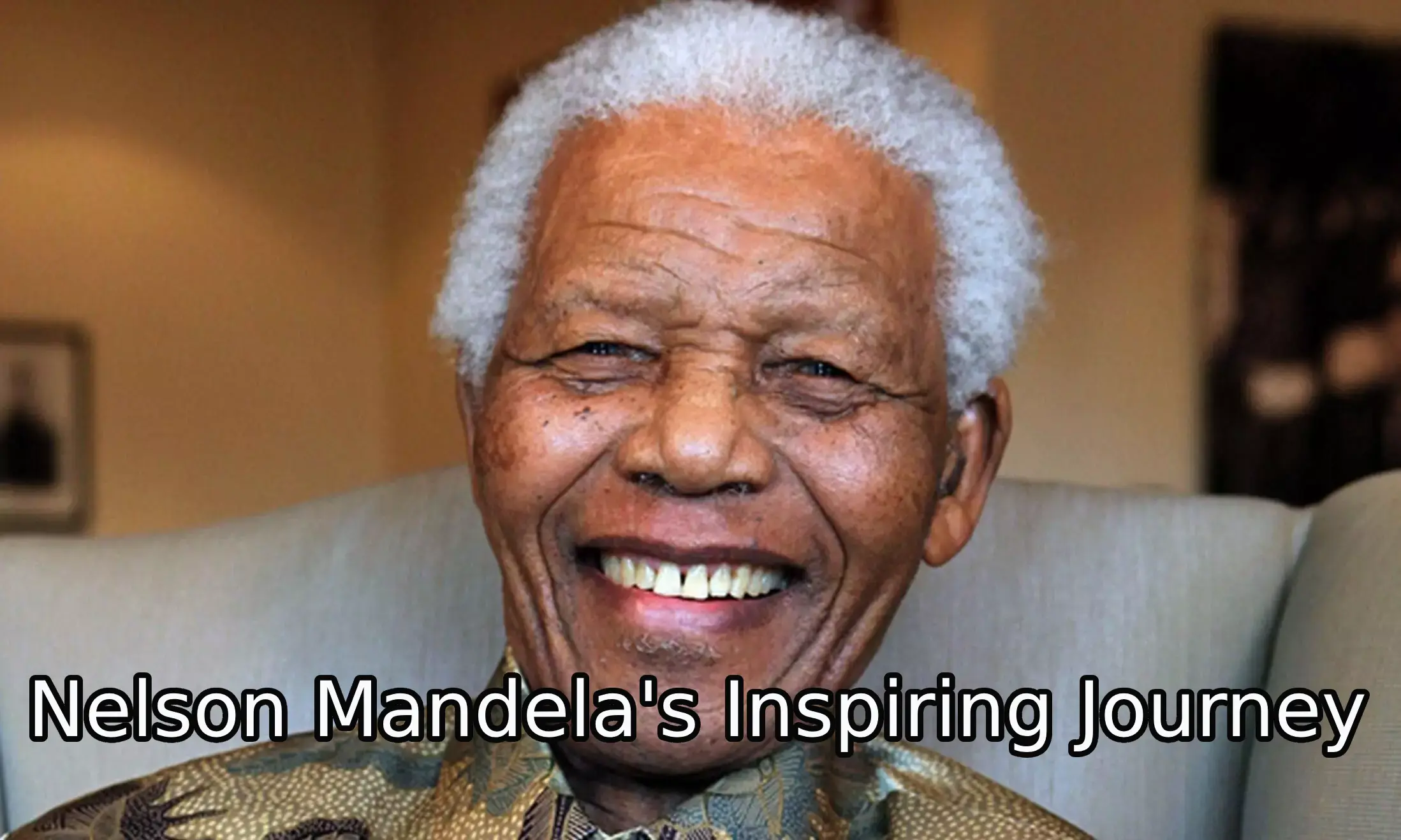
  • Nelson Mandela’s Inspiring Journey: From Activist to President in 5 Key Milestones, a Legacy of Equality and Hope

    Nelson Mandela’s Inspiring Journey: From Activist to President in 5 Key Milestones, a Legacy of Equality and Hope

    Introduction: Nelson Mandela: Inspiring Life of a Heroic Leader | Biography and Legacy

    Celebrating Nelson Mandela: Honoring the Inspiring Life of a Heroic Leader on His Birth Anniversary, 18 July Nelson Mandela International Day.

    In this article, we delve into the extraordinary life and enduring legacy of Nelson Mandela, a renowned global icon born on 18 July 1918, Mvezo South Africa. From his humble beginnings in rural South Africa to his unwavering fight against apartheid and subsequent presidency, Mandela’s story is a testament to the triumph of justice, equality, and human rights. Join us as we explore the key milestones and significant contributions of this remarkable leader, whose unwavering commitment to peace and reconciliation continues to inspire millions around the world.

    Early Life and Education of Nelson Mandela

    Nelson Mandela's childhood home, a humble dwelling that shaped his early years.

    Nelson Rolihlahla Mandela was born on July 18, 1918, in the village of Mvezo, Transkei, South Africa. Coming from the Xhosa tribe, Mandela grew up in a society deeply affected by racial inequality and oppression. Despite the challenging circumstances, he showed remarkable academic promise and eventually attended the University of Fort Hare, where he pursued a Bachelor of Arts degree.

    Activism Against Apartheid

    Nelson Mandela leading a peaceful protest, raising his fist as a symbol of unity and resistance.

    Mandela’s journey as an activist against apartheid began in the 1940s. He joined the African National Congress (ANC), a political party that fought for the rights of black South Africans, and became increasingly involved in advocating for racial equality. Recognizing the power of nonviolent resistance, Mandela played a pivotal role in organizing peaceful protests, boycotts, and strikes.

    However, as the apartheid regime intensified its oppressive measures, Mandela realized that more robust action was necessary. He co-founded the ANC’s armed wing, Umkhonto we Sizwe (MK), in 1961, leading a campaign of sabotage against government institutions. These actions ultimately resulted in his arrest and subsequent imprisonment.

    Imprisonment and Robben Island

    The desolate walls of Robben Island Prison, where Nelson Mandela spent 27 years of his life as a political prisoner.

    On June 12, 1964, Mandela was sentenced to life imprisonment for charges of sabotage and conspiracy against the state. He was incarcerated on Robben Island, a remote prison off the coast of Cape Town. Mandela’s imprisonment lasted for 27 years, during which he endured numerous hardships but remained resilient in his pursuit of justice.

    While imprisoned, Mandela became a symbol of resistance against apartheid. His unwavering determination, coupled with international pressure, eventually led to his release on February 11, 1990, marking a pivotal moment in South African history.

    Negotiations and Presidency

    Nelson Mandela and President F.W. de Klerk shaking hands, signifying the historic negotiations that paved the way for a democratic South Africa.

    Following his release, Mandela dedicated himself to achieving a peaceful transition to democracy in South Africa. He led negotiations with then-President F.W. de Klerk, resulting in the dismantling of apartheid and the country’s first multiracial elections. In 1994, Nelson Mandela became the first black president of South Africa, a historic milestone that symbolized the triumph over racial injustice.

    Legacy and Impact

     A mosaic portrait of Nelson Mandela, depicting his wise and inspiring presence.

    Nelson Mandela’s impact extended far beyond his presidency. His leadership and vision laid the foundation for a new South Africa built on principles of equality, justice, and reconciliation. Mandela worked tirelessly to promote social harmony and healing, establishing the Truth and Reconciliation Commission to address the atrocities committed during apartheid.

    His commitment to peace and human rights earned him international acclaim, leading to numerous awards and honors, including the Nobel Peace Prize in 1993. Mandela’s unwavering dedication to freedom and equality serves as an inspiration not only to South Africans but to people worldwide.

    Conclusion : Inspiring the World

    Nelson Mandela’s life exemplifies the transformative power of perseverance and forgiveness. From his early activism to his presidency, his unwavering commitment to justice and equality continues to inspire a better future for all.

    Nelson Mandela’s life journey embodies the indomitable spirit of a true hero. From his early activism to his remarkable presidency, he tirelessly fought for justice, equality, and human rights. Mandela’s legacy continues to inspire individuals and nations alike, reminding us of the transformative power of forgiveness, reconciliation, and the pursuit of a better world for all.

  • ‘Pictures like this meant I couldn’t return to South Africa until apartheid was abolished’: Steve Bloom’s best shot

    ‘Pictures like this meant I couldn’t return to South Africa until apartheid was abolished’: Steve Bloom’s best shot

    [ad_1]

    I spent my early adulthood in South Africa during the apartheid era. In 1974, the government passed a law stipulating that all lessons for black children had to be in Afrikaans, which most could not speak, and which was considered the language of the oppressor. By 1976, Black schoolchildren took to the streets of Soweto to protest and were met with police violence, with over 176 deaths. It was then that the tide turned, the protest movement grew and people worldwide became more aware of the injustices of apartheid.

    Sensing the country was on the cusp of change, I went out to try to photograph what was happening around me. I was in my early 20s and working for a company that printed magazines, so I’d take my own pictures at weekends. I’d had no photographic training and because I could hardly afford film, I bought bulk reels of black and white, which were cheaper. I had to limit the number of exposures I could make due to the cost, and used cat litter trays for developing the silver gelatin prints.

    I had a manual Canon FTb camera and a standard 50mm lens, which approximates the field of view of the eye. I would visit and photograph squatter towns where Black people were living as family units in defiance of the labour laws, and I also went to District Six, a mixed-race community where homes were demolished and the inhabitants evicted to make way for white housing. I’d knock on doors and ask if I could photograph people in their homes.

    When I took pictures of people on the streets, they were often absorbed in their own worlds. I spotted the couple in this photograph in Green Point, Cape Town, near where I lived. The man was tenderly caring for his sick partner, and a smartly dressed woman walked past them, totally oblivious to their existence. The man looked up at her and the white of his eye caught the light as I took the picture. There are two other photographs I took showing a pair of white kids walking past the same couple without appearing to notice them, and then on their return journey, eating ice creams they’d just bought.

    I felt my pictures needed to be seen and a local publisher was interested in producing a book, which reached the dummy stage before he decided the project was going to be too risky. But a photograph I sent to the British Journal of Photography made their front page in 1977, so that same month I packed a box of prints into a suitcase and flew to Heathrow. I only had a couple of dozen or so prints, and lent these to the International Defence and Aid Fund, which campaigned to defend people in race trials and raise awareness of apartheid internationally. My pictures were exhibited and published widely and, as a consequence, I was unable to return to South Africa until apartheid was abolished over 13 years later.

    Under apartheid, anti-racist behaviour was spurned by the government, interracial sex was illegal and the best jobs, housing and education were strictly reserved for whites. One of the other photographs I brought to the UK is a portrait of a man I worked with at the printing company. He was an experienced technician, but I remember once asking him to prepare two exposures on a contact sheet. He had to remind me he was only allowed to make one exposure, as two were classed as “skilled” work, which was reserved for white technicians.

    Apartheid, meaning “apartness”, was a deliberate process of engendering indifference between the races, which I think this photograph demonstrates. When you walk into my new exhibition at Leicester Art Gallery, it’s the first picture that strikes you, because it has been printed a couple of metres tall. There’s a resonance when people realise that such social and economic differences are still present 45 years later. The difference with this image is that the couple were denied equal opportunities by law.

    After the end of apartheid and the election of Nelson Mandela, I trawled through the old negatives, discovering images I’d forgotten I had. I became a wildlife photographer in midlife and now it feels like the photographs I took at 23 belong to another lifetime. They act as a poignant reminder of why history must never be buried or forgotten and how we need to be constantly reminded of such injustices to help prevent them from happening again.

    Steve Bloom’s CV

    Photographer Steve Bloom
    Photographer Steve Bloom

    Born: Johannesburg, 1953
    Trained: Self-taught
    Influences: “Photojournalist W Eugene Smith, with his powerful features in Life magazine.”
    High point: “Seeing my first photography book roll off the press. It’s the knowledge that the images will be seen. I think reaching an audience is a joy for any photographer.”
    Low point: “The phone call from a processing lab in the analogue film days to say that there had been a chemical ‘incident’ and the films I had brought back from a shoot in Kenya had been destroyed.”
    Top tip: “In this age of billions of pictures being made each day, it’s tempting to take multiple pictures of the same subject without actually concentrating too much on composition, lighting and timing. Photograph as if you only get one chance at it, and that discipline will sharpen your creative mind.”

    [ad_2]
    #Pictures #meant #couldnt #return #South #Africa #apartheid #abolished #Steve #Blooms #shot
    ( With inputs from : www.theguardian.com )