Tag: amnesty

  • Leaked Amnesty review finds own Ukraine report ‘legally questionable’

    Leaked Amnesty review finds own Ukraine report ‘legally questionable’

    [ad_1]

    A leaked internal review commissioned by Amnesty International is said to have concluded there were significant shortcomings in a controversial report prepared by the rights group that accused Ukraine of illegally endangering citizens by placing armed forces in civilian areas.

    The report, issued last August, prompted widespread anger in Ukraine, leading to an apology from Amnesty and a promise of a review by external experts of what went wrong. Among those who condemned the report was Ukraine’s president, Volodymyr Zelenskiy, who accused Amnesty of “shift[ing] the responsibility from the aggressor to the victim”.

    Leaked to the New York Times, that unpublished review has concluded that the report was “written in language that was ambiguous, imprecise and in some respects legally questionable”, according to the newspaper.

    In particular, the report’s authors were criticised for language that appeared to suggest “many or most of the civilian victims of the war died as a result of Ukraine’s decision to locate its forces in the vicinity of civilians” at a time when Russian forces were deliberately targeting civilians.

    “This is particularly the case with the opening paragraphs, which could be read as implying – even though this was not AI’s intention – that, on a systemic or general level, Ukrainian forces were primarily or equally to blame for the death of civilians resulting from attacks by Russia.”

    In the immediate aftermath of publication, the initial report was seized on by Russia, including the embassy in London, to claim that Ukrainian tactics were a “violation of international humanitarian law” at a time when Russian forces were being accused of serious war crimes.

    The paper added, however, that sources had told it that Amnesty’s board had sat on the 18-page review for months amid suggestions there had been pressure to water down its conclusions.

    At the centre of the controversy was Amnesty’s claim that by housing military personnel in civilian buildings and launching attacks from civilian areas, Ukraine had been in breach of international law on the protection of civilians.

    The expert review was conducted by five experts including Emanuela-Chiara Gillard of the University of Oxford; Kevin Jon Heller of the University of Copenhagen; Eric Talbot Jensen of Brigham Young University; Marko Milanovic of the University of Reading; and Marco Sassòli of the University of Geneva.

    Experts questioned whether the authors of the original report had correctly interpreted international law regarding Ukraine as a victim of aggression and whether there was evidence that Ukraine had put civilians in “harm’s way”.

    The leaked report also disclosed that there had been significant unease within Amnesty before publication, not least over the issue of whether the government of Ukraine had been sufficiently engaged with.

    “These reservations should have led to greater reflection and pause” before the organisation issued its statement, the review added.

    Oksana Pokalchuk, the former head of Amnesty’s Ukraine office, who resigned over the report, said she believed the review should be made public as well as a promised internal review of relations inside the organisation on how decisions were made around the report.

    “I want justice to be done and to be seen done,” she told the Guardian. “One of the things that was very important to me at the time was that we should be in communication with the Ukrainian government, formally or informally, to get information from them. This wasn’t done, and it caused a lot of damage.

    “What I have also not seen so far in the reporting of this review is any discussion of the larger context of the war and how this report played in favour of Russian propaganda. We need to talk about who is the aggressor and who is the victim of this war.”

    An Amnesty International spokesperson said: “Amnesty commissioned a panel of external experts in the field of international humanitarian law to conduct an independent review of the legal analysis in our 4 August press release.

    “Amnesty staff reviewed a first draft of the panel’s report, and their comments were taken into account in the final version, to the extent the legal panel itself deemed appropriate.

    “This is part of an ongoing internal learning process, and we welcome the full findings which will inform and improve our future work.”

    [ad_2]
    #Leaked #Amnesty #review #finds #Ukraine #report #legally #questionable
    ( With inputs from : www.theguardian.com )

  • Karnataka HC quashes ED’s order freezing bank accounts of Amnesty International

    Karnataka HC quashes ED’s order freezing bank accounts of Amnesty International

    [ad_1]

    Bengaluru: The Karnataka High Court has quashed a 2018 Enforcement Directorate order of freezing the bank accounts of Amnesty International India Private Limited.

    The petition filed by Amnesty International in 2018 was allowed and the notices quashed, the single-judge bench of Justice K S Hemalekha said in its February 24 order. A copy of the judgment was made available recently.

    In the judgment, the court said: “On perusal of the provisions of Section 132(8A) of the Act, it is evident that order under Sub-Section (3) of Section 132 of the Income Tax Act would not be in force beyond sixty days from the date of the order. In light of the provisions of Section 132(8A), the impugned notices dated 25.10.2018 have lost their efficacy by efflux of time as the period of sixty days has expired.”

    The court, however, said all the contentions are left open to be urged before the appropriate authority in accordance with law.

    Calling itself a company “engaged in the business of rendering, research (primary and secondary) and consultancy services regarding human rights”, Amnesty claimed in the petition before the High Court that on October 25, 2018, without any notice to it, a search and seizure was conducted on its premises. Several documents, agreements and mobile phones were scrutinised and confiscated.

    Following this, the bank accounts of Amnesty in HDFC Bank and Kotak Mahindra Bank were frozen by a Government Order without any notice to it. This was challenged in the petition before the High Court.

    The advocate for Amnesty pointed to the Greenpeace India Society vs Union of India case in which a similar issue was decided. The High Court accepted this contention.

    In the Greenpeace case, the NGO sought to quash the order blocking its financial assets which had been frozen by an order of the Ministry of Home Affairs following a bank transfer from another NGO located in Netherlands. The High Court held that the Ministry’s arguments were not satisfactory enough to freeze the financial assets of Greenpeace and ordered that the bank allow the NGO to have access to its accounts.

    [ad_2]
    #Karnataka #quashes #EDs #order #freezing #bank #accounts #Amnesty #International

    ( With inputs from www.siasat.com )

  • Peru’s ‘racist bias’ drove lethal police response to protests, Amnesty says

    Peru’s ‘racist bias’ drove lethal police response to protests, Amnesty says

    [ad_1]

    Peru used “excessive and lethal force” driven by “marked racist bias” against a largely indigenous and campesino population, Amnesty International has concluded, following an investigation into more than two months of anti-government protests which have claimed at least 60 lives.

    An Amnesty International fact-finding mission investigated 46 possible cases of human rights violations and documented 12 cases of deaths from the use of firearms – all the victims appeared to have been shot in the chest, torso or head – following visits to the capital Lima and the southern cities of Chincheros, Ayacucho and Andahuaylas.

    In a damning report, Erika Guevara-Rosas, the organisation’s Americas director, said the Peruvian authorities had permitted the “excessive and lethal use of force to be the government’s only response for more than two months to the clamour of thousands of communities who today demand dignity and a political system that guarantees their human rights.”

    Police officers arrest a woman protesting against the government of Dina Boluarte in Lima, Peru.
    Police officers arrest a woman protesting against the government of Dina Boluarte in Lima, Peru. Photograph: Antonio Melgarejo/EPA

    “The grave human rights crisis facing Peru has been fueled by stigmatisation, criminalisation and racism against Indigenous peoples and campesino communities who today take to the streets exercising their rights to freedom of expression and peaceful assembly, and in response have been violently punished,” she told journalists on Thursday.

    The rights group’s visit comes as President Dina Boluarte and her government face widespread accusations of using excessive force against civilian protesters. At least 48 people have been killed by security forces, prompting the UN human rights office to demand an investigation into the deaths and injuries last month.

    Peru has been mired in political strife and street violence since early December, when former president Pedro Castillo was accused of staging a coup after attempting to dissolve congress and rule by decree. He was arrested, and Boluarte, his vice-president and former running mate, took office. Protesters, however, have called for her resignation and early elections amid mounting deaths. She has refused to resign while the country’s congress has rejected bills to announce elections.

    Amnesty International’s delegation said it presented evidence of excesses by the security forces to Boluarte in a meeting on Wednesday. The investigation found evidence of “marked racist bias” targeting historically marginalised populations as the number of arbitrary deaths was disproportionately concentrated in largely Indigenous regions, the organisation said.

    Indigenous populations represent only 13% of Peru’s total population but they account for 80% of the total deaths registered since the crisis began, it found.

    “It’s no coincidence that dozens of people told Amnesty International they felt that the authorities treated them like animals and not human beings,” said Guevara-Rosas. “The systemic racism ingrained in Peruvian society and its authorities for decades has been the driving force behind the violence used to punish communities that have raised their voices.”

    “I come to demand justice. I come to speak on behalf of all those who were killed by bullets,” said Ruth Bárcena, the widow of Leonardo Hancco, 32, one of 10 citizens killed by soldiers in Ayacucho on December 15 after some protesters tried to storm the airport. “We are not terrorists,” she said.

    Police detachment guarding the squares of Lima, Peru.
    Protests in Peru have not stopped since Boluarte assumed the presidency in December. Photograph: Carlos Garcia Granthon/ZUMA Press Wire/REX/Shutterstock

    “I didn’t think that in the Peruvian state demanding your rights was a crime that deserved having your life taken,” said Bárcena, who leads a group of families left bereft by the violence in the Andean city. “[The dead] have left orphans who will never embrace their parents again. Like my daughter, who asks every day: ‘Why did they kill my father, why did the soldiers shoot my father?’”

    A recent investigation by Peruvian journalists at IDL Reporteros retraced the final steps of six of the 10 killed in Ayacucho. It found that one of the victims was helping an injured protester on his doorstep, and two others, including a 15-year-old boy, were walking home and had not taken part in the demonstrations nor been involved in the attempt – by some protesters – to storm the airport.

    The organisation said it found photographic and video material which pointed to “excessive and sometimes indiscriminate use of lethal and potentially lethal force by the authorities”. It added some of the cases could constitute extrajudicial killings.

    It also found that judicial investigations into the deaths were slow and under-resourced and the “chain of custody of certain evidence had not been preserved, which could undermine the possibility of genuinely impartial and exhaustive investigations”.

    [ad_2]
    #Perus #racist #bias #drove #lethal #police #response #protests #Amnesty
    ( With inputs from : www.theguardian.com )

  • Amnesty India Calls for Immediate Halt In Demolitions

    [ad_1]

    SRINAGAR: In view of the ongoing anti-encroachment drive Amnesty International India on Wednesday said that the demolitions in Kashmir must be halted and those affected should be compensated.

    “The ongoing demolitions appear to be an extension of the brutal human rights violations the region of Jammu and Kashmir, the only Muslim majority region of India, has historically witnessed. These demolitions could amount to forced evictions which constitute a gross violation of human rights,” Aakar Patel, chair of the board for Amnesty International India said.

    “Under the International Covenant on Economic, Social and Cultural Rights, to which India is a state party, everyone has the right to adequate housing which includes a prohibition on forced evictions. Where justified, evictions should be carried out in accordance with general principles of reasonableness and proportionality and include safeguards of reasonable and adequate notice; provision of legal remedies for infringement of rights; and provision of legal aid to people who need it to seek redress from the courts. No one should be made homeless or vulnerable to other human rights violations because of evictions.”

    No one should be made homeless or vulnerable to other human rights violations because of evictions, the statement by the Amnesty added.

    Aakar Patel said the government must “immediately halt the demolition drive” and “ensure that safeguards against forced evictions as outlined in international human rights standards are put in place before any evictions are carried out”. It added: “They must offer adequate compensation to all those affected without discrimination, ensure that victims of forced evictions have access to effective remedy, and those responsible are held to account.”

    [ad_2]
    #Amnesty #India #Calls #Halt #Demolitions

    ( With inputs from : kashmirlife.net )

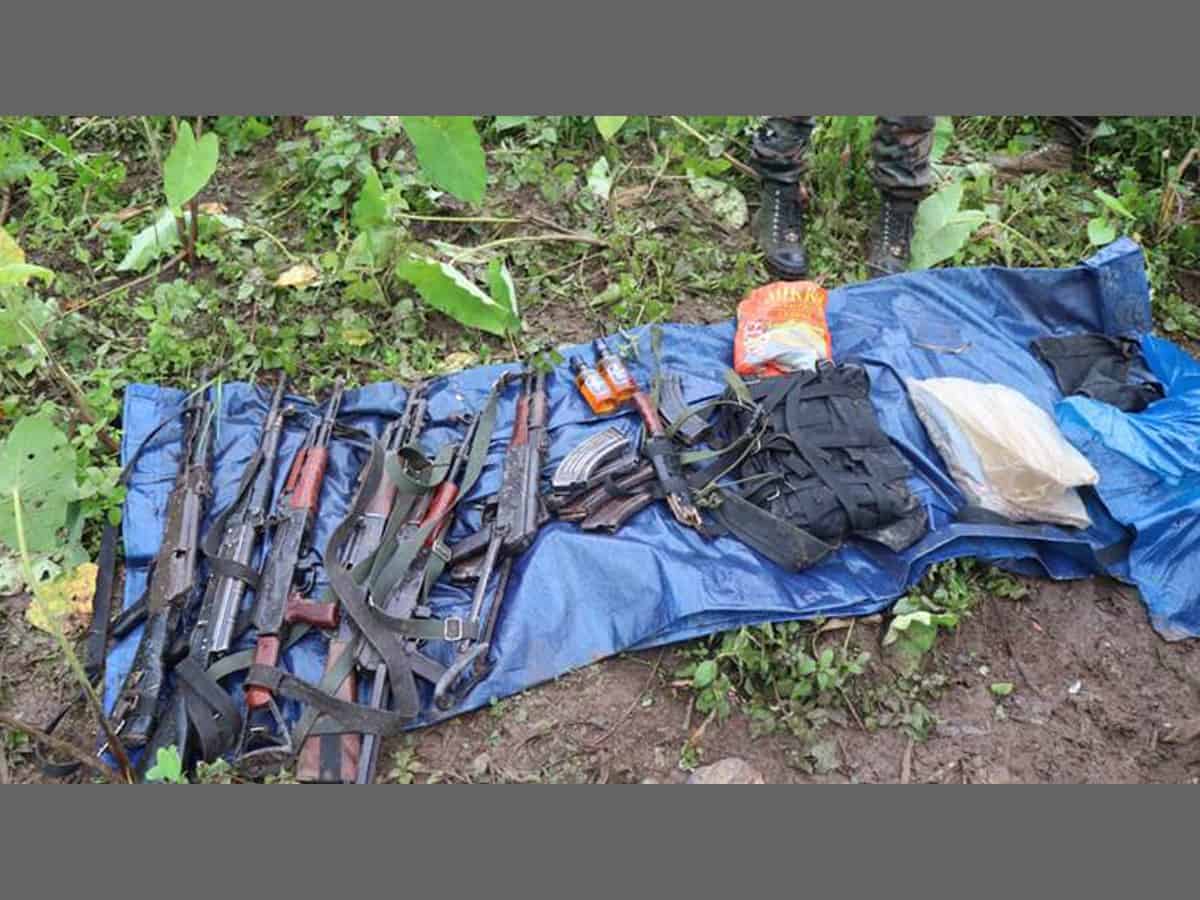
  • Over 17,000 weapons surrendered under Australian gun amnesty

    Over 17,000 weapons surrendered under Australian gun amnesty

    [ad_1]

    Canberra: More than 17,000 weapons were surrendered in the first year of Australia’s permanent national firearms amnesty, the government revealed on Saturday.

    The government released the first annual report on the amnesty program, which allows Australians to hand in unregistered, illegal or unwanted weapons without facing punishment, revealing 17,543 weapons were surrendered in the first 12 months, reports Xinhua news agency.

    The permanent amnesty was set up in mid-2021 following temporary programs in the wake of the Port Arthur massacre in 1996 and again in 2017.

    According to the Australian Criminal Intelligence Commission, there are approximately 260,000 illicit firearms in circulation in Australia.

    Among the weapons handed in between July 2021 and June 2022 were 8,140 rifles, 2,896 shotguns and 789 pistols.

    “It is an important measure to reduce the number of firearms circulating in our community, and keep Australians safe,” the country’s Attorney-General Mark Dreyfus said on Saturday.

    Subscribe us on The Siasat Daily - Google News

    [ad_2]
    #weapons #surrendered #Australian #gun #amnesty

    ( With inputs from www.siasat.com )