Author: SAQIB SHAFI

  • Bootstrapping Basics: How to Start Your Business with Minimal Funds

    Bootstrapping Basics: How to Start Your Business with Minimal Funds

    Starting your business with limited funds challenges you to use strategic foresight and resourcefulness, enabling the creation of a successful enterprise without significant financial input. This guide outlines key strategies that assist in launching your venture while safeguarding your financial reserves. By leveraging available resources intelligently, you set the stage for a prosperous business. Adopting these tactics ensures you can embark on your entrepreneurial path with confidence, despite financial constraints.

    Bootstrapping Basics: How to Start Your Business with Minimal Funds

    Leverage Free Marketing Channels

    Bootstrapping Basics: How to Start Your Business with Minimal Funds

    Harnessing the power of free publicity is a cornerstone for businesses operating on a shoestring budget. Social media platforms offer a vast arena to connect with potential customers without financial investment. Crafting engaging content that resonates with your audience can spark interest and build a community around your brand. Networking, both online and in person, opens doors to collaborations and partnerships, expanding your reach. By strategically utilizing these channels, you can establish a robust presence and drive attention to your venture without the need for substantial marketing funds.

    Opt for a Limited Liability Structure

    Limited Liability Company ( LLC )

    Forming your business as a limited liability company (LLC) ensures your personal assets are safeguarded against business liabilities. This structure grants you the flexibility to manage your business according to your preferences. You also benefit from tax advantages that can optimize your financial outcomes. Utilizing a formation service like ZenBusiness simplifies the process, making it accessible and straightforward. 

    Focus on High-Margin Offerings

    High Margin Offers

    Centering your business model around products or services with high profit margins can significantly enhance your revenue stream. Identifying a niche market or developing a unique value proposition can justify premium pricing, setting your venture apart from competitors. By concentrating on offerings that promise higher returns on investment, you can ensure a more sustainable business model that maximizes profitability with minimal upfront expenses.

    Implement Innovative Pricing Strategies

    Innovative Pricing Strategy

    Exploring various pricing strategies can unlock the potential for increased profitability and market appeal. Dynamic pricing allows for flexibility in response to market demand, while bundling products or services can enhance perceived value and encourage purchases. Tiered pricing models cater to different segments of your customer base, making your offerings accessible to a wider audience while maximizing revenue from those willing to pay more for premium options. This experimental approach to pricing can help you discover the most effective strategy for your business and customer base.

    Drive Early Sales through Special Offers

    Bootstrapping Basics: How to Start Your Business with Minimal Funds

    Generating initial revenue through pre-sales or offering discounts to early adopters can provide crucial cash flow to support your business’s early stages. This strategy not only validates the demand for your product or service but also builds a loyal customer base eager to support your venture from the outset. Early financial support can alleviate some of the pressure on your startup budget, allowing you to focus on scaling your business and refining your offerings.

    Optimize Your Inventory Management

    Bootstrapping Basics: How to Start Your Business with Minimal Funds

    Adopt a just-in-time inventory management approach to significantly reduce your inventory costs. By implementing dropshipping, you can eliminate the need for holding stock, thus lowering your overhead expenses. Consignment allows you to offer a wider range of products without the financial burden of purchasing inventory upfront. On-demand manufacturing enables you to produce goods only as they are ordered, minimizing the risk of excess inventory. These strategies together ensure you maintain optimal inventory levels, enhancing your business’s operational efficiency and cost-effectiveness.

    Launching a business on a tight budget showcases your creativity, discipline, and strategic acumen. Embrace essential tactics like forming an LLC and leveraging free marketing channels to overcome financial obstacles, laying the groundwork for future growth and success. Patience and persistence become crucial as you maneuver through the initial phases of your venture. With careful planning and resourcefulness, your business is set to thrive, even without a large initial investment. This approach not only tests your entrepreneurial spirit but also paves the way for a sustainable business model.

    Stay informed and ahead with The News Caravan—your destination for the most authentic and insightful news coverage.

  • How to Build a Financial Safety Net for Your Small Business: 8 Crucial Steps

    How to Build a Financial Safety Net for Your Small Business: 8 Crucial Steps

    Small business owners face numerous challenges, especially in the current unpredictable economic climate. To survive and thrive, creating a financial safety net is crucial. From The News Caravan, here are eight vital actions that every owner of a small company should do to create a solid financial safety net.

    "Building a Strong Financial Safety Net for Your Small Business | Expert Tips"
    Building a Strong Financial Safety Net.

    Project Your Cash Flow

    The first step in building a financial safety net is to develop a cash flow projection. This projection helps you anticipate your revenue and expenses, allowing you to identify potential shortfalls and make adjustments accordingly. By forecasting cash flow on a weekly or monthly basis, you can stay ahead of any potential problems and ensure that your business has the cash it needs to cover its bills.

    Monitor Financial Statements and Make Adjustments

    To keep your business on track, monitor your financial statements regularly. Make sure to look for areas where you can cut costs, reduce waste, or increase revenue. Identify trends and patterns in your financial data, and adjust your strategy accordingly. This will help you stay one step ahead of any potential financial challenges.

    Separate Personal and Business Finances

    Separating personal and business finances is a crucial step in maintaining financial safety for small business owners. This separation helps to avoid overspending and confusion, particularly when it comes to tracking expenses and income. One common question that arises in this context is, “Do I need a business bank account for an LLC?” The answer is yes. Creating a separate bank account for your LLC is imperative. Using this account exclusively for business transactions simplifies financial management, ensuring that personal funds are not inadvertently used to cover business expenses. This clear division also aids in accurate record-keeping, which is essential for tax purposes and overall financial health.

    Consider Leasing Equipment

    One way to reduce upfront costs and maintenance expenses is to consider leasing equipment instead of buying it outright. Leasing allows you to spread out the cost of equipment over time, which can help you manage your cash flow more effectively. Plus, leasing often includes maintenance and repairs, which can save you money in the long run.

    Find a Larger Home With Office Space

    As a way to cut costs, consider using online listings to find a larger rental to live and work from instead of leasing office space. Remote work has become increasingly popular, and it can be a great way to reduce overhead costs while still maintaining a professional image. Just make sure that you have a dedicated workspace and all the tools you need to run your business effectively.

    Keep Your Credentials Updated

    For small business owners, financial safety often involves maintaining a backup plan, and keeping your resume up-to-date is a key part of this. In the dynamic world of business, it’s important to be prepared for any eventuality, including the possibility of re-entering the job market or seeking new opportunities. 

    Utilizing a free online resume creator can simplify this process. These platforms often provide a range of customization options to help you craft a resume that truly reflects your skills and experiences. When you select a free resume template, you can easily update your professional credentials, ensuring they are always current and ready to present. This proactive approach not only keeps you prepared for unexpected changes in your business landscape but also opens up avenues for new collaborations, partnerships, or career paths, thus enhancing your financial safety net.

    Maximize Your Content’s Reach

    For small business owners, maximizing the potential of online content is a vital aspect of growth. Learning optimization strategies for your content can significantly increase its visibility and effectiveness. This involves understanding and applying SEO and keywording techniques, which are crucial for enhancing your online presence. Fortunately, there are numerous free online resources available where you can learn these skills. These resources offer guidance on how to optimize your website and content to rank higher in search engine results, attract more visitors, and ultimately convert them into customers.

    Work with a Financial Advisor or Accountant

    Finally, consider working with a financial advisor or accountant to develop a long-term financial plan. A financial professional can help you identify areas for improvement in your business, create a budget, and develop strategies for achieving your financial goals. With their guidance, you can build a strong financial safety net that will help your business thrive for years to come.

    Building a financial safety net is critical to surviving and thriving as a small business owner. By following these steps above, you can develop a comprehensive financial plan that will ensure your business has the resources it needs to succeed. Remember to stay focused on your long-term goals, monitor your financial statements regularly, seek expert guidance when you need it, and look for a home or rental with office space. With a little planning and preparation, you can build a strong financial safety net that will help your business weather any storm.

  • Justice Katju Claims China Behind Farmers’ Agitation To Stop BJP’s Victory In 2024 Elections

    Justice Katju Claims China Behind Farmers’ Agitation To Stop BJP’s Victory In 2024 Elections

    Who is behind the ongoing Indian farmers agitation ?

    Uncover the intricate dynamics of the ongoing Indian farmers' agitation in Justice Katju's analysis. Explore the potential influences, including geopolitical tensions and the quest for MSP (Minimum Support Price). Delve into the speculation surrounding external involvement, and the implications for Indian agriculture and politics. Gain insights into the complexities driving this critical issue ahead of the parliamentary elections.
    Indian farmers’ agitation.

    There was a Farmers’ Agitation in India in 2020-2021, which died down when the farmers’ demand of repeal of 3 agricultural laws was accepted by the Government of India

    Now, shortly before the forthcoming parliamentary elections, another farmers agitation, mainly led by farmers of Punjab demanding MSP ( Minimum Support Price ) for their agricultural products, has suddenly commenced.

    The news about this agitation has gone viral, and is all over the Indian media. Many people have commented on it, including this humble self :

    An interesting and important question is who is really behind this agitation ? There are of course the Sanyukt Kisan Morcha and some other groups which are heading the agitation,

    https://m.economictimes.com/news/india/farmers-protest-how-delhi-chalo-2-0-is-different-which-organizations-are-leading-the-movement-this-time/articleshow/107646536.cms

     But who is really behind these groups ? This is the question which will sought to be answered here. Since my answer may sound a bit bizarre, it needs to be explained in some detail.

    Today the main conflict in the world is between USA and China ( which has replaced USSR as the main rival of USA, after disintegration of the former ). China with its massive industrial base, has emerged as a super power, and is aggressively expanding everywhere in the world, hungrily in search of markets, raw materials, and avenues for investment for its huge 3.4 trillion dollar foreign exchange reserve.

    Prime Minister Modi has taken India wholeheartedly into the US camp, and the Americans have welcomed this, as they need a strong counterpoise to China in Asia. This would naturally have been strongly resented by the Chinese.

    Parliamentary elections will shortly be held in India, and Modi’s BJP seems sure to win a third 5 year term, particularly after the hype around the consecration of the Ram Mandir in Ayodhya, and, to a lesser extent, the agitations regarding the Gyanvapi mosque in Varanasi, and the Shahi Masjid in Mathura.

    Obviously this prospect would be unpalatable to the Chinese, who perceive the BJP as strongly pro-American. Hence I have a strong hunch that it is the Chinese who are really behind the present farmers’ agitation and the groups leading it.

    Now it may be immediately asked : what evidence do I have for such an outlandish assertion ?

    My answer is that true there is no direct evidence, but there is also a thing called circumstantial evidence, which is reliance on rational inferences.

    Would not the Chinese oppose the pro-American BJP coming to power again by winning the forthcoming elections ? Yes, they will do so tooth and nail. And what better way to do that than by arousing the Indian farmers, who comprise of 60% of India’s population ? And the best way to do that is to start an agitation for MSP.

    MSP is a popular demand of Indian farmers, who do not get adequate remuneration for their produce ( over 400,000 of them have committed suicide ), and they want a law guaranteeing MSP.

    The Swaminathan Commission set up by the Indian Government recommended a statutory MSP at cost price+50%. In other words, if it cost a farmer Rs 100 to produce an agricultural product, by law the government must buy it at Rs 150. Private traders can also buy it, but they too must pay Rs 150, otherwise they will be penalised. This was the law proposed by the Swaminathan Commission, and being demanded by the agitating farmers, who want to enter Delhi, but are being prevented by the police.

    MSP sounds a very rosy idea, and people opposing it risk being branded as anti farmer, and as hostile to our ‘annadatas’ ( bread providers )

    However, I submit that MSP is not feasible in a free enterprise economy.

    Presently, though MSP is declared for 23 crops in India, it is implemented mainly for wheat and paddy, and that too for only a small percentage of Indian farmers.

    70% Punjabi farmers get the benefit of MSP, while less than 10% Bihari farmers get it. 

    If a law for MSP is made, all farmers in India will demand that the government must buy all their produce at the MSP.  This would well nigh be impossible for the government to comply with. The only option for farmers then would be to sell the produce to private traders, but these may be unwilling to buy at the high MSP. They will then covertly buy at lower prices, thus subverting the entire MSP scheme. Moreover this is bound to result in largescale police corruption, as the police will sooner or later grow wise to the underhand dealings, and then start extortion from both the seller and buyer.

    Furthermore, the meaning of ‘cost of production’ is unclear

    https://indianexpress.com/article/business/budget/agriculture-budget-promises-msp-50-above-cost-doesnt-define-which-cost-5049635/

    Other problems in implementing MSP are given in the articles below

    https://www.businesstoday.in/latest/economy/story/economics-of-an-msp-guarantee-experts-say-may-be-difficult-given-financial-implications-417484-2024-02-14

    https://en.wikipedia.org/wiki/2020%E2%80%932021_Indian_farmers%27_protest

    https://theprint.in/report/will-linking-msp-with-cost-really-have-any-benefits-no-say-farmers-experts/33068/

    It is estimated that MSP would cost Rs 17 lakh crores, which is half the Union budget.

    The Union Govt has filed an affidavit in the Supreme Court that it would not be possible to determine MSP according to its promise, as such increase would distort the market

    https://thewire.in/agriculture/doubling-farmers-income-a-tale-of-empty-promises-deceit-and-propaganda

    I submit that the present farmers agitation is only with an eye on the forthcoming parliamentary elections in India, and the Chinese are behind it.

    What is the farmers’ demand?

    The farmers’ demand is to get a legal guarantee for the minimum support price (MSP) of their crops. MSP is the lowest rate at which the government buys crops from farmers to protect them from market fluctuations and ensure income security. The farmers want MSP to be fixed at 50% above the cost of production, as recommended by the Swaminathan Commission¹². They also want MSP to cover all 23 crops under the Commission for Agricultural Costs and Prices (CACP)³. Currently, the government only procures wheat and rice at MSP, leaving other crops vulnerable to market forces⁴. The farmers fear that without a legal guarantee for MSP, they will lose their bargaining power and livelihoods. 🌾

    What are the three agricultural laws that farmers want to repeal?

    The three agricultural laws that farmers want to repeal are:

    • The Farmers’ Produce Trade and Commerce (Promotion and Facilitation) Act, 2020: This law allows farmers to sell their produce outside the regulated markets (mandis) and across states, without paying any fees or taxes. It also permits online trading and contract farming. ¹²
    • The Farmers (Empowerment and Protection) Agreement on Price Assurance and Farm Services Act, 2020: This law enables farmers to enter into agreements with private buyers, such as companies, processors, exporters, or retailers, for the sale of future produce at a pre-agreed price. It also provides for dispute resolution mechanisms and quality standards. ¹²
    • The Essential Commodities (Amendment) Act, 2020: This law removes commodities such as cereals, pulses, oilseeds, edible oils, onions, and potatoes from the list of essential commodities, and deregulates their production, storage, movement, and distribution. It also removes the imposition of stock limits, except in cases of war, famine, natural calamity, or extraordinary price rise. ¹²

    The government claims that these laws are aimed at increasing farmers’ income, enhancing competition, reducing intermediaries, and creating a unified national market for agricultural produce. ¹²

    However, the farmers fear that these laws will expose them to the vagaries of market forces, undermine the minimum support price (MSP) system, weaken the state-regulated mandis, and favour the corporate sector.

  • Attempt to Silence the Media in Pakistan

    Attempt to Silence the Media in Pakistan

    Unprecedented media suppression in Pakistan as journalist's critical interview is silenced amid a government crackdown. Concerns rise over threats to free speech and expression.

    A disquieting thing happened yesterday.

    Three days back a Pakistani journalist Ali Hasnain Shah, who works as researcher/producer with Khabarhar Team of Aftab Iqbal, called me on whatsapp and said he wants to take my interview about the recent judgment of the Pakistan Supreme Court depriving Imran Khan’s PTI party of its symbol.

    I immediately agreed, and shortly thereafter my interview of about 10-12 minutes wes recorded in which I criticised the judgment. I had written an article about it earlier too.

    After the interview was recorded I asked Ali Hasnain Shah when will he send me a link so that I can post it on my fb page and twitter. He said it will be sent the next day, after it was edited.

    I waited the next day, and messaged him a few times. He replied it was still being edited.

    Yesterday morning ( i.e. 2 days after the recording ) I received his message that the editing was complete, and the video link will be sent to me between 9 and 10 a.m.

    I waited till 10.30 a.m. and when the link did not come I messaged Ali Hasnain asking as to when was he sending it ? He gave no reply. I messaged again several times, but there was no response. I tried to call him on his whatsapp number, but he would not take my call.

    In the evening I received a text message on whatsapp from him that in view of a government notification forming a JIT ( Joint Investigation Team ) to investigate ‘malicious criticism’ of Pakistan Supreme Judges and launch criminal prosecutions against the ‘offenders’, it had been decided not to air my interview, and the link would not be sent to me.

    This government notification was evidently issued because there had been tremendous criticism of the Supreme Court judgment in the media and elsewhere. The notification is contained in the article below 

    https://www.brecorder.com/news/40284030

    This notification, which threatened criminal prosecution of those who criticised Supreme Court Judges, evidently so scared and petrified the team to which Ali Hasnain belonged, that they decided to suppress my interview ( which I had given at their request ).

    I responded to the text message of Ali Hasnain by saying that another Pakistani journalist had taken 2 interviews in which I criticised the 3 judges who had given the bat symbol judgment, so what was there to be frightened and terrified about ? I whatsapped these 2 interviews to him.

    However, despite several more messages by me, and attempts to call him on whatsapp, there was no response from him and stony silence. I got only one message of only one word from Ali Hasnain ‘busy’.

    So evidently at the behest of Chief Justice Qazi Faez Isa and some of his colleagues, the Pakistan Government has decided to silence people who ‘maliciously’ criticise them.

    There is already power in the Court to punish for contempt and send to jail those who maliciously criticise judges. So where was the need of this notification ?

    Moreover, what is ‘malicious’ ? The word is vague, and susceptible to any number of meanings.

    In a democracy the people are supreme, and have a right to criticise judges, who are only their servants (,like all state authorities ).

    https://timesofindia.indiatimes.com/blogs/satyam-bruyat/contempt-law-threatens-freedom/

    https://www.facebook.com/justicekatju/posts/the-case-against-arundhati-royi-have-carefully-perused-the-article-of-arundhati-/1100626633311215/

    Evidently the media and people are being silenced in Pakistan

  • Is India going towards heaven, or hell ?

    Is India going towards heaven, or hell ?

    In his famous novel ‘A Tale of Two Cities‘ The British author Charles Dickens writes :

    ” It was the best of times, it was the worst of times, it was the age of wisdom, it was the age of foolishness, it was the epoch of belief, it was the epoch of incredulity, it was the season of Light, it was the season of Darkness, it was the spring of hope, it was the winter of despair. We had everything before us, we had nothing before us. We were all going direct to Heaven, we were all going direct the other way ”

    This is precisely the situation in India today. 

    (1) The following articles ( supported by massive propaganda by the ‘godi media’ ) say everything is hunky dory in India, GDP is growing, the stock market is booming, India is shining, and soon rivers of milk and honey will flow in our country  :

    https://indicanews.com/at-6-2-growth-estimate-for-2024-indian-economy-to-outperform-peers-un-economist/

    https://indicanews.com/indian-economy-gathering-momentum-in-q2-reserve-bank/

    https://indicanews.com/indias-gdp-grew-7-6-in-july-september-quarter-fy-24-growth-to-be-6-5-says-finance-ministry/

    https://www.worldbank.org/en/news/press-release/2023/10/03/india-s-growth-to-remain-resilient-despite-global-challenges

    (2) But the following articles paint the reverse picture :

    https://indicanews.com/justice-markandey-katju-lies-damned-lies-and-statistics-in-india/

    https://indicanews.com/justice-markandey-katju-the-truth-behind-indias-explosive-gdp-growth/

    https://justicekatju.com/a-response-to-s-p-global-market-intelligence-6c2d2129bb0d

    So what is the truth ?

    Even if there is GDP growth, the question remains : who is getting the fruits of this growth, the Indian masses, or a handful of big businessmen and corporates.?

    The truth is that there is massive poverty in India.
    Global Hunger Index, an internationally renowned agency, has mentioned that half of India’s children suffer from malnutrition, and many are wasted and stunted. Out of the 121 countries it surveyed, India has slipped from position number 101 to 107, behind the poorest sub Saharan countries like Somalia, and behind neighbouring countries like Pakistan, Nepal, Bangladesh and Srilanka.
    Prices of essential commodities like food have skyrocketed. Recently a ₹50 increase in the price of cooking gas cylinders was announced.
    Unemployment in India is at a record high. For even 100 jobs of peons advertised by the government there are usually half a million applicants, many of them Ph.Ds, engineers, MBAs, MSc, etc, all begging for a menial job.
    Proper healthcare and good education is almost non-existent for the Indian masses (though there are state of the art hospitals and IITs for a few).

    So is India going towards heaven or hell, as Charles Dickens asked ?

     One feels one is like Alice in Wonderland when confronted with this question, and one’s mind boggles.


    So what is the truth ? Let the people decide

  • Rahul Gandhi’s ‘Bharat Nyaya Yatra’: Political Stunt for 2024 Elections

    Rahul Gandhi’s ‘Bharat Nyaya Yatra’: Political Stunt for 2024 Elections

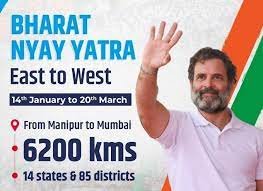
    The Congress party has announced that Rahul Gandhi will undertake a ‘Bharat Nyaya Yatra‘ from Manipur to Mumbai from 14th January 2024 to 20th March, covering a distance of 6200 kms, passing through 14 states and 85 districts.

    This Yatra is evidently with an eye on the coming 2024 Lok Sabha parliamentary elections.

    Rahul Gandhi’s earlier Bharat Jodo Yatra from Kanya Kumari to Srinagar from 7th September 2022 to 30th January 2023, covering about 4000 kms and passing through 12 states, and his Speeches In America about starting a ‘mohabbat ki dukan’ in a ‘nafrat ka bazaar’ were a flop show and a gimmick, despite all the fanfare and publicity, as they were followed by the defeat of the Congress in Madhya Pradesh, Rajasthan and Chattisgarh ( though it won in Telangana ).

    https://indicanews.com/rahul-gandhis-bharat-jodo-yatra-is-just-a-stunt-and-gimmick/
    https://indicanews.com/the-truth-about-the-bharat-jodo-yatra/

    The whole aim of the Congress party and Rahul Gandhi in all this is to get the large Muslim vote bank, for without that it has a bleak future. Congress, which was in power for several decades after Independence, feels like a fish out of water without power, and its corresponding loaves of office.

    For a long time Muslims were Congress voters, but after demolition of the Babri Masjid in December 1992 Muslims left Congress in UP, the largest state in India, and went over to the Samajwadi Party ( SP ), and in Bihar to Lalu Yadav’s RJD. Now the Congress is desperate to get them back.

    The problem for the Congress is that other non-BJP parties also want the Muslim votes. For instance, the SP wants their votes in UP, and the RJD in Bihar. So seat sharing in the INDIA alliance of opposition parties will not be easy.

    Also, when a party goes to the polls it must have something positive to offer to the people. The BJP has Hindutva to offer ( whatever its worth ). But the Congress has nothing to offer, except harping on secularism, which is only a euphemism for a desire to get Muslim votes.

    The Bharat Nyaya Yatra has proclaimed its objective as ‘aarthik nyaya‘ ( economic justice ) and ‘rajnaitik nyaya‘ ( political justice ), which really means nothing. Everybody in India know that Indian politicians have no genuine desire to give Indians economic justice, but only seek their votes by making all kinds of tall promises to the people, when in fact all they seek is power and pelf.

    Rahul Gandhi has no clue how to solve India’s huge economic problems, so all his talk of ‘aarthik nyaya’ is claptrap and hot air.

    https://indicanews.com/indians-love-to-follow-a-pied-piper-of-hamelin/
    https://indicanews.com/justice-markandey-katju-on-rahul-gandhis-visit-to-the-united-states/

     In India politics runs largely on the basis of caste and religious vote banks, and when most voters go to vote they forget economic issues like poverty, unemployment, price rise, etc and only see the candidate’s caste or religion ( or the caste or religion his party claims to represent ).

    The skilfully manipulated media hype over the consecration of the Ram Temple in Ayodhya on 22nd January, and its inauguration on the 24th will certainly benefit the BJP, apart from the religious polarisation in recent years, in the coming elections.

    I am afraid the Bharat Nyaya Yatra will be as much a stunt and a gimmick as the Bharat Jodo Yatra

  • Bill Tammeus and Justice Katju Reunite in Heartwarming Encounter After 60 years.

    Bill Tammeus and Justice Katju Reunite in Heartwarming Encounter After 60 years.

    Bill Tammeus is my American friend, who lives in Kansas City, Missouri. USA with his wife Marcia.

    He had come to Allahabad with his parents and 3 sisters in 1957. Bill’s father was an agriculture expert from Illinois University who had come for 2 years to India to teach modern methods of agriculture in the Allahabad Agriculture Institute.

    Bill was admitted to Boys High School, Allahabad (where the famous Indian filmstar Amitabh Bachchan had also studied ), and we were classmates from 1957-1958. He was then about 12 years old.

    Later, he went back with his parents to America, and became a journalist in the Kansas City Star (where the great writer Ernest Hemingway had once worked). However, we remained in touch since then, through letters which would take 10 days or more to reach ( there was no such thing as email then ).

    Thus, we have been friends for about 66 years, quite a record !

    Bill has since retired, and does social work, including serving as a part time preacher in his Presbyterian Church ( for which reason I call him ‘Reverend’ ).

    I had requested Bill to be one of the speakers in the recent Christmas special global online webinar of the organisation Ibaadatkhana, which promotes inter faith harmony. I am the patron of this organisation, Tasawar Jalali, who lives in San Jose, California is its Chairman, Irfan Ali, who lives in Princeton, New Jersey is its Vice Chairman, Naren Singh, who lives in California is its Gen Secy, and Ritu Jha who lives in California, and is the editor of indicanews.com, is the head of publicity and public relations.

    The video recording of the webinar can be seen on my facebook page.

    Bill had to decline my invitation due to prior commitments. He explained that this is the holiday season in America, and everyone’s calendar, including his own, is jampacked well in advance.

    However, he sent this video recorded Christmas and New Year greetings.

    https://drive.google.com/file/d/1JQD0apNzzAgEXMjQPAltPG_QFVWlCRaF/view?usp=drive_web

    You can email Bill on wtammeus@gmail.com, and I am sure he would be happy to reply

    Below is a pic of Bill and I ( we are both about 78 now ) when we met in Fremont, California in 2019, after a gap of over 60 years

    Bill Tammeus and Justice Katju
    Bill Tammeus and Justice Katju
  • Justice Katju: Akbar, Ashoka, and Lord Rama – India’s Unity Icons

    Justice Katju: Akbar, Ashoka, and Lord Rama – India’s Unity Icons

    The Real Forefather’s of India

    A Real Father is one who takes care of all his children. He is like a banyan tree which gives shade and protection to all who come under it.

    download 13 Akbar

    From that viewpoint, who are the real forefathers of the Indian Nation ?

    hanuman before rama Akbar

    1. The Father of the Indian Nation

    The Father of the Indian Nation is the Great Mughal Emperor Akbar ( 1542-1605 ), who proclaimed the doctrine of suleh-e-kul i.e. giving equal respect to all communities, a policy which was inclusive, because of which the Mughal Empire lasted so long. 

    He built the Ibaadatkhana in his new capital Fatehpur Sikri, a building unique in the world, where scholars and saints of all religions discussed amicably about the good points in their religion

    The Father of the Indian Nation is the Great Mughal Emperor Akbar
    Great Mughal Emperor Akbar

    2. The Grandfather of the Indian Nation

    The Great Emperor Ashoka ( who ruled from 268 to 232 BC ) is the Grandfather of the Indian Nation.

    The Great Emperor Ashok
    The Great Emperor Ashok

    Emperor Ashoka conceived of the idea of a Welfare State, 2000 years before it was conceived of by Europeans ( see Major Rock Edicts 2, 6, and 7, and Pillar Edicts 1 and 6 ). He regarded all his subjects as his children, attending to their welfare being a king’s duty.

    Major Rock Edict 12 ( also known as the Girnar Rock Edict ) of about 260 BC, declares Ashoka’s policy of religious tolerance

    ( Girnar is near Junagarh in Gujrat, and the Edict is inscribed on a rock, which I have seen ).

    ” Thus saith His Sacred and Gracious Majesty the King : The King honours all religious sects. His Sacred Majesty does not value gifts and honours as he values the growth of the essential elements of all religious sects. But the root of it is restraint of speech, that is, there should not be honour only of one’s own religion and condemnation of other religions. On the other hand, other religions should be honoured too.

    By doing this, one helps his own religion to grow, and benefits the religion of others too. By doing otherwise, one harms his own religion and injures the other religions too. For whoever honours only his own religion and condemns others’ religions gravely injures his own religion.

    Hence concord alone is commendable, and all should listen, and be willing to listen, to the beliefs professed by others. This is the desire of his Sacred Majesty. “

    3. The Great Grandfather of the Indian Nation

    The Great Grandfather of the Indian Nation is Lord Rama, who regarded all his people, not just a section of them, as his children.

    The Great Grandfather of the Indian Nation is Lord Rama
    The Great Grandfather of the Indian Nation is Lord Rama

    If he had been India’s King today, Rama would have given severe punishment to those who committed atrocities on minorities in India.

    India is a country of tremendous diversity. Hence the correct policy for running it is as shown by the above great figures, i.e. giving equal respect to all communities. Promoting religious polarisation and communal hatred may benefit some people in the short run ( by getting them votes ), but in the long run it will do great harm to our nation.

    As Bheeshma Pitamah told Yudhishthir :

    भेदे गणाः विनश्यन्ति भिन्नास्तु सजाया: पराः

    तस्मात् संघातयेंन प्रयतरेण गणाः सदा

    i.e.

    “ Republics are destroyed only because of internal strife among the people

    Therefore the authorities in a republic should always strive to maintain good relations among the people “

    ( Bheeshma Pitamah’s upadesh to Yudhishthir in the Shantiparva of Mahabharat, chapter 107/108, shloka 14 ).

  • Ibaadatkhana Organizes Global Online Christmas Webinar Promoting Interfaith Harmony and Unity

    Ibaadatkhana Organizes Global Online Christmas Webinar Promoting Interfaith Harmony and Unity

    Ibaadatkhana is a global organisation for promoting communal harmony, of which I am the Patron, Tasawar Jalali, who lives in San Jose, California, USA is the International Chairman, Irfan Ali, who lives in Princeton, New Jersey, USA is the International Vice Chairman, Narendra Singh, who lives in California, is the international General Secretary, and Ritu Jha, editor of indicanews.com, is the head of publicity and public relations

    download 10 Akbar

    Majeed Memon, senior advocate Indian Supreme Court and Bombay High Court, and former MP, is the President of the Indian Chapter, Ms. Husnara Salim, grand niece of Maulana Azad, and Chairperson of Maulana Azad Foundation, is the Indian VP, and Dr Arshi Malik is the Indian Gen Secy

    https://indicanews.com/the-historical-importance-of-the-ibaadatkhana-movement/
    https://indicanews.com/ibaadatkhana-function-and-unity-dinner/

    We have been holding regular global online webinars in pursuit of our objective, as given below

    Since Christmas is approaching, we have decided to hold a global online webinar to celebrate it and promote inter faith harmony, on the date and time mentioned in the schedule below :

    download 9 Akbar

    Topic: Ibaadatkhana Global Webinar
    Time: Dec 22, 2023 08:00 PM Pacific Time (US and Canada) / Dec 23rd 9:30am IST
    Join Zoom Meeting
    https://us02web.zoom.us/j/89188340639?pwd=VXpJWmFaVzllS1kwa0dDWUozRmU4UT09
    Meeting ID: 891 8834 0639
    Passcode: 421961

    Many eminent persons from India, Pakistan, USA etc will be the speakers

    We will try to show it live on my fb page

    Ritu Jha, editor of indicanews.com, will be the coordinator of the webinar

  • Tipu Sultan Airport Renaming Sparks Fiery Debate: Hero or Villain?

    Tipu Sultan Airport Renaming Sparks Fiery Debate: Hero or Villain?

    A fierce controversy has erupted in India over the proposal to rename Mysore airport as Tipu Sultan airport, made recently by a Congress MLA, Prasad Abbaya, in the Karnataka Legislative Assembly.

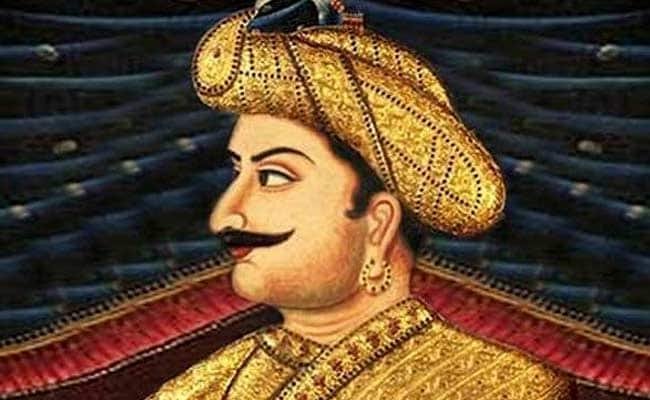
    Tipu Sultan's portrait, Mysore Airport, and a historical debate on the proposed renaming, stirring controversy in India.
    Tipu Sultan

    This has once again stirred up a heated debate in India, particularly in Karnataka, about Tipu’s legacy. Is he a national hero, or a bigoted villain ?

    The BJP is strongly opposing the move, saying it was only to appease Muslims in the state of Karnataka.

    A BJP spokesperson said that Tipu was a butcher of Hindus, and a communal bigot, who forcibly converted Hindus to Islam.

    https://www.udayindia.in/news/controversy-erupts-as-karnataka-congress-mla-proposes-renaming-mysuru-airport-after-tipu-sultan

    Is Tipu a hero or a villain ?

    Featuring Tipu Sultan's portrait, Mysore Airport, and a historical debate on the proposed renaming, stirring controversy in India.
    Tipu Sultan

    He should certainly be regarded a villain if he persecuted Hindus. But what is the truth about him ? Did he commit atrocities on Hindus ?

    Here is the truth about Tipu : far from being anti-Hindu, he gave annual grants to 156 Hindu temples, had very cordial relations with the Shankaracharya of Sringeri math to whom he sent regular grants, and helped him when he was in dire distress, his Prime Minister, Punaiya, army commander, Krishna Rao, and numerous top officials were Hindus, etc.

    Can such a person be described as anti -Hindu and communal ?

    https://indicanews.com/justice-katju-the-truth-about-tipu-sultan/

    http://justicekatju.blogspot.com/2015/11/tipu-jayanti-celebrations-vhp-activists.html

    During British rule, pursuant to the British policy of divide and rule, Indian history text-books were so falsified and distorted as to give an impression that the medieval period of Indian history was full of atrocities committed by Muslim rulers on their Hindu subjects, and the Hindus had to suffer terrible indignities under Islamic rule. The same was done about the image of Tipu Sultan.

    Here is what Prof BN Pande, Professor of History in Allahabad University ( who later became Governor of Odisha ) said in his speech in the Rajya Sabha ( the upper House of the Indian Parliament ) in 1977 :

    ” While I was doing some research on Tipu Sultan in 1928 at Allahabad, some office bearers of a college Students Union approached me with a request to inaugurate their History Association. They had directly come from the college with their text-book.

    I opened the chapter on Tipu Sultan. One of the sentences that struck me deeply was: ‘Three thousand Brahmins committed suicide as Tipu wanted to convert them forcibly into the fold of Islam’. The author of the text-book was, Mahamahopadhyaya Dr. Har Prashad Shastri, Head of the Department of Sanskrit, Calcutta University.

    I immediately wrote to Dr. Shastri for the source of his information. After many reminders came the reply that he had taken that from the Mysore Gazetteer.

    I contacted Prof. Srikantia of the Mysore University in this connection.

    Prof Srikantia informed me that the episode of the suicide of 3,000 Brahmins is nowhere in the Mysore Gazetteer and he, as student of history of Mysore, was quite certain that no such incident had taken place. He further informed me that the Prime Minister of Tipu Sultan was a Brahmin named Punaiya and his commander-in-chief was also a Brahmin, named Krishna Rao.

    He supplied me with the list of 156 temples to which Tipu Sultan used to pay annual grants. He sent me 30 photostat copies of Tipu Sultan’s letters addressed to the Jagadguru Shankaracharya of Srinageri Math with whom Tipu Sultan had very cordial relations.

    Dr Shastri’s book was approved as a course book of history for high schools in Bengal, Assam, Bihar, Orissa, U.P., M.P. and Rajasthan.

    I approached Sri Ashutosh Mukherjee, the then Vice-Chancellor of Calcutta University, and sent him all the correspondence that I had exchanged with Dr Shastri, with Mysore University Vice-Chancellor, Sri Brijendra Nath Seal, and Prof. Srikantia, with the request to take proper action against the offending passages in the text-book.

    Prompt came the reply from Sri Ashutosh Mukherjee, that the history book by Dr Shastri has been put out of course.

    However, I was amazed to find the same suicide story was still existing in the history text-books which had been prescribed in 1972 for Junior High Schools in U.P. ”.

    Tipu was branded as communal by the Britishers who wanted to demonise him as he fought against them, and allied himself with their rivals, the French. The truth is that Tipu never practiced religious discrimination, nor was he for domination of Muslims over the Hindus. He was not an idol breaker or a temple destroyer.

    On the contrary, he saw to it that all the Hindu temples flourished in his Kingdom by extending to them active encouragement and financial support.

    That Tipu was non-communal is evident in the fact that a number of top officials in his government were Hindus. Purnaiya was the Mir Asaf (in charge of Revenue and Finance). Krishna Rao was his Treasurer. Shamaiya Iyengar was Minister of Police and Postal department. Subba Rao was his chief Peshkar (Chief Secretary). Srinivas Rao and Appaji Ram were his close confidantes. His agents in the Moghul court in Delhi were Mool Chand and Sujan Rai. The Faujdar of Coorg was Nagappayya, a Brahmin.

    The Asafs (revenue officers) at Coimbatore and Palghat were Brahmins. The chief of Tipu’s irregular cavalry was Hari Singh. Rama Rao and Sivaji, a Maratha, commanded his regular cavalry. Another of his  generals was a Hindu named Sripat Rao

     In 1916, the Mysore government’s Director of Archeology, K.Narasimhachar, discovered a bunch of letters in the Sringeri Shankaracharya Math (monastery) which showed that Tipu had greatly helped the monastery, whose head was the Sringeri Shankaracharya. 

    In 1791, the monastery was raided and pillaged by a Maratha chieftain, Raghunath Rao Patwardan, and the Shankaracharya asked Tipu for help. Deeply grieved, Tipu Sultan wrote back saying: “ People who have sinned against such a holy place are sure to suffer the consequences of their misdeeds at no distant date”. He sent his army which drove off the Marathas from Sringeri.

    He then asked his officials to send cash and grains so that the idol of Goddess Sharada could be consecrated. He also donated a palanquin to the Shankaracharya and requested him to pray for the prosperity of his domain.

     Tipu had contributed to the Lakshmikanta temple at Kalale in Nanjangud taluk; the Narayanaswami temple at Melkote; the Srikanteshwara temple at Nanjangud and to the Ranganathaswamy temple at Srirangapatna all in Karnataka.

    The greenish shivalinga at the Nanjundeshwara temple is known as Padsha linga because it was donated by Tipu, the ruler.  According to a sanad, Tipu ordered the continuation of worship at the Thirupathi Venkatachalapathi temple. 

    One wonders if Tipu would have allowed the Ranganatha, Narasimha and Gangadhareswara temples to function in the Srirangapatnam fort, his capital, if he was an Islamic bigot.

    These temples still exist today, and I have myself seen them.Whether the name of Mysore airport is changed or not, the truth is that Tipu is a national hero, not a villain