Indo Farm Equipment IPO: A Comprehensive Evaluation
Indo Farm Equipment IPO
1. Company Fundamentals
Business Model:
Manufacturer of tractors, cranes, and engines; focuses on cost-effective solutions for domestic and export markets.
Industry and Market Position:
Operates in the growing Indian agricultural equipment sector but faces competition from established players like Mahindra & Mahindra and Escorts.
Financial Stability:
Revenue CAGR: 12% (last three years).
PAT margin: 9% (stable).
Debt-to-equity ratio: 0.45 (manageable leverage).
Indo Farm Equipment IPO
2. Valuation
Price Band: ₹204 – ₹215 per share.
Key Ratios:
P/E: ~20 (slightly above the industry average of 18).
P/S: 1.8 (aligned with competitors).
Verdict: Fairly valued; not deeply discounted, offering moderate growth potential.
3. Promoters and Management
Promoters: Patel family retains 60% post-IPO, reflecting confidence in the company’s future.
Management: Led by seasoned professionals with expertise in manufacturing and marketing.
4. Purpose of IPO
Objectives:
₹120 crore for expanding manufacturing facilities.
₹50 crore for debt repayment.
Remaining for general corporate purposes.
Analysis: Aimed at growth and financial stability, signaling long-term sustainability.
5. Risk Factors
Reliance on monsoon and agricultural cycles may impact demand.
Faces stiff competition from larger, established players.
Rising input costs (steel, fuel) could squeeze margins.
6. Subscription Status
QIBs: 12.3x subscribed.
NIIs: 9.4x subscribed.
Retail Investors: 5.2x subscribed.
7. Regulatory and Legal Compliance
SEBI-approved; complies with all necessary regulatory standards.
No significant legal disputes.
8. Lock-in Period and Post-IPO Plans
Promoters’ shares locked for one year post-listing.
Post-IPO plans focus on capacity expansion and growing exports to African and South Asian markets.
Indo Farm Equipment IPO
9. Key Dates
IPO Open: December 31, 2024.
Close: January 2, 2025.
Allotment Date: January 3, 2025.
Refund Initiation: January 6, 2025.
Credit to Demat Accounts: January 6, 2025.
Listing Date: January 7, 2025.
10. Grey Market Premium (GMP)
GMP: ₹85 (as of December 27, 2024), indicating a potential listing price of ~₹300 (40% premium over issue price).
Predictions and Recommendations
Short-term: Likely to list at a premium driven by strong GMP and subscription levels.
Long-term: Suitable for investors seeking exposure to the agricultural sector with moderate growth potential.
Caution: Moderate valuation and competitive risks warrant a cautious approach.
Disclaimer: We at The News Caravan are not SEBI-registered financial advisors. This analysis is for informational purposes only. Consult a certified financial advisor before making investment decisions.
To my Brothers and Sisters Judges of the Supreme Court of India
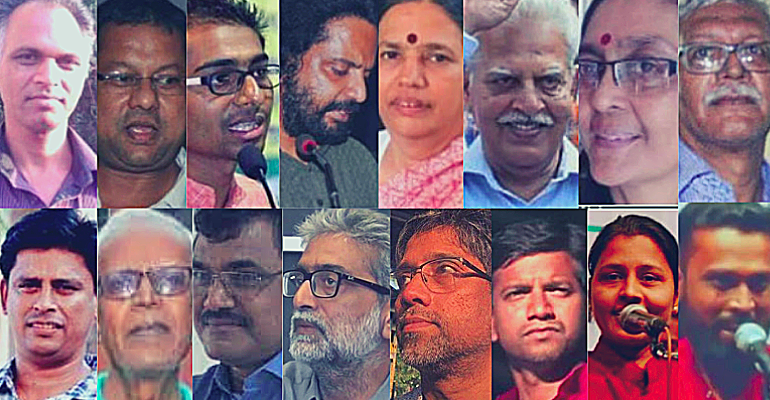
I respectfully appeal to you to revisit the cases of the people in jail mentioned below whom I believe are innocent and have been wrongly incarcerated due to political vendetta by the Modi Government, quash the bogus charges against them, and free them.
Sanjiv Bhatt He was a senior IPS Police Officer who gave an affidavit in the Supreme Court alleging complicity of Modi in the 2002 massacre of 2000-3000 Muslims in Gujarat. In the affidavit, he claimed he had attended a meeting at the then chief minister’s residence in February 2002, at which Modi allegedly told officers to “allow Hindus to vent their anger” against the minority community. As a result, Modi, who is known to be a very vindictive person, got him arrested on apparently trumped up false charge of an old case of 1996, and convicted, and he has been in jail since 2018 . He has also been sacked from the police and he and his family harrssed in many ways. https://thewire.in/law/ips-officer-sanjiv-bhatt-custodial-death-narendra-modi-gujarat-riots
Umar Khalid He is a Ph.D from JNU, and was an activist. He was arrested on charges of sedition, under the UAPA and a host of other sections of the IPC, which I believe to be totally concocted and bogus, and he has been in jail since 2020. His real crime is being a Muslim. Kanhaiya Kumar, who was accused of similar charges in the same incident in JNU, being a Hindu, is free.
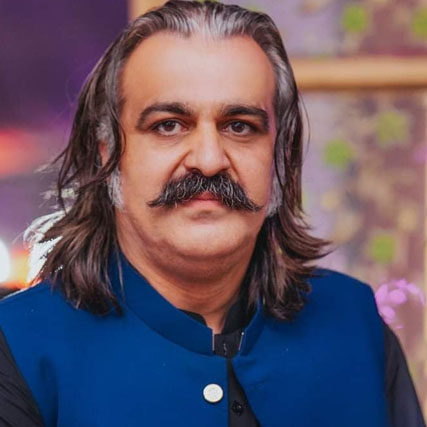
Ali Amin Gandapur is the Chief Minister of the province of Khyber Pakhtunkhwa ( KP ) in Pakistan, and belongs to former Prime Minister Imran Khan’s party, the PTI.
Pathans are a brave people, who cannot be hectored or pushed around by anyone. Their land was invaded by Alexander the Great, the Moghul Empire, the British Empire, the Russians, and the Americans, but they never surrendered, and instead made their country a graveyard of invaders.
About Pathans there is a saying that if you give a Pathan respect, he will jump into a well if you tell him to without a second thought. But if you do not give him respect, and try to bully or cow him down, he will not listen to anything you say.
In Rambo III an Afghan tells Rambo a popular saying : ” May God deliver us from the venom of the Cobra, teeth of the tiger, and the vengeance of the Afghan. Do you know what that means ? “.
To which Rambo replies ” That you people don’t take any shit “.
So I often tell my Pathan friends ( and I have many ) ” You Pathans are a bit manphira ( crazy ) ”.
Ali Amin Gandapur also seems a bit manphira. But there is no doubt that he is a brave man who cannot be intimidated by anyone.
His leader Imran Khan, and his PTI party has the support of probably 90% Pakistanis ( as all opinion polls show ), but by a rigged election in February the Pakistan army, which really rules Pakistan, installed the corrupt PDM in power, with Shahbaz Sharif as Prime Minister. However, despite their best effort they could not prevent the PTI from coming to power in KP.
If the Pakistan Establishment thinks it can lord it over the Pathans and Ali Amin Gandapur, and subject them to their tyranny, they are forgetting their history. They are forgetting what Pathans did to Alexander the Great, the Moghuls, the British, the Russians, and the Americans.
A sex scandal has erupted in India which is flying all around the country–in headliners of many newspapers, on TV, on the social media, and is being discussed.
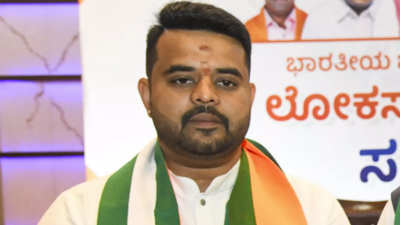
Briefly, the scandal relates to Prajwal Revanna, the 33 year old grandson of HD Deve Gowda, a 91 year old former Indian Prime Minister and leader of the JDS ( Janta Dal Secular ), a regional political party in the State of Karnataka, which is presently in alliance with the BJP. Prajwal’s father HD Revanna is a member of the Karnataka Legislative Assembly and former Minister. His uncle HD Kumarswamy is a former Chief Minister of the state.
Prajwal is presently a sitting member of the Lok Sabha ( the lower house of the Indian parliament ), and he is again contesting in the ongoing Lok Sabha elections from his family’s home seat of Hassan.
The election in Hassan was held on 26th April. A few days before the election, a large number of identical pen drives were thrown overnight by unknown persons all over Hassan– in bus stations, railway stations, bazaars, tea stalls, streets, garbage dumps, homes of people, etc.
These pen drives contain 2976 videos showing Prajwal sexually assaulting hundreds of women, including panchayat members, police women, government employees, housewives, etc. Many of these videos are disgusting, lecherous and obscene. Women can be seen tearfully pleading to be let go, but none dared to report it to the police for fear of their lives ( as Prajwal’s family was very rich and powerful ) or for fear of dishonour. The background in many of these videos is a store room in Prajwal’s house, and his clothes which he often wears can be seen.
Despite widespread circulation of these videos a few days before the election on 26th April, Prajwal went around brazenly campaigning and asking for votes till the 25th April, but he disappeared thereafter, and he is reported to have fled to Germany.
Subsequently, a maid of Prajwal gathered courage and filed an FIR ( first information report ) before the police. She had been repeatedly raped by Prajwal, but being poor and helpless remained silent about it, but when Prajwal tried to sexually assault her daughter too this was too much for her to bear.
Thereafter more women came forward and filed FIRs. A former member of a panchayat alleged that she was offered several allurements by Prajwal to have sex with him, but when she refused, he threatened to shoot her. He raped her repeatedly for 3 years. Other women complained of blackmail by Prajwal, who threatened to leak their pictures in lewd state unless they surrendered to his demands. Daily new allegations are coming in in this connection.
One woman complained to Prajwal’s father HD Revanna about Prajwal’s misdeeds, but instead of reprimanding his son he too allegedly sexually assaulted her.
Who distributed these pen drives ( which can be seen on the social media ) ? The most common belief is that it was Prajwal’s estranged ex driver Kartik, while some attribute it to a political rival G Devraj Gowda, a member of the BJP.
A SIT ( special investigation team ) has been set up by the Karnataka Government to investigate the scandal.
Apart from the specific facts of the case, the more significant thing is that it shows how politicians in India can get away with the most horrendous and outrageous crimes with impunity. Now many people are saying that Prajwal’s lascivious, lustful, and perverted nature was widely known in Hassan, but no one dared to speak publicly about it for fear of his family’s retribution. Had it not been for the revelation by the pen drive, he too may have got away with it.
G Devraj Gowda, to whom Kartik allegedly gave the pen drive, said he wrote to the BJP higher ups in Bangalore and Delhi about it, but they remained mum. This reflects adversely on the BJP which had waxed eloquent on their theme ‘beti bachao, beti padhao‘, but Prime Minister Modi was often seen in videos with Prajwal and his entire family, and canvassed for him
Jammu & Kashmir, April 15, 2024 – The disparity in stipends received by MBBS interns across different states has once again come under the spotlight, as MBBS interns in Jammu & Kashmir continue to voice their dissatisfaction with the meager stipend of ₹12,300 they receive. This issue has sparked a social media campaign under the hashtag #HikeJKInternsStipend, highlighting the stark difference between the stipends of MBBS interns in J&K compared to those in other states, which range from ₹20,000 to ₹30,000 with Assam ranking the highest with a stipend of ₹31,500.
Despite recommendations for an increase in stipends, the situation remains unchanged, prompting interns to raise their concerns directly to authorities, including the Office of the Lieutenant Governor of J&K, @OfficeOfLGJandK, and other prominent figures in the state’s healthcare sector.
Interns play a crucial role in the functioning of hospitals, often working long hours and providing essential care to patients. They are the backbone of the healthcare system, yet their efforts seem undervalued and overlooked when it comes to compensation.
“The current stipend of ₹12,000 is insufficient to support oneself, let alone a family,” says one medical intern who preferred to remain anonymous. “We work tirelessly, often in challenging conditions, and deserve to be fairly compensated for our contributions.”
The disparity in stipends not only affects the financial well-being of interns but also raises concerns about retention and morale within the healthcare workforce. Many interns in J&K face the dilemma of balancing their professional responsibilities with their personal financial obligations, leading to added stress and strain.
In response to the growing outcry, medical interns are calling for a revision in stipend policies to reflect the true value of their work and to ensure parity with their counterparts in other states. They urge authorities to recognize their dedication and commitment by providing them with a livable wage that acknowledges the demanding nature of their roles.
As the debate continues, interns in Jammu & Kashmir remain hopeful that their voices will be heard, and meaningful action will be taken to address their concerns. They emphasize that fair compensation is not just a matter of financial security but also a reflection of the value placed on their contributions to the healthcare system.
Efforts to reach out to relevant authorities, including @SyedAbidShah, @HealthMedicalE1, @DullooAtal, @manojsinha_, @DrJitendraSingh, @RavinderRaina, @Junaid_Mattu, @IltijaMufti_, @MehboobaMufti, @OmarAbdullah, and @sajadlone, for comments on the matter were unsuccessful at the time of reporting.
Iltija Mufti’s tweet regarding this issue:
Medical interns in J&K get a meagre 13000 every month which is less than half of what their counterparts in others states earn. They are struggling to support their families & deserve better. Request @manojsinha_ ji to look their genuine demands. pic.twitter.com/hWTXgGq980
The plight of MBBS interns in Jammu & Kashmir serves as a reminder of the challenges faced by healthcare workers across the country and the importance of fair compensation in ensuring a sustainable and effective healthcare system.
In this connection a panel discussion was organised by the well known TV journalist Barkha Dutt on NDTV channel, to which I was also invited.
Among other participants in the panel discussion were 4 politicians, namely Sanjeev Balyan and Sudhanshu Mittal of the BJP, Naved Siddiqui of the Samajwadi Party, and one member of the Congress.
These politicians were asked to speak first, and they started shouting and quarreling with each other angrily.
The moment I said this it united the politicians, who were till now at loggerheads.
Barkha said I was doing loose talk, and added how could I say that politicians should be hanged when the Supreme Court had said that death penalty should only be given in ‘rarest of rare’ cases ?
I replied that these politicians polarise society and incite caste and religious hatred for securing their vote banks, even if the country goes to hell. They have no genuine love for the country. So don’t they deserve to be hanged ?
Sanjeev Balyan interrupted me when I was speaking ( though I had never interrupted him when he was speaking ), and called me an idiot,
Naved Siddique said I was giving a ‘Talibani haq’, and asked me how could I say what I said ?
I replied that I said it because it was because you politicians incite hatred and make people fight with each other on the basis of caste and religion. You only care for your vote banks, even if the country goes to ‘jahannum’ ( hell ), and I repeated that you politicians have no real love for the people.
Later, Naved Siddique said that I have called politicians idiots. I replied that you are not idiots. you are very cunning people, the reverse of idiots. For your vote banks you can take the country to hell.
At the end Sudhanshu Mittal called me a criminal because I ate beef, and waved some paper. I would have liked to tell him that I eat beef only where legally permitted, e.g. in Kerala, Goa, the north east or in USA, but I thought it better to remain silent in the heated atmosphere.
The interesting and somewhat amusing thing in this episode was that these crooks ( our politicians ), who are otherwise often quarrelling with each other, quickly unite when faced with a frontal attack on their whole gang.
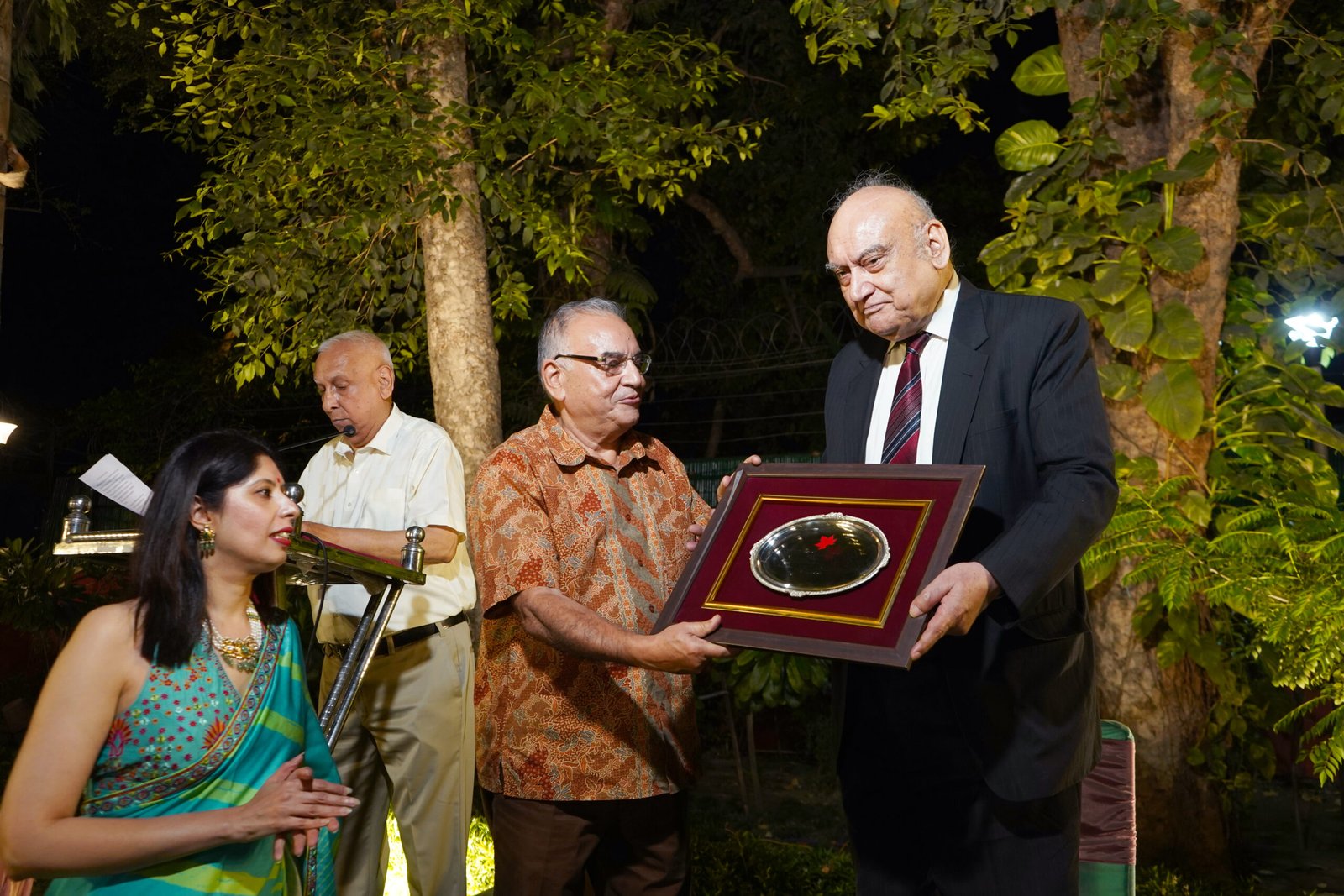
Yesterday, 6th April 2024, the Kashmiri Pandits Association, an association of the non Kashmiri speaking Kashmiri Pandits, ( Kashmiri speaking Kashmiri Pandits have their own association called All India Kashmiri Samaj ), held a function in Delhi to honour me and Anita Mulla, the daughter of the heroic Capt MN Mulla who went down with his ship Kukri in the war against Pakistan, in the tradition of the Navy.
Kashmiri Pandits ( hereafter referred to as KPs ) are of two types, Kashmiri speaking, and non Kashmiri speaking, the former being about 400,000 in number, and the latter a little less than half of that. The latter, which includes me, are those whose ancestors migrated from Kashmir to the plains of India about 200 years ago, while the former are those who remained in the Kashmir valley until they were driven out by persecution in the 1990s.
Kashmiri is a language totally different from Hindi, and a Hindi speaker will not be able to understand it. Though our ancestors who migrated from Kashmir no doubt spoke Kashmiri, their descendants forgot it after a couple of generations or so, and could thereafter speak only Hindi and English.
However they retained their Kashmiri Pandit identity by marrying only among themselves and not with the local people ( now of course many have married outside the community ). They retained their Kashmiri food habits, being non vegetarians, and eating Kashmiri delicacies like roganjosh, kabargaah, damaloo, etc.
Though they had forgotten the Kashmiri language, in certain rituals like Herat puja they would utter some Kashmiri words which had been passed on for generations, without understanding a word of what they meant ( just as many people recite Sanskrit shlokas without understanding their meaning ). These too became distorted over the generations. For instance, the Kashmiri words ‘kus choo’ ( who is it ? ) became ‘kuch choo’. It was only after I married my wife Rupa, who is a Kashmiri speaking Kashmiri Pandit, that she told me the meaning and correct pronunciation of these words.
The non Kashmiri speaking KPs left Kashmir not because of persecution but for job opportunities. To understand this I must tell something about the history of KPs.
Kashmir was conquered by Mughal Emperor Akbar in 1588 who deposed the last independent ruler of Kashmir Yusuf Shah Chak, and incorporated Kashmir into the Mughal Empire. Mughal rule was beneficial to KPs. At that time KPs comprised of only about 5% of the total Kashmiri population, the rest having converted to islam. The Mughals needed a buffer between themselves and the local Muslim population, so they made KPs landlords, whose tenants/servants were the local Muslims. KPs not only became landlords but were also the educated class in Kashmir ( Kashmiri Muslims then being almost all illiterate ), and they were very proficient in Persian and Urdu, which were the languages of the elite in the entire Indian subcontinent.
Because they were proficient in Persian and Urdu, KPs were in great demand in the princely states, where the court languages were Persian and Urdu.
During British rule part of India was under direct British rule, and part under the princely states i.e, states ruled by Maharajas and Nawabs ( who, however, recognised the paramountcy of the British ). Most of eastern India was under direct British rule, since Bengal was the first big base of the British in India after the batles of Plassey ( 1757 ) and Buxar ( 1764 ), and from there British rule expanded westward. The Maharajas of western and central India ( Punjab, Rajasthan, Madhya Pradesh, etc ) were allowed to continue their rule ( though recognising British paramountcy ), and, as mentioned above, their court languages ( even of Hindu rulers ) were Persian and Urdu.
The ancestors of all non Kashmiri speaking KPs came to the plains of India in exactly the same way (whether the ancestor of former Prime Minister Jawaharlal Nehru, the eminent lawyer Sir Tej Bahadur Sapru, or any others ), that is, they got jobs as officials in the courts of Maharaja and Nawabs ( because of their proficiency in Persian and Urdu ). They were trustworthy, industrious, and men of honour, and soon rose to high positions, many even becoming Dewans ( equivalent to Prime Minister ) in their states.
My own ancestor Pt Mansa Ram Katju, who migrated from Kashmir abouit 200 years ago, got employment as an official in the court of the Nawab of Jaora, which was a princely state in western MP bordering Rajasthan, and for many generations his descendants served there. Pt Mansa Ram wrote in the register of a panda in Kurukshetra ”Ba-talaash-e-maash aamadam ” ( i.e. I have come in quest of bread ) The descendant of the KP immigrants, too, became court officials in the princely states, but after a few generations some branched off and joined the legal profession as lawyers. This happened because KPs were an intellectual class, not physical labourers, and the only avenue then available to intellectuals was the legal profession. There was no IAS at that time, and the ICS recruited mainly Britishers. At that time most lawyers in India were sons of zamindars ( landlords ). This was because in those days a new lawyer would not earn anything for the first 4-5 years of his law practice, and so only sons of zamindars could sustain themselves in the early years of their practice as they received some allowances from their zamindar father.
The problem for KPs who entered the legal profession was that they had no zamindari. Hence they had to earn from almost the start of their practice, and for this they had to work hard day and night to quickly master the law. They soon gained a reputation for their knowledge of law and uprightness, and started getting clients. They quickly rose high, and became the top lawyers. Thus, in UP not only some of the top lawyers in the Allahabad High Court like Sir Tej Bahadur Sapru, Pt Moti Lal Nehru, Dr KN Katju etc were KPs, even in about half the district courts in UP the top lawyer was a KP, e.g. Prithvinath Chak in Kanpur, Shangloo saheb in Fyzabad ( now Ayodhya ), Anand Narain Tankha in Dehra Dun, Bakshi saheb in Hardoi, Masaldan saheb ( father of the President of KPA Gen Masaldan ) in Sitapur, etc. Similar was the position in many other states, e.g. Raj Kumar Tankha who started his law practice in Rewa district court and became a Judge of the MP High Court at a very young age, and in all likelihood would have become the Chief Justice of India ( as he was senior to Justice JS Verma who became CJI ) but for his untimely death at the age of 51. His son Vivek Tankha is today a top lawyer of India, as well as an MP.
I may also mention Justice Shambhu Nath Pandit, a KP, who became the first Indian Judge of a High Court in 1863.
Later, when more avenues were opened up, KPs went into the corporate sector, became professors, doctors, engineers, etc, and many have migrated to USA and elsewehere, where they have done very well. I am adding some pics of yesterday’s function
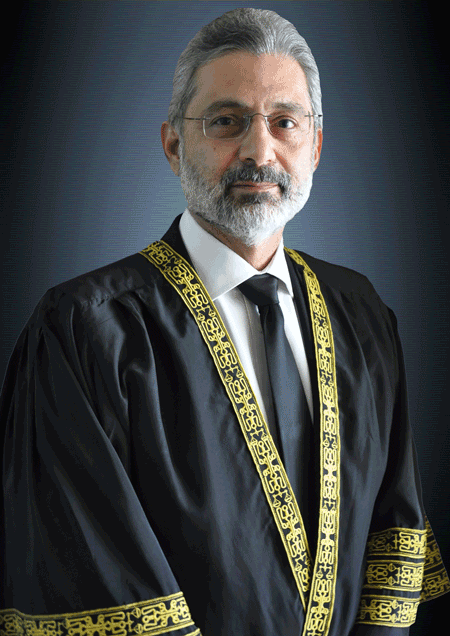
A meeting was held between the Pakistan Prime Minister Shahbaz Sharif and the Chief Justice of Pakistan Qazi Faez Isa in response to the letter of 6 Judges of the Islamabad High Court to the CJP and other senior Judges complaining of interference by the ISI and other intelligence agencies of Pakistan with fthe functioning of the judiciary. Thereafter the Pakistan Law Minister announced setting up of a commission to probe into the matter, headed by a retired Judge, Justice Tassaduq Jillani.
However, Justice Jillani has said he is not willing to head such a probe.
Now Qazi Faez Isa ( whom I call Justice Dramabaz ) has issued a suo motu notice and set up a bench of 7 Judges of the Supreme Court to deal with the matter.
In my opinion this is just another farce by Justice Dramabaz. Let me explain.
1. There is no reason to disbelieve what the 6 Judges of IHC said in their letter.
A fascist reign of terror was unleashed in Pakistan by the Pakistan army after the events of 9th May, 2023 ( which many say were stage managed ). About 14,000 people were arrested by the security forces on trumped up charges, their houses broken into, and they were beaten/tortured, and then incarcerated in jail in inhuman conditions, where they are still rotting. The people of Pakistan are living in terror, and the Pakistan media is largely muzzled.
It is in the nature of fascism, whether of the Hitler type in Nazi Germany, the Mussolini type in Italy, or the Pinochet type in Chile ( where tens of thousands of people simply ‘disappeared’ ) that the judiciary is silenced. The judiciary stands as a bulwark against state oppression, and is a protector of the rights of the people, and hence it cannot be left independent under fascist rule. So it has to be silenced, as has lagely been done in Pakistan, and some of the ways that was done were mentioned in para 6 of the letter of the 6 IHC judges.
2. So what can the bench of 7 Judges of the Pakistan Supreme Court constituted by the CJP possibly achieve ? If they find the allegations of the 6 IHC Judges to be correct, which they undoubtedly are, will they send the Director General and other senior officers of the ISI, on whose instructions this outrage was obviously committed, as well as those who carried out the order, to jail for contempt of court ? It is laughable even to think of the idea. It requires people with guts and a spine to do that, and these people do not have that
3. What, then, will this 7 member bench do ?
It will hold that the allegations of these 6 IHC Judges cannot be substantiated
And to ensure that, Justice Dramabaz has deliberately selected 7 Supreme Court judges who are his sidekicks and do his bidding, and are known to be pro-Pakistan establishment, to be on the bench, instead of constituting a Full Bench of all Judges of the Supreme Court, including upright and independent Judges like Justice Munib Akhtar, Justice Ayesha Malik, and Justice Shahid Waheed.
Justice Dramabaz will himself preside over this bench, and his actions have proved that he has become a servile toady of the Pakistan Establishment e.g. his flawed and dishonest judgmernt depriving Imran Khan’s PTI of its party symbol, and his other acts detailed below
So this bench of 7 Supreme Court judges constituted by Justice Dramabaz will only be a farce, and its proceedings a melodrama, a burlesque, and an excercise in futility.
4. What then should be done ? I have mentioned the only correct course of action in 2 video interviews ( one very recent ) which I gave to a young Pakistani journalist, Sohrab Barkat, of siasat.pk
That course of action is for the Chief Justice of Pakistan to announce that he will close all courts in Pakistan unless and until the Pakistan Establishment ( meaning the army ) gives an assurance that there will be no interference with the independence of the judiciary, no threats or snooping on the judges, and judicial orders will be obeyed. There is no other way out.
But that is too much to expect from Justice Dramabaz
6 Judges of the Islamabad High Court have written a letter to the Supreme Court Judicial Council of Pakistan, whose head is the Chief Justice of Pakistan Qazi Faez Isa, complaining of the interference in their work, threats, and snooping on them by Pakistan’s Intelligence Agencies
The lawyers have called a convention to discuss this brazen attack on the independence of the judiciary
For quite some time it has been noticed in Pakistan that Court orders are not obeyed. For instance, the order of the Supreme Court to hold elections for the Punjab Legislative Assembly on 14th May, 2023, was simply thrown into the waste paper basket.
The latest revelations in the letter of 6 Hon’ble Judges of the Islamabad High Court shows brazen interference by the executive with the judiciary.
This takes us into the question why have a judiciary at all ?
It is in the nature of things that in every society, in all ages, there were, and will be, some disputes between the people, or between the people and the authorities. Hence there has to be a forum for peaceful resolution of these disputes, on the basis of some established principles, by professional experts who are conversant with these principles, known as Judges, otherwise they will be resolved violently by guns, bombs, swords, or lathis. Hence the purpose of a judiciary is to preserve peace in society.
A person presents his case in court, as does his adversary, and then the judge gives his verdict. Even if a party loses, he has the satisfaction that he was given a hearing, and this pacifies him to some extent.
But this presumes that the Judge was honest, impartial, and independent. In Pakistan, unfortunately, these features are missing. An example of this is the clearly dishonest verdict of the 3 Judge bench of the Pakistan Supreme Court, presided over by the Chief Justice Qazi Faez Isa, which deprived Imran Khan’s PTI party of its symbol
A Pakistani journalist, Sohrab Barkat, of the social media forum siasat.pk, who is based in Islamabad, asked me what I would have done in this situation had I been the Chief Justice of Pakistan.
I told him I would have taken a very tough stand. I would have closed down all courts in Pakistan until the government gives a solemn assurance that it will obey court orders ( subject of course to provisions for review, or appeal to a higher court ), and will respect the independence of the judiciary.
I would have also sent to jail for contempt of court those who defied court orders, however high the person or persons may be
Unfortunately the former CJP Bandial, and the present CJP Qazi Faez Isa, have proved to be spineless in this regard, and the latter has proved to be servile to the Pakistan Establishment, and a disgrace to the judiciary, like a modern Judge Jeffreys.
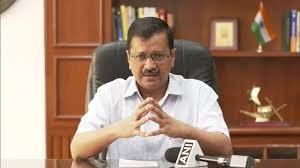
Ever since he was arrested on 21st March in connection with the massive liquor scam he was expecting millions of people to turn out in protest by holding massive demonstrations in the streets of India, particularly in Delhi. But no one seemed to be interested. No one is happy at the prospect of becoming a shaheed ( martyr ) for this modern ‘Stalin’ ( I call him that as he has said in his message delivered through his wife Sunita ” Aapka bhai lohe ka bana hai ” ), who has since long departed from all his professed principles of integrity, etc
In the above message of 23rd March Kejriwal appealed to people to go to temples to pray for him. None did. They preferred celebrating Holi with gusto ( despite appeals by AAP leaders not to celebrate it ).
In his message Kejriwal also said ” ” Whether inside or outside, every moment of my life is dedicated to serving the country. Every drop of my blood is dedicated to the country,”
This was laughable. The public has understood by now, after bitter experience, that every moment of Kejriwal’s life is dedicated not to serving the people, but to his idea how he can remain in power by hook or crook, and even become Prime Minister one day, for which he regards himself fully deserving. He has mastered the art of Machiavellian ‘realpolitik’.
Even Anna Hazare, on whose ‘imaandaari’ movement Kejriwal rode piggy back, now condemns him.
Kejriwal added in his message that no bar could keep him inside, and he would soon return. He probably imagines he is a Lord Krishna, who after his birth was miraculously taken out of the jail of his mama Kansa. Or perhaps he believes that the jail walls will be stormed and he will be rescued by a huge crowd, like the revolutionaries who stormed the Bastille in Paris on 14th July 1789.
None of that will happen. Kejriwal seems to be in for the long haul
But here is a suggestion for AAP leaders and members who want Kejriwal to be released soon :
When I was a lawyer in Allahabad High Court, and there was a threat that a Meerut Bench of the High Court may be created ( thus drastically reducing our incomes, since Western UP districts were relatively affluent compared to eastern UP districts, and its people good paymasters ), we lawyers of the High Court went on a long strike.
Among the things we lawyers did was to dig a huge ‘agnikund’ ( pit of fire ) inside the High Court premises, into which we threw a lot of wood, set it on fire, and when the flames were leaping high, threatened to collectively jump into it, like a ‘jauhar’ committed by the women of Chittorgarh.
This did the trick, and the government, frightened out of its wits, announced that it had withdrawn the proposal to create a Bench.
I am sure Kejriwal will be released soon after AAP folk do the same ( but I advise them not to actully jump into the bonfire, only keep giving threats ).